In the rapidly evolving landscape of artificial intelligence, one bottleneck has remained stubbornly persistent: the hardware. For years, the engine room of the AI revolution has been dominated by a single titan—Nvidia. However, recent developments indicate that OpenAI, the laboratory behind the world-altering ChatGPT, is taking decisive steps to break free from this reliance. Under the internal code name "Jalapeño," the organization is developing its own proprietary AI chips, a move that could fundamentally reshape the economics of generative AI and challenge the current industry power structure.
The Strategic Imperative: Why OpenAI Needs Its Own Silicon
At the heart of the current AI boom lies a simple, brutal economic reality: intelligence is expensive. Every time a user types a prompt into ChatGPT, an immense amount of computational power is summoned. Large Language Models (LLMs) like GPT-4 require trillions of calculations to generate even a single sentence. Currently, this process relies heavily on Nvidia’s H100 and Blackwell series GPUs, which have become the gold standard for training and inference.

However, the "compute tax" paid to Nvidia is staggering. As OpenAI scales its services to hundreds of millions of users, the cost of processing these requests has reached billions of dollars annually. To remain profitable and competitive, the company must optimize its infrastructure.
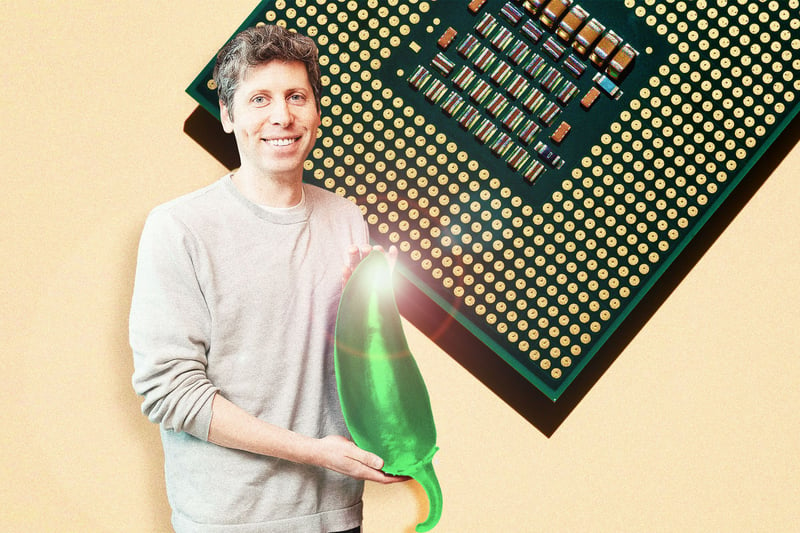
"We are engineers, and we don’t take ourselves too seriously," says Richard Ho, head of chip development at the San Francisco-based AI lab, explaining the quirky "Jalapeño" moniker. But while the name may be a nod to the "Hot Peppers" developer team’s sense of humor, the underlying strategy is cold, calculated, and high-stakes. By moving toward custom silicon, OpenAI aims to lower the "cost per inference," thereby expanding its margins and accelerating the development of more sophisticated, resource-heavy models.
A Chronology of Dependency and Disruption
The relationship between OpenAI and the hardware market has evolved through three distinct phases:
- The Early Exploration (2018–2020): During its formative years, OpenAI, like most research labs, relied on generic cloud computing resources. The focus was on architectural innovation rather than hardware optimization.
- The Nvidia Era (2021–2023): As GPT-3 and subsequently GPT-4 proved that scale was the primary driver of capability, OpenAI became one of the largest consumers of Nvidia hardware. The scarcity of these chips during the 2023–2024 period created a bottleneck that delayed product launches and increased capital expenditure.
- The Pivot to Autonomy (2024–Present): Recognizing that total dependence on a third-party supplier creates a strategic vulnerability, CEO Sam Altman and his engineering leadership began aggressively recruiting top-tier talent from companies like Google (TPU division) and Apple to build a custom hardware stack. The "Jalapeño" project represents the fruition of these efforts.
Supporting Data: The Economics of the Chip War
The financial stakes of the semiconductor race cannot be overstated. To understand why OpenAI is venturing into the notoriously difficult world of chip design, one must look at the capital expenditure trends:
- Inference Costs: Industry estimates suggest that the cost of running inference for advanced models has dropped, but the total volume of requests is growing at an exponential rate. Without custom hardware tailored specifically for transformer-based architectures, companies risk seeing their profit margins eroded by electricity and hardware depreciation costs.
- The Nvidia Premium: Nvidia currently commands a massive share of the AI hardware market, with profit margins that have drawn the envy of the entire tech sector. By designing its own chips, OpenAI is not just looking for efficiency; it is looking to capture a portion of the value currently flowing directly into Nvidia’s treasury.
- Energy Efficiency: Custom silicon, or ASICs (Application-Specific Integrated Circuits), can be designed to perform specific tasks—such as matrix multiplication for neural networks—far more efficiently than general-purpose GPUs. This is critical for data centers facing power consumption limits.
The Industry Perspective: A Threat or a Necessary Evolution?
The announcement that OpenAI is pursuing "Jalapeño" has sent ripples through Wall Street and Silicon Valley. Martin Geißler, a chip industry expert at the consulting firm Argon & Co., observes: "Jalapeño could be the first real attack on the dominance of Nvidia. While Nvidia currently provides the infrastructure that makes AI possible, OpenAI is betting that by controlling the hardware, they can dictate the future of software performance."
However, industry analysts caution that the transition will be neither fast nor easy. "Designing a chip is one thing; scaling it to a production level that can compete with the manufacturing prowess of TSMC and the software ecosystem of Nvidia’s CUDA platform is an entirely different beast," says one industry analyst.

Furthermore, OpenAI remains tethered to Nvidia for the foreseeable future. The training of frontier models—the massive, multi-month processes that create the next generation of intelligence—will still require the massive, interconnected clusters of GPUs that only Nvidia can currently provide. "Jalapeño" is likely intended to handle the "inference" side of the house—serving the millions of daily requests—rather than replacing the massive training clusters required for foundational research.
Implications for the Future of AI
The move toward custom silicon has three major implications for the industry:

1. Vertical Integration as the New Standard
OpenAI is following in the footsteps of tech giants like Apple and Google, who have long understood that owning the hardware-software stack is the ultimate competitive advantage. By optimizing its software to run on "Jalapeño" chips, OpenAI can squeeze out performance gains that would be impossible on generic, off-the-shelf hardware.
2. The Democratization of AI Power
If OpenAI succeeds in lowering the cost of inference, the barriers to entry for advanced AI applications will drop. This could enable more complex agents that run locally or in cost-effective cloud environments, shifting the focus from "how do we afford this?" to "what can we build with this?"

3. A Shift in Supplier Power Dynamics
Nvidia is not sitting idle. The company is rapidly iterating on its own architecture to remain the indispensable partner for AI labs. However, the move by OpenAI—and similar efforts by Microsoft, Amazon, and Google—signals that the era of relying on a single hardware provider is coming to an end. The market is moving toward a fragmented, specialized future where hardware is increasingly tailored to specific model architectures.
Conclusion: The Road Ahead
Project "Jalapeño" is a testament to the maturation of the AI industry. OpenAI has moved beyond the "research lab" phase and is now a full-scale industrial power. By tackling the semiconductor challenge, the company is demonstrating that it is prepared to play the long game.

While the "Hot Peppers" team may enjoy a good joke about their project name, the implications for the global technology market are deadly serious. OpenAI’s shift toward custom hardware is a clear signal that the company intends to control its own destiny, regardless of the supply chains that currently dictate the pace of the digital world. Whether "Jalapeño" will truly displace the giants of the semiconductor industry remains to be seen, but one thing is certain: the era of "off-the-shelf" artificial intelligence is rapidly drawing to a close. As we look toward the future, the winners of the AI race will not just be those with the best models, but those with the best machines to run them on.