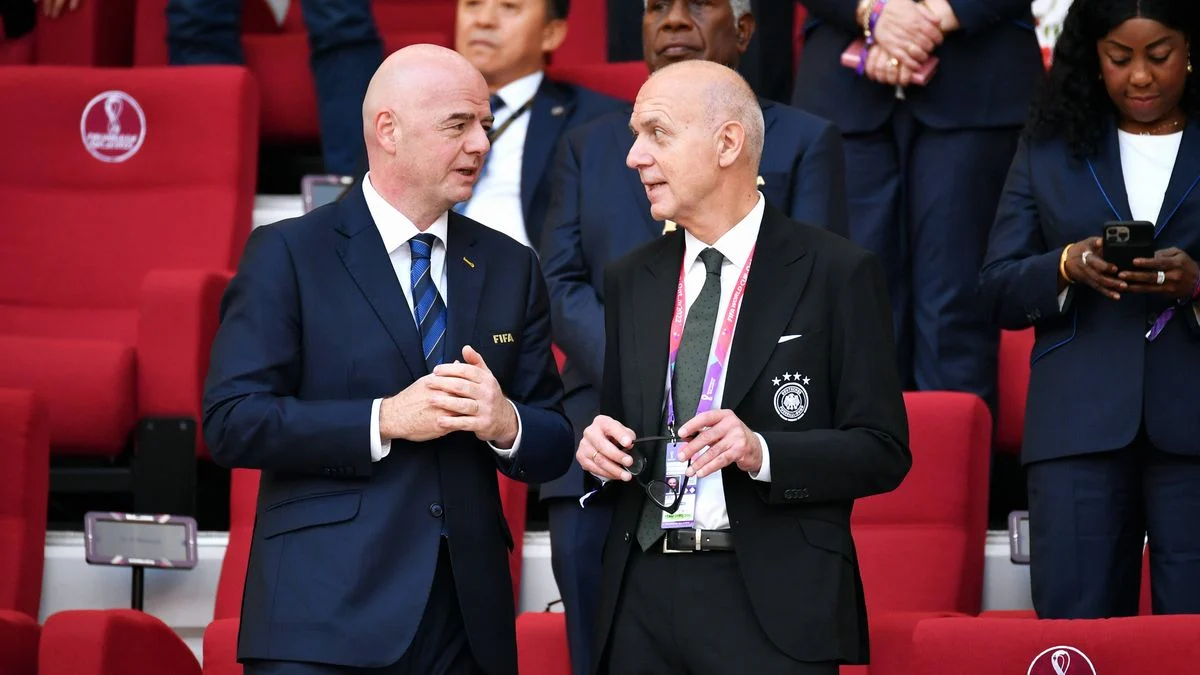
The world of international football is currently witnessing a high-stakes geopolitical drama. Behind the polished facade of FIFA headquarters in Zurich, a quiet but determined insurgency is taking shape. European football associations, led by the UEFA bloc and supported by powerful national entities like the German Football Association (DFB), are exploring pathways to end the era of FIFA President Gianni Infantino.
The relationship between the European establishment and the global governing body has reached a breaking point. From disputes over the frequency of the World Cup to the expansion of club tournaments and allegations of centralized power-grabbing, the friction has transformed into a strategic effort to reclaim the governance of the world’s most popular sport.
The Core Friction: Why the Establishment is Turning
The discord is not merely personal; it is systemic. Critics of Infantino argue that his tenure has been defined by a "presidentialization" of FIFA that undermines the democratic processes of confederations.
The World Cup Frequency Debate
The most public flashpoint occurred when Infantino championed the idea of a biennial World Cup. While the proposal was marketed as a way to increase revenue and global development, the European block—joined by South American counterparts—saw it as a direct threat to the sanctity of the tournament and the health of their players. The subsequent backlash forced a retreat, but the trust between the UEFA leadership and Infantino was irreparably damaged.
Financial Control and Tournament Expansion
The expansion of the Club World Cup has also served as a catalyst for dissent. Major European leagues, who provide the talent for these competitions, were largely sidelined in the decision-making process. For federations like the DFB, the issue is one of consultation: they believe the global governing body has transitioned from a service organization for its members into an autonomous entity that operates in isolation from the stakeholders who actually fund the sport.
A Chronology of the Fracturing Relationship
To understand how the current crisis developed, one must look at the timeline of the last three years:
- 2021: The FIFA-led push for a biennial World Cup begins in earnest. UEFA and CONMEBOL form a strategic alliance to block the move, signaling the first major "revolt" against Infantino’s policy agenda.
- 2022: The Qatar World Cup serves as a backdrop for intense friction regarding human rights issues and the late-stage banning of on-pitch expressions of protest. European nations feel their values were ignored by FIFA leadership.
- 2023: The announcement of a massive, expanded 32-team Club World Cup is met with legal threats from player unions and skepticism from European leagues. The DFB publicly calls for greater transparency in FIFA’s financial reporting.
- 2024: Internal discussions among influential European football officials turn toward the possibility of a "post-Infantino era." Conversations regarding potential challengers and governance reforms move from private corridors to the periphery of formal meetings.
Supporting Data: The Power Balance
FIFA operates on a "one member, one vote" system, which historically favors the incumbent. Infantino has masterfully courted votes from smaller federations in Africa, Asia, and Oceania by increasing financial subsidies and infrastructure development grants.
However, the European block holds the financial and sporting "leverage." Europe generates the vast majority of FIFA’s commercial revenue. If the major European leagues were to threaten a breakaway or a withholding of certain broadcast rights—a "nuclear option"—it would destabilize FIFA’s current fiscal model.
Key Metrics of Influence:
- Revenue Contribution: European markets account for over 60% of global broadcasting and sponsorship revenue for the FIFA World Cup.
- Player Representation: Over 75% of the players in the last three World Cup finals play for clubs based in UEFA-affiliated leagues.
- Democratic Density: While Europe has only 55 of the 211 votes in the FIFA Congress, their ability to set global standards (VAR, offside rules, transfer regulations) remains unmatched.
Official Responses and Diplomatic Manuevering
The official line from Zurich remains one of defiance. FIFA’s communications department maintains that the current administration has increased financial transparency and that the reforms implemented since the Sepp Blatter era have been transformative.
"The focus of FIFA remains the global growth of football," a spokesperson recently noted. "Divisiveness serves only to hinder the progress made in emerging markets."
Conversely, the DFB and UEFA officials have adopted a "measured silence." By refusing to provide a clear, singular ultimatum, they maintain the ability to maneuver. However, sources within the German football hierarchy suggest that the DFB is no longer willing to rubber-stamp proposals that have not been vetted by the European Club Association (ECA).
The Implications: What Happens Next?
The removal of a FIFA president is a notoriously difficult task, requiring a two-thirds majority in the FIFA Congress. Given Infantino’s support in the Global South, a direct vote of no confidence is unlikely to succeed under current conditions.
The "Salami Tactics" Strategy
Instead of a direct coup, critics are leaning toward a strategy of attrition. By blocking individual initiatives, challenging FIFA in the Court of Arbitration for Sport (CAS), and demanding rigorous audits of the development fund distribution, the European bloc hopes to make the current administration’s agenda untenable.
The Risk of a Split
The most drastic implication is a formal rupture in the structure of international football. Should the European powers decide that the FIFA structure is no longer compatible with their interests, the creation of a "super-confederation" or a rival global body remains the ultimate, albeit unlikely, deterrent.
The Future of Governance
Ultimately, the current struggle highlights a fundamental question: Who should own the sport? Is football a global commodity to be managed by a centralized, top-down bureaucratic entity, or is it a community-led ecosystem that requires the consensus of its most productive stakeholders?
As the 2026 World Cup approaches, the pressure on Infantino will likely intensify. The European federations are playing a long game, banking on the fact that the financial and sporting weight of their continent is an asset that even the most powerful FIFA president cannot ignore indefinitely.
The outcome of this quiet insurgency will define the next decade of football. For now, the game is being played not on the pitch, but in the halls of power, where the stakes are not trophies, but the fundamental authority to govern the world’s most influential game.
(Note: This analysis is based on current trends in international football governance. The situation remains fluid, and developments within the FIFA Congress in the coming months will be critical to watch.)