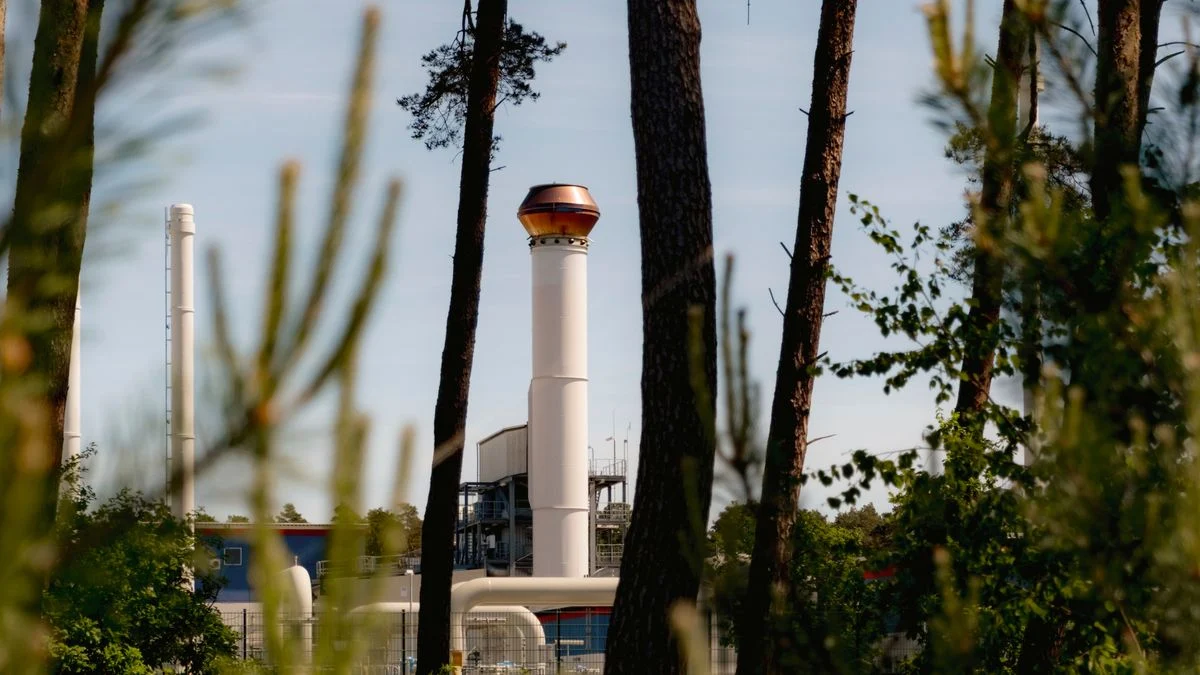
In a move that signals both a strategic pivot in energy diplomacy and a concrete commitment to Ukraine’s infrastructure resilience, the German government has initiated the transfer of a significant power plant facility from Lubmin, near Greifswald, to the war-torn energy grid of Ukraine. This decision, shrouded in logistical complexity and geopolitical weight, underscores the deepening cooperation between Berlin and Kyiv as the latter faces continued Russian strikes on its power infrastructure.
Main Facts: The Anatomy of a Strategic Gift
The facility in question is not merely a collection of machinery; it is a critical piece of energy infrastructure that has been repurposed to serve the humanitarian and operational needs of a nation under siege. The plant, located on the Baltic coast, possesses the technical specifications required to integrate into Ukraine’s decentralized energy grid—a necessary adaptation for a country whose central power plants have become primary targets for Russian cruise missiles and drones.
The transfer process involves the dismantling, shipping, and reassembling of high-capacity power generation components. For Germany, this represents a shift from supplying military hardware to supplying the "lifeblood" of civil society: electricity. The move is designed to mitigate the blackout risks that plague Ukrainian cities, particularly as the winter months approach, threatening to freeze out civilian populations and paralyze essential services.
Chronology: From Baltic Hub to Kyiv’s Rescue
The path to this transfer was not instantaneous. It began with the realization that the existing infrastructure in Lubmin—a site historically significant for its role in energy transit—held underutilized capacity that could be modernized and exported.
- Early 2023: Initial assessments of Ukraine’s energy grid destruction revealed that the primary threat was not just a lack of fuel, but the catastrophic failure of transformers and power blocks.
- Late 2023: Diplomatic channels between Berlin and Kyiv prioritized the "Winter Shield" initiative. Technical teams from Germany’s Federal Ministry for Economic Affairs and Climate Action began auditing domestic assets.
- Spring 2024: The Lubmin site was identified as a viable candidate for donation. Negotiations regarding the legal transfer, insurance, and the specialized transport of heavy equipment commenced.
- Summer 2024: The dismantling process began. Engineers faced the daunting task of prepping the plant for transit without damaging sensitive electronics.
- Current Phase: The equipment is currently in transit or undergoing final staging, with international logistics partners coordinating the secure passage to Ukrainian installation sites.
Supporting Data: The Energy Deficit
To understand the magnitude of this gift, one must look at the data surrounding Ukraine’s current energy crisis. According to reports from the International Energy Agency (IEA) and local Ukrainian authorities, Russia has systematically destroyed over 50% of Ukraine’s power generation capacity since February 2022.
- Generation Gap: Ukraine requires an estimated 15 to 20 gigawatts (GW) of capacity to maintain pre-war stability. Current estimates suggest a shortfall of nearly 9 GW during peak winter hours.
- The Cost of Replacement: The cost of the Lubmin facility, in terms of market value and logistics, is estimated in the tens of millions of euros. However, its value to the Ukrainian state is incalculable, as it provides a stable baseload power supply that prevents total grid collapse.
- The "Decentralization" Factor: The Lubmin plant is designed to be modular. In the context of Russian "targeting-by-GPS," large, centralized plants are easy marks. By breaking down and dispersing the Lubmin technology, Ukraine can create a more resilient, localized network that is harder to disable in a single strike.
Official Responses and Diplomatic Context
The German government, led by the Ministry for Economic Affairs, has framed the donation as a moral and strategic imperative. "Energy security is national security," stated a government spokesperson during a recent press briefing. "By helping Ukraine keep the lights on, we are directly contributing to the survival of the Ukrainian state and its people."
However, the decision has not been without its critics. Within the Bundestag, some opposition members have questioned the domestic impact of exporting power generation assets, citing potential shortages or price hikes for German consumers. The government’s rebuttal has been clear: the Lubmin facility was determined to be surplus to Germany’s current energy needs, and the cost of the donation is offset by the long-term stabilization of a key European ally.
On the Ukrainian side, the Ministry of Energy has expressed profound gratitude. President Volodymyr Zelenskyy’s administration has consistently highlighted that every transformer, every generator, and every power plant component received from Western allies is essentially a defensive weapon against the "energy terror" employed by Moscow.
Implications: A New Model of Support
The transfer of the Lubmin power plant sets a precedent for how Western nations might support Ukraine in the coming years. This is no longer just about sending tanks or air defense systems; it is about "rebuilding while fighting."
1. The Precedent of Industrial Aid
This donation signals that the "reconstruction" of Ukraine is not a post-war goal, but an active, ongoing effort. By transferring industrial assets, Germany is demonstrating that it can contribute to the sustainability of the Ukrainian economy even while the conflict remains hot.
2. Geopolitical Signaling to Russia
The Kremlin has frequently utilized energy as a weapon, specifically through the weaponization of gas flows and the targeting of civil energy infrastructure. By gifting this power plant, Germany is sending a message: Europe is committed to neutralizing Russia’s energy-based warfare. It demonstrates that for every megawatt of power Russia destroys, Europe will work to provide a replacement.
3. Logistical Challenges as a Benchmark
The successful relocation of this plant will serve as a test case for future international efforts. The logistical hurdles—securing the transport route, ensuring the equipment is compatible with the Soviet-era grid standards of Ukraine, and training local technicians—provide a roadmap for future infrastructure assistance. If this project succeeds, it will likely pave the way for similar "industrial-scale" donations from other European nations.
Conclusion: The Long Road to Resilience
The donation of the Lubmin power plant is a testament to the evolving nature of the war in Ukraine. It reflects a realization that the resilience of a nation’s energy grid is just as vital to its survival as its front-line defenses. As the equipment makes its way across the border, it carries with it the hopes of thousands of Ukrainian households that will remain powered through the coming winter.
For Germany, the decision underscores a difficult but necessary commitment to a foreign policy that prioritizes long-term European stability over short-term domestic comfort. As the project reaches its conclusion, it stands as a symbol of solidarity—a tangible, heavy, and essential piece of evidence that Europe’s support for Ukraine is expanding into the very foundations of the state. The lights that stay on in Kyiv because of this facility will be, in a very real sense, a flicker of German support in the dark.