By Clara Nack
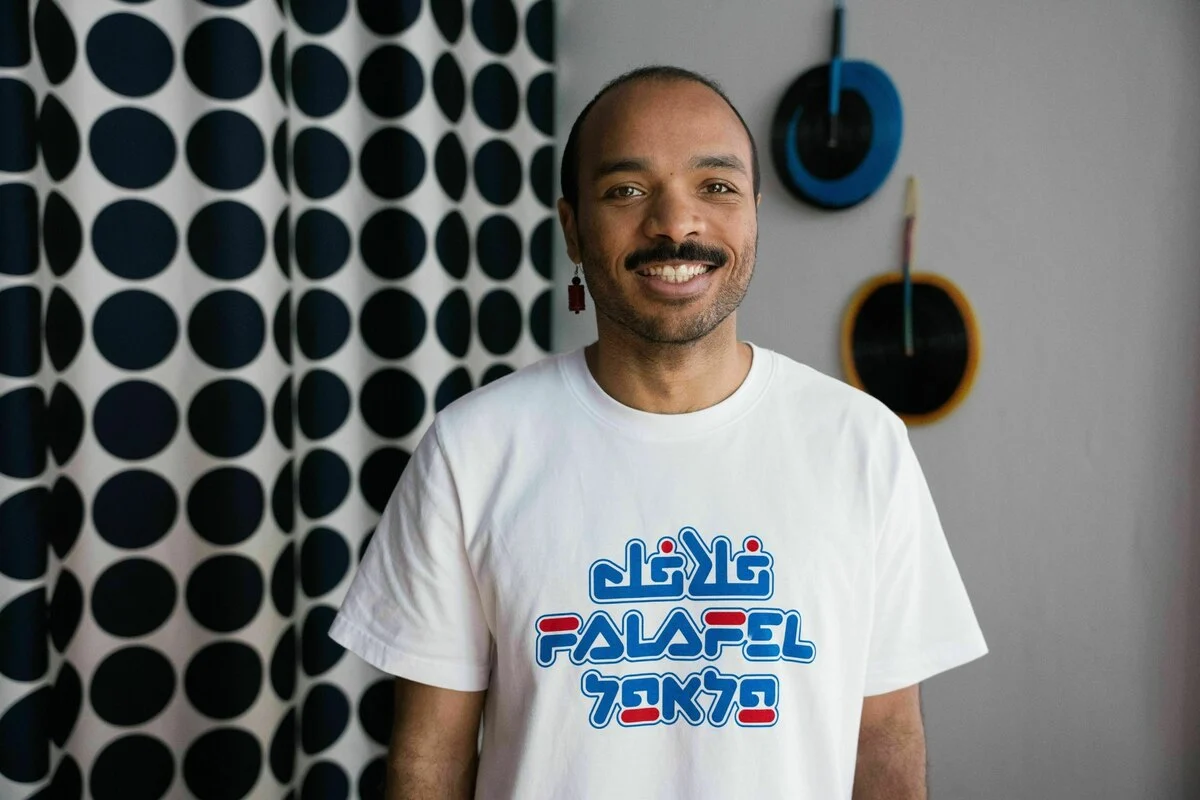
The cabin of the flight from Berlin to Tel Aviv was uncharacteristically quiet, yet the air was thick with tension. Among the passengers was Nathan Dawidowicz, a 35-year-old non-binary activist who has called Berlin home for the last decade. Nathan, who uses the pronouns "they/them," was not returning for a holiday. Like thousands of other Israelis currently streaming back to their homeland, Nathan was returning for a singular, urgent purpose: to cast a vote in an election that many believe will determine the very soul of the nation.
For Nathan, the journey is personal, political, and deeply painful. It marks a return to a country they haven’t voted in for 17 years, and a reconciliation with a mother they haven’t seen in seven. In the landscape of Israeli politics, Nathan represents a distinct, often marginalized voice—a progressive, queer, and secular individual navigating a family legacy defined by the ultra-orthodox Chabad movement.
The Anatomy of a Fractured Nation
The current political climate in Israel is not merely a debate over policy; it is a visceral battle over identity. As Nathan describes it, the division is no longer the traditional left-versus-right spectrum that defined the 20th century. "It isn’t about traditional party lines anymore," Nathan explains. "It is about being for or against the current government. It is a choice between two versions of Israel."
This sentiment is echoed across the diaspora. Airlines report that flights from major European and North American hubs have been packed with citizens rushing to exercise their democratic right. For many, the catalyst was the traumatic events of October 7, 2023, which served as a grim punctuation mark on years of deepening political instability.
The division is not just found in the halls of the Knesset; it is found at the dinner table. Nathan’s own mother, a deeply devout woman, holds political views that Nathan finds fundamentally irreconcilable with their own existence. "My mother is Ashkenazi, and I am Black," Nathan says. "The people she supports in government actively fuel racism against people of my skin color. It is a contradiction I have had to learn to live with just to keep the bridge of our relationship intact."
A Chronology of Polarization
To understand the current urgency, one must look at the recent trajectory of Israeli governance.
- 2019–2022: The country was trapped in a cycle of instability, forcing four national elections in three years. This period eroded public trust and exhausted the electorate.
- October 2023: The brutal attacks on Israeli soil shattered the remaining sense of security, further radicalizing the rhetoric of the right-wing coalition and pushing the opposition into a defensive, fragmented state.
- 2024–2025: The rise of AI-generated misinformation and the normalization of inflammatory language in public squares have made the current election cycle arguably the most aggressive in the nation’s history.
Nathan recalls walking through the streets of Jerusalem this week, stunned by the sheer hostility of the campaign posters. On one city bus, a slogan featured a biblical verse—"If someone comes to kill you, kill him first"—used as a political rallying cry. "This level of aggression in the public space," Nathan notes, "is something I never saw growing up here. It has moved from the extremist fringes into the mainstream."

The Search for a Political Alternative
Nathan has declared their intent to vote for the Democratic Party led by Yair Golan. For many, this party represents a fragile hope—a coalition that attempts to bridge the gaps between secular and religious, Jewish and Arab citizens.
"The party is far from perfect," Nathan admits, "but I have watched them for years. They are the only ones talking about long-term solutions and, crucially, they are open to working with Arab parties to form a government. That is the only way we can survive as a democratic state."
The implications of this election are profound. If the current coalition remains in power, observers—including Nathan—fear a permanent shift toward an authoritarian, religiously-aligned state. If the opposition wins, the road ahead remains steep: the country faces the challenge of healing deep societal wounds, addressing the violence of radical settlers in the West Bank, and navigating an increasingly hostile international environment.
Implications: Security vs. Identity
The decision to return to Israel for the vote was not just a political act; it was a philosophical one. Nathan has spent the last year grappling with their own safety as a Jewish person in Europe. Following a series of antisemitic incidents in Berlin, Nathan began to view Israel not just as a homeland, but as a potential—if deeply flawed—refuge.

"I found myself asking," Nathan reflects, "what is worse? The physical danger of military escalation in the Middle East, or the psychological toll of rising antisemitism in Europe? I realized that if Israel is to be a sanctuary, it must be a democratic one."
The dilemma for the modern Israeli is twofold: they must decide how to handle the existential threat of external conflict while simultaneously fighting the internal decay of their democratic institutions. The "Siedlerterror"—the violence perpetrated by extremist settlers in the West Bank—has become a flashpoint. For Nathan, a government that fails to curb this violence is a government that has abandoned the moral framework necessary for long-term peace.
The Human Cost of Ideology
"Love is stronger than ideology," Nathan says, a mantra that seems to be the only thing keeping their family bond alive. But as they navigate the streets of Jerusalem, observing the tourists from Italy, the monks in the Old City, and the frantic energy of a nation on the brink, the abstraction of "politics" melts away.
"I had forgotten what it was like to see these people as human beings with real stories," Nathan says. "In Europe, we talk about Israel as a concept. Here, you are forced to confront the reality of the people, the trauma they carry, and the fear that drives them toward such extreme positions."

Looking Toward the Horizon
The upcoming election is widely expected to be another stalemate. The possibility of a fifth, or even sixth, election in the coming years hangs over the voters like a dark cloud. "If the people are forced to vote again and again, it will eventually break them," Nathan warns.
Yet, despite the grim outlook, there is a flicker of optimism in the return of the diaspora. By flying in to cast their ballots, these citizens are signaling that they refuse to be sidelined. They are demanding a seat at the table in deciding the future of the nation.
For Nathan, the goal is simple: unity. "The more united we are, the easier it becomes to pursue peace. It sounds idealistic, perhaps even naive given the current climate, but it is the only path forward. A society that separates itself into silos of religious and secular, or Jew and Arab, is a society that has already lost its heart."
As the election day approaches, the eyes of the world remain fixed on Israel. Whether the result brings a shift in policy or merely another cycle of gridlock, the message from the airport arrivals hall is clear: the diaspora is watching, the diaspora is invested, and for many, the future of the state is worth the price of a flight home.