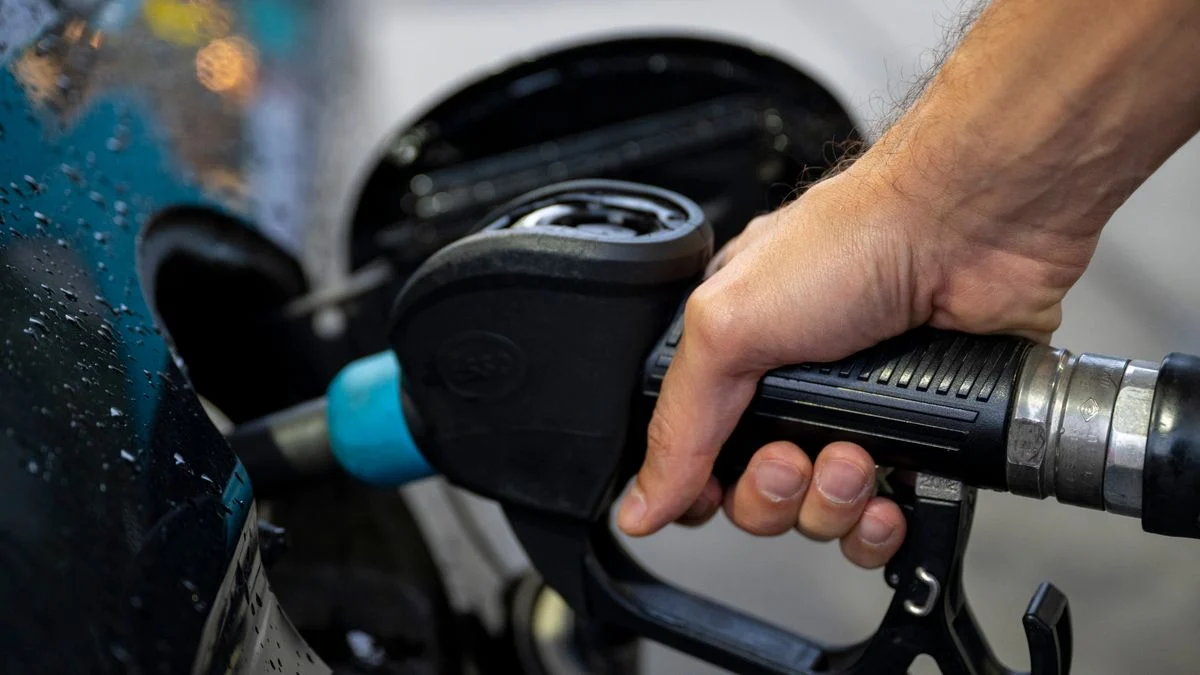
Barely days after the German government implemented its ambitious “tank rebate” (Tankrabatt) designed to shield citizens from the biting costs of inflation, the policy is already under fire. What was intended to be a significant, immediate relief measure for millions of commuters has quickly transformed into a source of public frustration and political controversy. As prices at the pump creep back toward record highs, questions are mounting: Is the tax cut reaching the consumer, or is it being absorbed by the energy industry?
The Current State of Play: Facts and Figures
The intent behind the fuel discount was clear: reduce the energy tax on petrol and diesel to lower prices at the pump by approximately 16.7 cents per liter for petrol and 8.2 cents for diesel. However, market reality has proven far more stubborn than legislative intent.
According to the latest data released by the ADAC, Germany’s largest automobile club, the fleeting joy of lower prices has been short-lived. On Sunday, the nationwide average price for a liter of Super E10 reached 2.137 euros. This marks a notable increase of 2.3 cents compared to the levels observed just last Thursday. Diesel, the lifeblood of the logistics sector, saw a similar upward trend, rising by 0.9 cents to an average of 2.253 euros per liter.
These figures are more than just statistical fluctuations; they represent a tangible erosion of the government’s relief efforts. For the average commuter, the dream of seeing prices comfortably below the two-euro mark—a reality briefly glimpsed immediately following the tax cut’s implementation—is rapidly fading. Finding such prices today is becoming an increasingly rare occurrence, leading to growing skepticism about the efficacy of the government’s fiscal intervention.
A Chronology of the Fuel Crisis
The trajectory of the fuel discount has been marked by high expectations followed by a swift reality check.
Phase 1: The Build-Up. As global energy markets tightened due to the ongoing geopolitical instability following Russia’s invasion of Ukraine, the German government faced mounting pressure to act. The coalition government decided on a temporary reduction of the energy tax to the European minimum, a move widely publicized as a "breathing space" for households.
Phase 2: The Implementation. Upon the official commencement of the tax cut, there was an initial dip in prices. For a few days, consumers across Germany experienced the intended relief. Many gas stations dropped their prices, and for a brief window, the average cost of E10 plummeted below the psychologically significant two-euro threshold.
Phase 3: The Rebound. Almost as quickly as the prices dropped, they began to climb again. By the weekend, the gains achieved by the tax cut were being swallowed by market dynamics. The ADAC’s report confirmed that the trend was no longer downward, but consistently upward, effectively negating the benefits of the government’s multi-billion-euro investment in consumer relief.
Supporting Data and Economic Anomalies
The ADAC has been particularly vocal in its critique, highlighting a glaring discrepancy between market fundamentals and retail prices.
According to the automobile club’s analysts, the price hikes at the pump cannot be explained by external market forces. The global price of crude oil has remained relatively stable in recent days, and the Euro-to-Dollar exchange rate—a critical factor in fuel imports—has shown no significant volatility that would justify such a sharp increase at the retail level.
"The development is difficult for consumers to understand," the ADAC stated in a recent press briefing. "The oil price and the Euro-Dollar exchange rate have hardly changed, yet a significant portion of the initial relief from the tax cut has already been consumed."
This divergence suggests that internal market factors—potentially including pricing strategies by fuel suppliers—are playing a greater role than the global commodities market. When external factors remain static while retail prices rise, the public and consumer protection agencies are naturally inclined to look toward the profit margins of the energy corporations.
Official Responses and Industry Defenses
The tension between the government, the consumer, and the energy industry has created a complex web of blame.
The industry association En2x, which represents the major oil companies and fuel suppliers in Germany, has mounted a robust defense. Their position is that the tax cut has been passed on in full, as mandated by law. They argue that the volatility is not a result of profit-taking, but rather a reflection of the “replacement costs” and the current state of the global wholesale market.
"Our member companies have passed on the rebate in its entirety," a spokesperson for En2x asserted. The association points to the global wholesale market, where the cost of procuring refined products has risen, thereby exerting upward pressure on retail prices regardless of the tax reduction. According to the industry, the tax cut is essentially acting as a buffer against even higher prices that would have occurred without the government’s intervention.
However, this defense has not mollified political critics or the public. The Federal Cartel Office (Bundeskartellamt) is now under renewed pressure to investigate whether oil companies are using the volatile market environment to keep retail prices artificially high, thereby capturing the value of the tax cut as increased profit margins.
The Broader Implications
The failure—or at least the perceived failure—of the fuel discount carries significant implications for German economic policy and social stability.
1. The Erosion of Public Trust
When a government spends billions of euros in taxpayer money to provide relief, and that relief disappears within days, the damage to public trust is profound. It fuels the narrative that the government is either incompetent in its regulatory oversight or subservient to the interests of powerful energy conglomerates.
2. The Inflationary Spiral
While the fuel discount was intended to curb inflation, its failure means that transport costs remain high. Since fuel is a primary cost factor for goods, the lack of a stable, lower price point for diesel means that food and consumer goods prices will likely continue to rise, further squeezing the purchasing power of lower- and middle-income households.
3. The Limits of Fiscal Policy
This episode serves as a cautionary tale for policymakers regarding the limits of fiscal intervention in a globalized, opaque market. Without strict price controls—which are generally eschewed in a free-market economy—governments are at the mercy of market actors who may prioritize their own margins over the intended social impact of a subsidy.
4. Future Energy Strategy
The ongoing crisis is accelerating the debate over Germany’s energy future. If short-term tax rebates are ineffective at insulating the public from market volatility, the pressure will mount to shift focus toward long-term structural changes, including a faster transition to renewable energy sources and a reduction in the country’s dependence on fossil fuel imports.
Conclusion: A Policy at a Crossroads
As the German government monitors the situation, it faces a difficult decision. It can continue to defend the current policy, hoping that market competition will eventually stabilize prices at a lower level. Alternatively, it may need to intervene more aggressively through the Federal Cartel Office to ensure that the relief is not being diverted by market participants.
For the German motorist, however, the current reality remains unchanged: the pump is no longer a place of relief, but a source of persistent economic anxiety. Until a more stable, transparent pricing mechanism is established, the "tank rebate" will likely be remembered not as a successful rescue package, but as a missed opportunity in the fight against the cost-of-living crisis. The coming weeks will be decisive in determining whether the government can regain control of the narrative—and more importantly, deliver the relief that the German people were promised.