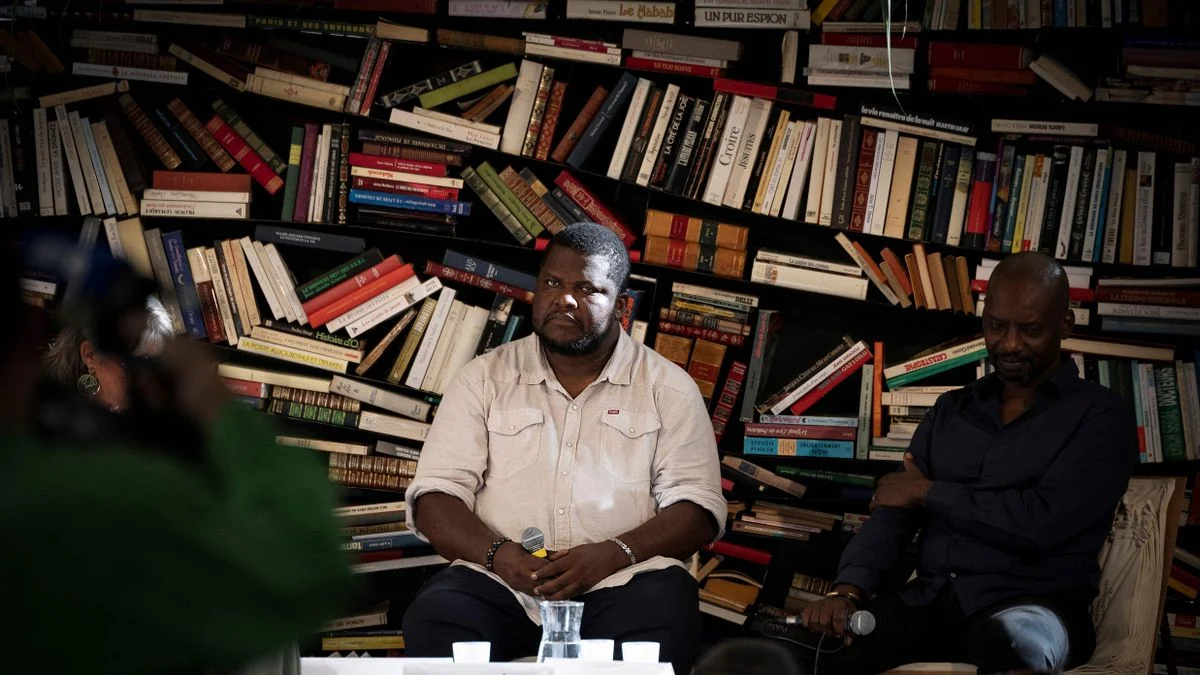
The literary world is currently grappling with a scandal that strikes at the heart of creative authenticity. Thélyson Orélien, a promising Canadian-Haitian author whose star had been rising rapidly, finds his career in a state of sudden, ignominious collapse. His acclaimed novel, C’était ça ou mourir, once celebrated as a poignant exploration of the human experience, has become the centerpiece of a firestorm regarding the surreptitious use of generative artificial intelligence in professional writing.
For weeks, Orélien maintained a posture of staunch denial, dismissing allegations that his prose was the product of algorithms rather than his own intellect. However, that defense has now crumbled under the weight of empirical evidence. His publisher, the esteemed Canadian house Les Éditions du Boréal, has officially confirmed that artificial intelligence played a significant role in the drafting of the novel, leading to an immediate and permanent severance of their professional relationship with the author.
This incident is more than a personal fall from grace; it serves as a watershed moment for the publishing industry, triggering urgent debates about intellectual property, the definition of authorship, and the ethics of technological intervention in the arts.
The Chronology of a Literary Deception
The controversy surrounding C’était ça ou mourir did not erupt overnight. It began with whispers within the literary community, followed by technical audits that eventually grew too loud for the author or his publisher to ignore.
- The Initial Success: Upon its release, C’était ça ou mourir was met with critical acclaim. Orélien was heralded as a powerful new voice in Francophone literature, and the book quickly gained traction, securing a spot on the longlist for the prestigious Prix Goncourt—the highest honor in French-language literature.
- The First Doubts: As the book gained notoriety, astute readers and literary critics began to note stylistic inconsistencies and patterns often associated with Large Language Models (LLMs). The allegations eventually reached the Académie Goncourt.
- The Audit: Faced with growing pressure, Les Éditions du Boréal took the unprecedented step of gathering all existing drafts of the manuscript. They engaged an independent, external party to conduct a forensic linguistic analysis of the various iterations.
- The Confrontation: The publisher attempted to work with Orélien, providing him with an opportunity to verify his creative process and substantiate his authorship. According to the publisher, these attempts proved fruitless. Orélien eventually ceased communication, declaring he would provide no further information.
- The Final Verdict: Following the analysis, which uncovered clear "traces of AI," Les Éditions du Boréal issued a formal statement confirming the breach of trust. Simultaneously, the Académie Goncourt removed the novel from contention, stating that experts had concluded the book was "in all likelihood, largely the product of an AI."
Forensic Evidence and the "Black Box" Problem
The core of the issue lies in the difficulty of proving authorship in the age of generative AI. While the publisher confirmed the presence of AI, they noted that the exact extent of its use remains unclear. This ambiguity highlights a significant technological hurdle: the "Black Box" problem. When an author uses an LLM to generate, rewrite, or expand upon ideas, the line between "assistance" and "authorship" becomes dangerously blurred.
For the forensic analysts involved in the Orélien case, the detection process likely involved examining "perplexity" and "burstiness"—metrics that distinguish the rhythmic, often repetitive, and statistically predictable patterns of AI from the idiosyncratic, emotionally erratic cadence of human writing. The fact that the publisher’s independent analysis was conclusive enough to end a contract suggests that the AI intervention was not merely for editing, but for structural and narrative generation.
Official Responses and the Publisher’s Dilemma
The response from Les Éditions du Boréal has been one of decisive damage control. By publicly confirming the use of AI, the publisher has sought to preserve its own reputation for integrity, signaling to its audience and other authors that it maintains a zero-tolerance policy regarding undisclosed AI usage.
"New information, confirmed over the past few days, shows that artificial intelligence was used in the writing process," the publisher stated. By cutting ties with Orélien, Boréal is not just punishing a specific author; they are establishing a precedent for the industry. Publishers are now facing a reality where they must implement rigorous verification protocols for manuscript submissions, a move that could significantly increase administrative costs and slow down the publishing pipeline.
The Académie Goncourt’s reaction was equally swift. By removing the book from their longlist, they effectively stripped it of its cultural legitimacy. Their statement serves as a warning to the literary establishment: the gatekeepers of prestige are not prepared to recognize AI-generated content as "literature" in the traditional sense, regardless of its quality or readability.
The Emergence of the "AI-Literature" Category
While the traditional publishing world is moving to banish AI, a new movement is emerging from the tech sector that seeks to embrace it. Almost as a counter-reaction to the Orélien scandal, three French tech entrepreneurs—Philippe Rodriguez, Albin Serviant, and Gilles Mentrè—have announced the launch of the first French literary prize specifically for books written with the assistance of artificial intelligence.
This development poses a provocative question: If the value of literature is defined by the quality of the narrative and the engagement of the reader, does it matter if the author is carbon-based or silicon-based?
The founders of the new prize argue for a democratic, barrier-free approach to literature. "The prize is open to anyone writing in French, anywhere in the Francophone world, without requirements regarding nationality or residence, and without a publisher," they stated. This initiative represents a philosophical shift: it reframes the author as an "architect" of prompts rather than a "writer" of sentences.
Implications for the Future of Authorship
The Thélyson Orélien affair is symptomatic of a broader shift in human creativity. We are currently navigating the "Post-Truth" era of the arts, where the provenance of a creative work is as important as the work itself.
1. The Death of the "Pure" Author?
If AI can produce prose that is indistinguishable from that of a human, the value of the "author persona" increases. Readers seek a connection with the human experience—the trauma, the joy, and the specific historical context of the writer. When that connection is revealed to be synthetic, the reader feels betrayed. The future of publishing may see a "human-verified" certification, similar to "organic" or "fair trade" labels in the food industry.
2. Legal and Ethical Frameworks
The Orélien case will undoubtedly be cited in future legal disputes regarding copyright. If an author uses AI to generate 70% of a book, who owns the copyright? Is it the author, the company that created the AI, or the public domain? Currently, legislation is struggling to keep pace with technological advancement, leaving publishers and authors in a precarious gray zone.
3. The Democratization vs. Devaluation of Writing
The emergence of a prize for AI-written books signals a potential split in the literary world. On one side, a "human-only" bastion that values the slow, laborious, and fallible process of traditional writing. On the other, a high-velocity, tech-enabled creative space that values speed, efficiency, and the iterative power of machines.
Ultimately, the scandal of C’était ça ou mourir is a cautionary tale. Thélyson Orélien’s downfall was not necessarily caused by his use of AI, but by his denial of it. In an age where digital footprints are permanent and forensic analysis is becoming more sophisticated, the attempt to pass off synthetic intelligence as human soul was a gambit doomed to fail. As we move forward, the literary world must decide whether it will treat AI as an unwelcome intruder, or as a new, albeit controversial, instrument in the writer’s toolbox. For now, the verdict is clear: in the world of high-stakes literature, transparency is the only currency that holds its value.