


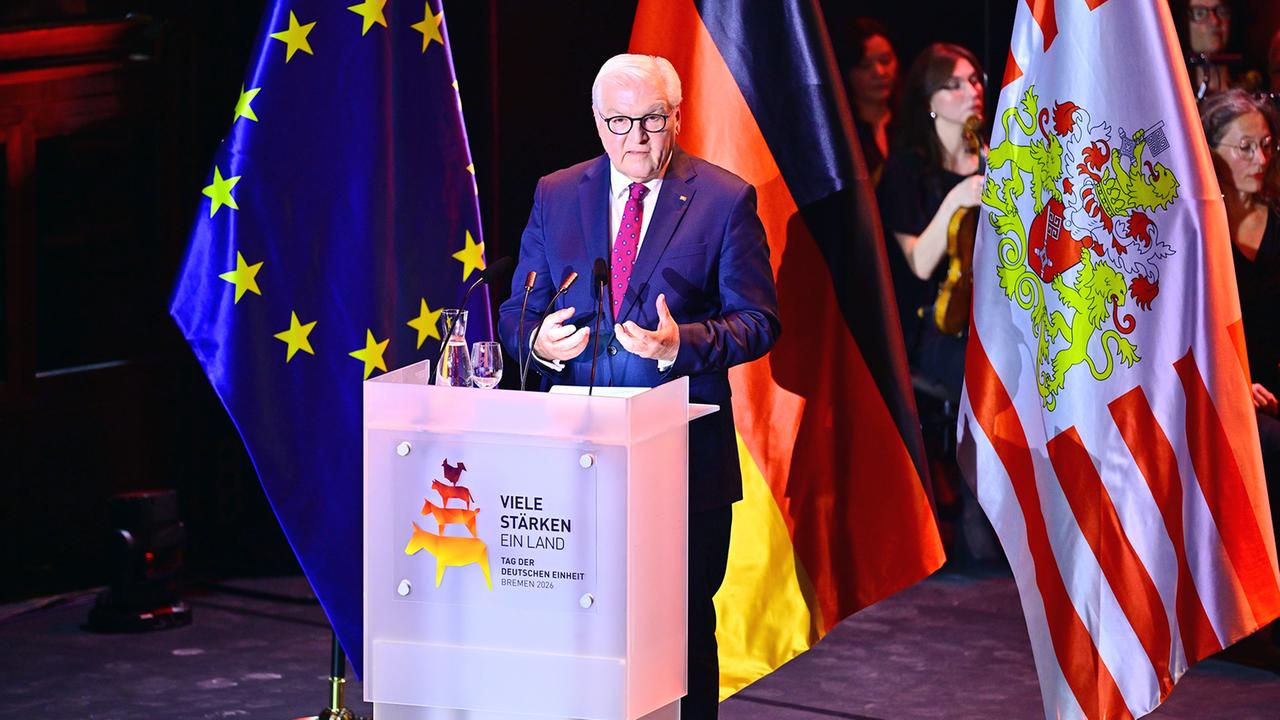
Berlin, October 3, 2026 – In what served as his final address at a central ceremony for the Day of German Unity, Federal President Frank-Walter Steinmeier delivered a sobering and impassioned warning about the future of the nation. Standing before political leaders and citizens, the outgoing head of state articulated a vision of a republic at a crossroads, urging a collective "self-assertion of democracy" in the face of rising internal polarization and the erosion of civic discourse.
As Steinmeier prepares to vacate the Bellevue Palace in March 2027, his speech acted as both a swan song and a cautionary roadmap for his successor. The address, delivered against the backdrop of a Germany grappling with economic stagnation, geopolitical shifts, and the resurgence of extremist rhetoric, underscored the fragility of the peace and stability achieved since the reunification of 1990.
The Core Warning: A Democracy Under Siege
The central theme of President Steinmeier’s address was the alarming rise of political demagoguery. He pulled no punches, describing a toxic political environment where extremist forces operate with a "lust for destruction."
"The intolerable political demagoguery of extremist forces, who live out a lust for destruction and mock and threaten other people, threatens today not only freedom and democracy. It threatens our unity," Steinmeier declared.
The President highlighted that for many Germans, the euphoria of the post-Wall era has faded, replaced by a profound disillusionment with the democratic process. He noted that nearly a quarter of the electorate now expresses open hostility toward the foundational values of the Federal Republic, a trend he characterized as an existential challenge to the nation’s social contract.
A Chronology of Discontent: From 1990 to 2026
To understand the current climate, it is necessary to trace the arc of the last thirty-six years.
- 1990: The formal unification of Germany, a triumph of the peaceful revolution against the SED dictatorship. It was a moment of unprecedented national optimism.
- 1990s–2000s: A period of massive, historically unparalleled investment in the former East. While infrastructure was modernized, structural economic disparities persisted, creating a fertile ground for feelings of neglect.
- 2015–2020: The rise of populist movements began to challenge the traditional consensus, accelerated by debates surrounding migration and social security.
- 2024–2026: A period defined by "shrill emotionalization," driven by social media algorithms and the proliferation of AI-generated misinformation. The line between truth and falsehood has blurred, as has the distinction between political debate and outright incitement.
Steinmeier reflected on this trajectory with a sense of personal admission. "I held our democracy to be secure," he confessed, "and I must learn that it is, in any case, being contested anew."
The Anatomy of the Crisis: Polarization and Disillusionment
The President’s address identified several key drivers of this domestic fragmentation:
1. The Erosion of Discourse
Steinmeier criticized the abandonment of "streitkultur"—a healthy culture of debate. He insisted that there can be no bridge "between the rule of law and contempt for the law, between the effort for truth and the readiness for lies." His specific condemnation of anti-Jewish sentiment, noting that Jews in Germany again fear for their safety, served as a stark reminder of the historical demons that continue to haunt the nation.
2. The Digital Threat
The President identified social media as a primary engine of instability. He warned against the "absurd idiocies" that dominate digital discourse, noting that it is often impossible to distinguish whether an argument is being made by a human or a machine. This confusion, he argued, undermines the common ground required for a functioning democratic society.
3. Structural Failures and Self-Criticism
In a rare moment of institutional humility, Steinmeier called upon political leaders to engage in "self-criticism and thoughtfulness." He explicitly asked whether the federal and state governments had failed in their duties over the last three and a half decades. He specifically questioned if enough had been done to prevent structural unemployment in certain regions and if the integration of East Germans into high-level positions of influence had been insufficient, leading to a sense of alienation.
Implications for Governance: The Path Toward Reform
Steinmeier did not merely diagnose the illness; he prescribed a difficult, if necessary, medicine. He argued that Germany is currently navigating a "truly profound crisis" and that the status quo is no longer a viable option for survival.
The Necessity of Reform
"We cannot gain new growth if everything remains as it is," the President stated. He called for a fundamental departure from "ingrained routines," challenging the government to show the courage to innovate even when faced with significant political risk. For the administration in Berlin, this is a clear signal that the era of "muddling through" must come to an end.
A Challenge to the Successor
As he nears the end of his second term, Steinmeier offered a preview of the challenges awaiting the next President. He characterized the office as one that cannot be "taken lightly." The coming years, he warned, will be significantly more taxing than the preceding decades. The next head of state will need to be not just a ceremonial figure, but an active architect of social cohesion.
The Call to Action: "Have the Courage for Renewal"
The emotional climax of the speech was a direct appeal to the citizenry and the political establishment. Despite the "wind blowing in our faces," as the President put it, he urged for determination.
"Reform is always a risk—but we take it for the sake of hope, to take our fate into our own hands," he said. His message was one of cautious optimism: that through a "thorough renewal," Germany could emerge more secure, stronger, and more capable of solidarity.
Key Takeaways for the Future
- Defense of Democratic Norms: The protection of the democratic framework is no longer a passive exercise; it requires active, daily defense.
- Economic Realignment: The government must prioritize growth-oriented policies that address the specific grievances of the eastern states to bridge the divide of identity.
- Communication Integrity: There is a crying need for a return to fact-based, human-centered political discourse to counter the polarizing effects of social media.
Conclusion: A Legacy Defined by Reality
Frank-Walter Steinmeier’s final Unity Day speech will likely be remembered as the moment a modern German leader acknowledged the limits of his own era. By admitting that he once believed the democratic project was finished and realizing that it is, in fact, an ongoing battle, he has set the tone for the next political cycle.
As Germany looks toward the post-Steinmeier era, the message from the podium was clear: the unity of the nation is not a historical artifact to be celebrated in museums, but a daily responsibility that requires the constant, sometimes uncomfortable, work of renewal. Whether the political class can rise to this challenge—or whether the divisions he highlighted will continue to widen—will be the defining question of the next decade of German politics.







