BUENOS AIRES – The clock is ticking toward a moment that millions of football fans across the globe have dreaded for two decades. In the early hours of Wednesday, October 7, 2026, the heartbeat of Argentine football will make his final appearance for the Albiceleste. Lionel Messi, the man whose left foot transformed the sport into an art form, will lace up his boots for the 208th and final time to face Benin in a farewell match that promises to be as emotional as it is historic.
After 21 years of service, a World Cup title, and a transformative impact on the global game, the man simply known as "La Pulga" (The Flea) is saying "adiós."
The End of an Era: A Nation Prepares for the Final Dance
The atmosphere in Buenos Aires is one of heavy, reverent anticipation. Newspapers are already dedicating their entire front pages to the "last football god to wear the number 10." La Nacion described the upcoming match as a "day that will remain in the collective memory of a people forever," while Clarin heralded the end of the greatest chapter in Argentine sports history.
National team manager Lionel Scaloni, who has overseen the most successful period of Messi’s international tenure, struggled to hide his emotions during the pre-match press conference. "This will be an unforgettable day for everyone," Scaloni noted. "Everyone wants to be part of this match, and now it is simply about enjoying it. We are trying to process the gap he will leave behind, but we are also grateful for every second we shared."
For Messi, the decision was far from easy. Following a heartbreaking loss in the 2026 World Cup final to a resilient Spanish side, the 39-year-old icon confirmed that his international retirement was a "painful decision" that still weighs heavily on him.
A Legacy Written in Gold: The Chronology of a Legend
To understand the magnitude of this departure, one must look back at the arduous and glittering journey of the boy from Rosario who became the world’s greatest player.
The Turbulent Beginning (2005–2009)
Messi’s international career began with a shock. On August 17, 2005, an 18-year-old Messi was introduced against Hungary, only to be sent off within 60 seconds for a controversial foul. It was a baptism by fire, but he would score his first international goal just months later in March 2006.
The 2006 World Cup in Germany served as his global debut, though it ended in disappointment as Argentina fell to Germany on penalties in the quarterfinals—a match where a young Messi remained on the bench, fueling a national debate that would haunt him for years.
The Weight of the Number 10 (2010–2014)
When Diego Maradona took the helm as national coach, he bestowed the legendary number 10 jersey upon Messi. It was a double-edged sword: a badge of honor and a crushing burden of expectation. Messi was expected to replicate Maradona’s "Hand of God" magic, and when the team struggled, the blame inevitably fell on his shoulders. The 2014 World Cup final in Rio de Janeiro, where Mario Götze’s extra-time strike snatched the trophy for Germany, remains one of the most painful wounds of his career.
The Darkest Hour and the Redemption (2016–2022)
The pressure culminated in 2016 when, following consecutive Copa América final losses to Chile, a devastated Messi announced his retirement. It was a fleeting, reactionary departure, but one that signaled how deep the wounds of public expectation ran.
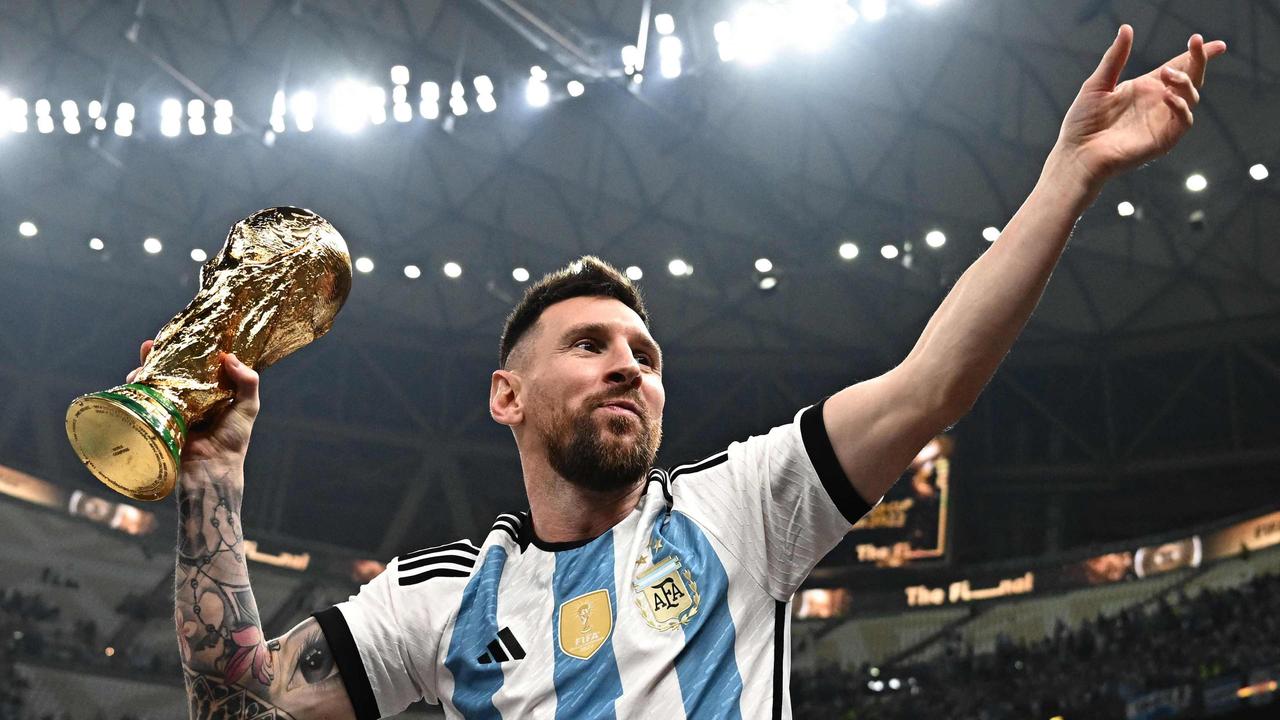
However, the phoenix rose from the ashes. In 2021, Messi finally secured his first major trophy with the senior squad, defeating Brazil at the Maracanã. This set the stage for the pinnacle of his career: the 2022 World Cup in Qatar. Lifting that trophy—the only accolade that had eluded him—cemented his status as the undisputed greatest of all time.
The Twilight Years (2023–2026)
Even in his late 30s, Messi remained the gravitational center of the Argentine team. He led them to another World Cup final in 2026, though the squad fell just short against Spain in New York. While he retires without a second World Cup trophy, he exits the international stage as the undisputed king of Argentine football.
The Barcelona Years and the Global Icon
While his heart belonged to the Albiceleste, Messi’s club career defined a generation of European football. Arriving at FC Barcelona’s La Masia at age 13, he made his professional debut in 2004 at 17. For 21 years, he was the heartbeat of the Blaugrana, winning countless league titles and Champions League trophies.
The forced departure from Barcelona in 2021 due to the club’s financial instability sent shockwaves through the sport. His stint at Paris Saint-Germain was marked by individual brilliance but team-wide frustration. His subsequent move to Inter Miami in Major League Soccer in 2023 marked the beginning of his transition toward the sunset of his playing days, a contract that remains in effect until 2028.
Official Perspectives and Personal Reflections
The global football community has been united in its praise. Pep Guardiola, who guided Messi during his peak years at Barcelona, provided the most poignant tribute: "The game has never produced talent comparable to his. For me, he is the greatest footballer of all time. His retirement from the national team is heartbreaking."
Messi himself penned an emotional farewell letter to the Argentine public, stating: "I love it, I have loved it, and I will always love being part of the national team. I swear to you, I have always given everything—not just in the last few years when we won everything, but before that, too. I fought to give you joy and to make you proud to be Argentine. Thank you, God, for making me an Argentine."
The Implications: Life After Leo
What comes next for the Albiceleste? Coach Scaloni is realistic: "We will try to close the gap as a team, but there is no replacing a player of his caliber. We have to evolve."
For Messi, the transition is clear: he intends to remain a devoted fan. "Now, I will be one of you," he told reporters. He plans to continue his club career in Miami, focusing on his family and enjoying the game without the crushing weight of a nation’s expectations on his shoulders.
His father, Jorge, who passed away recently, was the architect of his career. It is a bittersweet reality that he will not see his son’s final match, but the gold-tinted jersey Messi will wear on Wednesday—a special commemorative design—will carry the spirit of all those who supported him from the dusty pitches of Rosario to the grandest stadiums in the world.
Data at a Glance: The Messi Statistics
- Total International Caps: 208 (as of the final match)
- International Goals: 125
- International Assists: 68
- Major Trophies: 1 World Cup (2022), 2 Copa América titles.
- Career Tenure: 21 years (2005–2026)
As the referee blows the final whistle on Wednesday, it will not just be the end of a match. It will be the end of the "Messi Era." The number 10 will be retired, the tears will flow in the stands, and a footballing nation will collectively exhale, having witnessed the most brilliant, consistent, and magical talent the world has ever seen.
The curtain falls, but the legend of Lionel Messi is etched into the history of humanity, far beyond the confines of the pitch. He came as a boy with a dream and leaves as the man who made the world believe in the impossible.