In a landmark decision that will redefine how humanity measures the passage of time, the General Conference on Weights and Measures (CGPM) has officially moved to abolish the "leap second." For decades, this tiny adjustment has served as the mechanical bridge between the precise, unwavering rhythm of atomic clocks and the slightly erratic, slowing rotation of our planet. The decision marks the end of a tradition that has seen our clocks paused 27 times since 1972 to ensure our digital synchronization does not drift from the astronomical reality of the Earth’s orbit.

This historic shift, while seemingly technical, represents a massive undertaking in global infrastructure. It is a decision that balances the needs of ultra-precise modern technology with the ancient, celestial rhythms that have governed human existence for millennia.
The Mechanics of Time: Why We Needed the Leap Second
To understand the gravity of the CGPM’s decision, one must first understand the two competing standards of time. On one hand, we have International Atomic Time (TAI), which is derived from the hyper-stable vibrations of cesium atoms. It is the gold standard for global telecommunications, navigation systems like GPS, and high-frequency financial trading. It is, for all intents and purposes, perfectly constant.
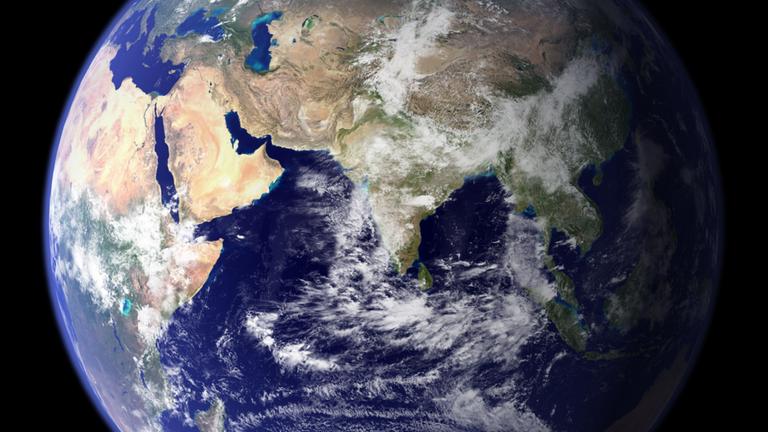
On the other hand, we have Universal Time (UT1), which is based on the Earth’s rotation. The problem, as physicists and astronomers have noted for years, is that the Earth is a terrible clock. Its rotation is subject to the gravitational tugs of the Moon and Sun, internal fluid dynamics in the Earth’s core, and even the melting of polar ice caps, which shifts the planet’s mass distribution and alters its spin.
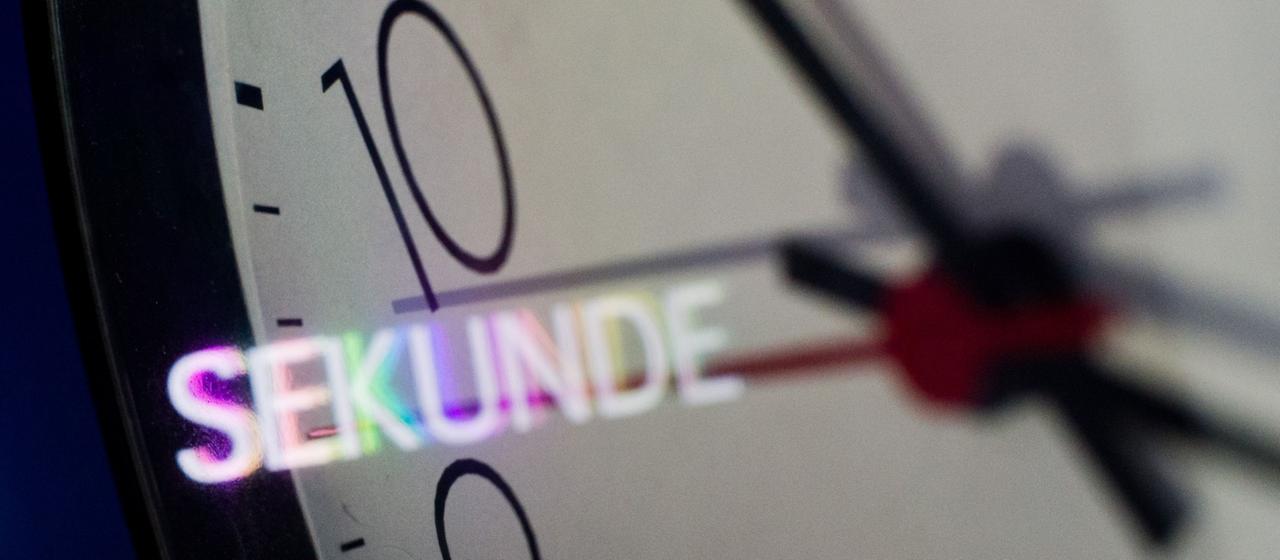
For 52 years, the leap second acted as a "buffer." Whenever the gap between atomic time and Earth-rotation time grew too large—usually by a fraction of a second—the International Earth Rotation and Reference Systems Service (IERS) would trigger an additional second to be added to the end of the day. This kept Coordinated Universal Time (UTC) within 0.9 seconds of the astronomical time.
Chronology of the Decision: A Long Road to Standardization
The debate over the leap second has been raging in scientific circles for over two decades. The primary drivers for change have been the tech giants and infrastructure providers who find the "manual" insertion of a leap second to be a logistical nightmare.
- 1972: The leap second system is officially introduced as part of the UTC standard.
- Early 2000s: With the rise of the internet and global cloud computing, software developers begin reporting "glitches" during leap second events. Because time is supposed to flow linearly in computer systems, the sudden repetition of a second caused crashes in databases and server clusters.
- 2012: A major leap second event causes widespread issues across the web, including outages on sites like Reddit and Mozilla, forcing the tech industry to lobby harder for a permanent solution.
- 2022: The CGPM, the governing body for global measurements, convenes at the Palace of Versailles to finalize the resolution.
- November 2022: The official vote is cast. The international community agrees to abandon the leap second by the year 2035.
Supporting Data: The Costs of a Second
The push for the abolition of the leap second was not driven by aesthetic or philosophical preference, but by cold, hard data regarding global digital stability. In the modern era, the "jitter" caused by a leap second can lead to significant economic loss.
When a leap second is introduced, computers must handle a minute that is 61 seconds long rather than 60. Many operating systems, particularly those governing distributed networks, are not programmed to handle a "double" second. This leads to what engineers call a "time-jump error." During the last major implementation, global financial markets reported minor delays in transaction processing, and cloud services experienced massive spikes in latency as servers struggled to reconcile their internal clocks with the sudden change.

Calculations suggest that the cost of managing leap seconds across global IT infrastructure—including manual overrides, system patches, and downtime—runs into the millions of dollars per event. By 2035, the global economy will have transitioned to a model where we allow the drift to accumulate for centuries, rather than forcing a correction every few years.
Official Responses: Science vs. Tradition
The decision has elicited a complex array of responses from the scientific and political communities.
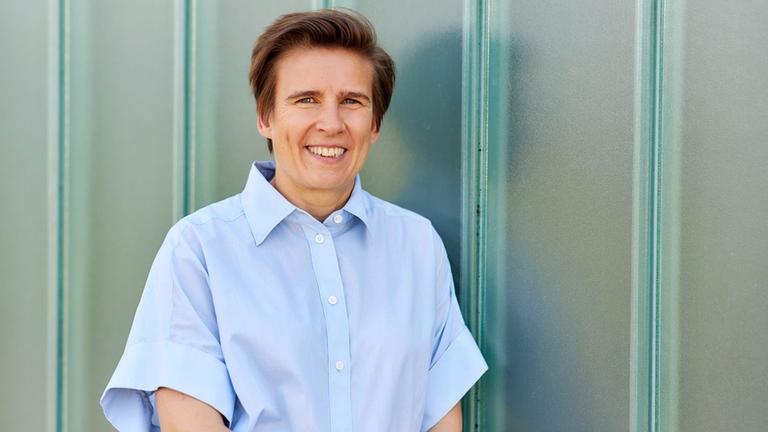
Dr. Patrizia Tavella, a lead researcher at the Bureau International des Poids et Mesures (BIPM), noted that "the decision is a triumph of technical pragmatism over historical convention." For the scientific community, the ability to rely on a continuous, unbroken timeline is essential for future deep-space navigation and high-precision scientific experiments.
However, some astronomers have expressed caution. The transition means that by the year 3000, there could be a noticeable discrepancy between our clocks and the position of the Sun in the sky. While this is negligible for the average person, it does represent a departure from the historical tether between the "noon" on our watches and the "noon" of the solar meridian.

The compromise reached by the CGPM includes a provision that allows for a larger tolerance. Instead of correcting the time when the deviation hits one second, we will allow it to drift for much longer. A new system will likely be implemented in the year 3000, by which time technology will have evolved to allow for a much cleaner, more elegant solution to the drift problem than a simple, manual addition of a second.

Implications for the Future: A New Era of Timekeeping
The abolition of the leap second is a clear indicator that humanity has moved into a "digital-first" era of existence. We are no longer governed by the sun-dial or the mechanical gear; we are governed by the atomic vibration.

Impact on Navigation and Space Exploration
For global positioning systems, this is a massive relief. GPS satellites rely on atomic clocks that are strictly linear. Managing the "leap second" on a satellite orbiting the Earth is an incredibly complex maneuver. By removing the requirement, we ensure that space-based navigation remains more accurate and less prone to systemic errors.

The Financial Sector
Global markets operate at speeds measured in microseconds. The elimination of the leap second removes the "uncertainty window" that used to occur every few years, ensuring that high-frequency trading platforms can operate with absolute, uninterrupted continuity.
The Philosophical Shift
Perhaps the most profound implication is the separation of "Human Time" from "Solar Time." By opting to prioritize the convenience of our machines over the precise alignment with the Earth’s rotation, we are acknowledging that our society is increasingly decoupled from the natural world. We have created a global, synchronized reality that exists entirely within the silicon of our machines.

Conclusion: Looking Toward the Year 3000
The decision to end the era of the leap second is not a surrender to machines, but a necessary evolution of our species’ ability to organize itself. As we look toward the next century, the focus will shift from "correcting" our time to "accounting" for the drift. The year 3000 stands as the next major horizon—a date far enough in the future that we can trust the advancements of science and engineering to solve the problems that currently seem insurmountable.
For now, the world can rest easy knowing that the clock will keep ticking, uninterrupted. We have successfully negotiated a truce between the spinning of our planet and the beating of our atoms, ensuring that the digital foundation of our global civilization remains stable, accurate, and perfectly in sync for generations to come.

The leap second, that strange little artifact of the 20th century, will soon be consigned to the history books, marking the end of a long and fascinating chapter in our quest to master the most fundamental aspect of the universe: time itself.