The iconic landscape of the European music festival scene is undergoing a profound structural metamorphosis. What once began as a grassroots movement—defined by mud-caked boots, makeshift stages, and the raw, unbridled passion of subcultural communities—has increasingly morphed into a high-stakes, multi-billion-euro financial asset. From the legendary metal fields of Wacken in Schleswig-Holstein to the massive electronic beats of Parookaville and the rock anthems of Hurricane, the industry is no longer solely in the hands of music enthusiasts. It is being consolidated by a handful of international corporations and private equity giants, a shift that is fundamentally rewriting the economics of live entertainment.
The Evolution of the Festival Economy
The trajectory of Wacken Open Air serves as the perfect case study for this seismic shift. In 1990, it was an improvised gathering of 800 metal fans. Today, it stands as a global titan of the industry. However, the ownership structure has moved far away from its founders, Thomas Jensen and Holger Hübner. While the duo remains the public face of the event, their personal stake in the operating entity has dwindled to roughly five percent each. In October 2026, they divested further, leaving nearly 90 percent of the festival in the hands of Superstruct, an international festival conglomerate backed by deep-pocketed financial investors.
This is not an isolated incident; it is a systemic trend. A comprehensive analysis by European live music associations Live DMA and Reset! reveals that more than 150 of the EU’s largest music festivals are now orbitally linked to just four major corporate entities: Superstruct, CTS Eventim, Live Nation, and AEG. These organizations operate across a spectrum of ownership models, ranging from full acquisition to strategic minority partnerships and operational management contracts.
Chronology of Consolidation
The professionalization of the festival market did not happen overnight. The transition can be viewed in three distinct phases:
- The Grassroots Era (1990s–early 2000s): Festivals were largely independent operations, run by local promoters who possessed deep knowledge of their specific music scenes. The focus was on community, local culture, and survival.
- The Scaling Phase (2005–2015): As the demand for "experience-based" consumption grew, festivals became brands. Corporations began to realize that a festival is not just a concert; it is a captive, high-spending audience that can be monetized for three to four days straight.
- The Era of Financialization (2016–Present): Private equity firms entered the space, viewing festivals as "platform assets." By acquiring a portfolio of festivals, these firms could leverage economies of scale—pooling resources for security, stage production, marketing, and, most crucially, booking leverage.
Supporting Data: The Vertical Integration Model
The power of modern festival conglomerates lies in "vertical integration." Companies like CTS Eventim, which reported revenues exceeding three billion euros in 2025, have mastered this strategy. They do not merely operate the festivals; they operate the entire ecosystem.
Consider the journey of a single band in the current market:
- The Agency: The band is signed to an agency often affiliated with a larger parent group.
- The Tour: The tour is promoted by a subsidiary of the conglomerate.
- The Venue: The band plays at a stadium or arena owned or managed by that same conglomerate.
- The Ticket: The tickets are sold through the conglomerate’s proprietary ticketing platform.
- The Festival: Finally, the band is booked to headline a festival that is part of the same corporate network.
This creates a self-reinforcing loop. For the corporation, the profitability is maximized at every touchpoint. For the consumer, the experience might seem seamless, but for the independent promoter, the barrier to entry has become an insurmountable wall.
Official Responses and Strategic Rationales
When confronted with concerns regarding market dominance, the conglomerates point to the brutal economic realities of the modern music business.
The Argument for Stability:
"The landscape of live music has become incredibly volatile," says a representative from one of the major groups. "Rising artist fees, soaring insurance premiums, and the astronomical costs of staging, sound, and lighting mean that a single rainy weekend can bankrupt an independent promoter."
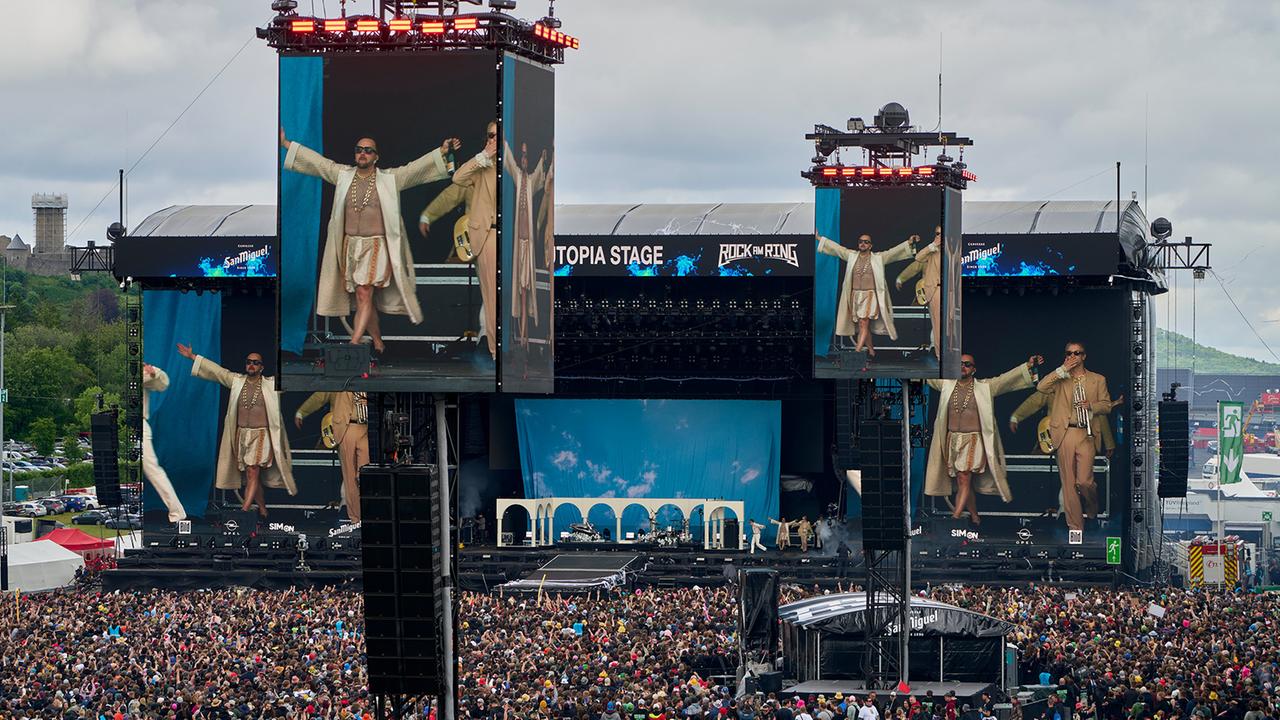
Superstruct has defended its acquisition of legendary festivals by arguing that their deep pockets provided a critical financial lifeline during the COVID-19 pandemic. They claim that their investment protects the festivals from market fluctuations, ensuring that these cultural institutions can survive in an era of hyper-inflated production costs. They argue that they are not destroying culture, but "professionalizing" it to ensure its longevity.
The Independent Perspective:
Conversely, independent voices see a different picture. Johanna Stark, speaking for the LiveMusikKommission, has publicly characterized this as a "displacement structure." She notes that as conglomerates buy up festivals, they create a bottleneck for talent. "When you control the biggest stages in Europe, you control the market value of the artists," she explains. "They drive up the asking prices for headliners, effectively pricing out smaller, independent festivals that rely on local audiences and smaller budgets."
Implications: What is at Stake?
The consolidation of the festival market poses several critical questions for the future of culture.
1. The Death of the "Cultural Incubator"
Many festivals began as experiments. They were places where niche genres could find a home. When a festival is beholden to quarterly earnings reports and private equity investors, the appetite for risk diminishes. "Safe" lineups—those that guarantee ticket sales—replace the eclectic, experimental programming that originally defined the spirit of these gatherings.
2. Territory Protection and Artist Mobility
The issue of "radius clauses" or "territory protection" has become a point of contention. Major promoters often include clauses in artist contracts that prevent them from playing in a specific region for months before or after a festival appearance. For an independent festival, this means that even if they have the budget to book a popular act, they are legally barred from doing so because the artist is already tied to a conglomerate’s tour schedule.
3. The Erosion of Identity
While founders like Thomas Jensen maintain that their creative teams still hold the reins, the reality is that the ultimate authority rests with the board of directors. As cultural goals collide with financial expectations, there is a legitimate fear that festivals will eventually lose the "soul" that made them unique. When every festival feels like a carbon copy of a standardized corporate product, the cultural diversity of the live music landscape suffers.
4. The Future of Independent Promoters
The most alarming implication is the thinning of the herd. Small and medium-sized festivals are the lifeblood of the music industry; they are where new talent is discovered and where regional scenes are nurtured. If the market continues to consolidate, we risk a future where independent promoters are relegated to the fringes, unable to compete for the talent necessary to keep their festivals financially viable.
Conclusion: A Call for Cultural Preservation
The shift toward corporate ownership is not inherently evil, but it is inherently transformative. While the financial backing of corporations can provide stability and professional infrastructure, it comes at the cost of autonomy.
As we look toward the future of the European festival season, the question is no longer just about who owns the biggest stages. It is about whether we can find a way to support the "cultural ecosystem" that allows festivals to thrive as expressions of identity rather than just assets on a balance sheet. Without regulation or a concerted effort to support independent operators, we may soon find that the "festival experience" we once knew has been replaced by a homogenized, corporate-controlled entertainment product—a change that would leave the music industry, and its fans, significantly poorer in spirit.