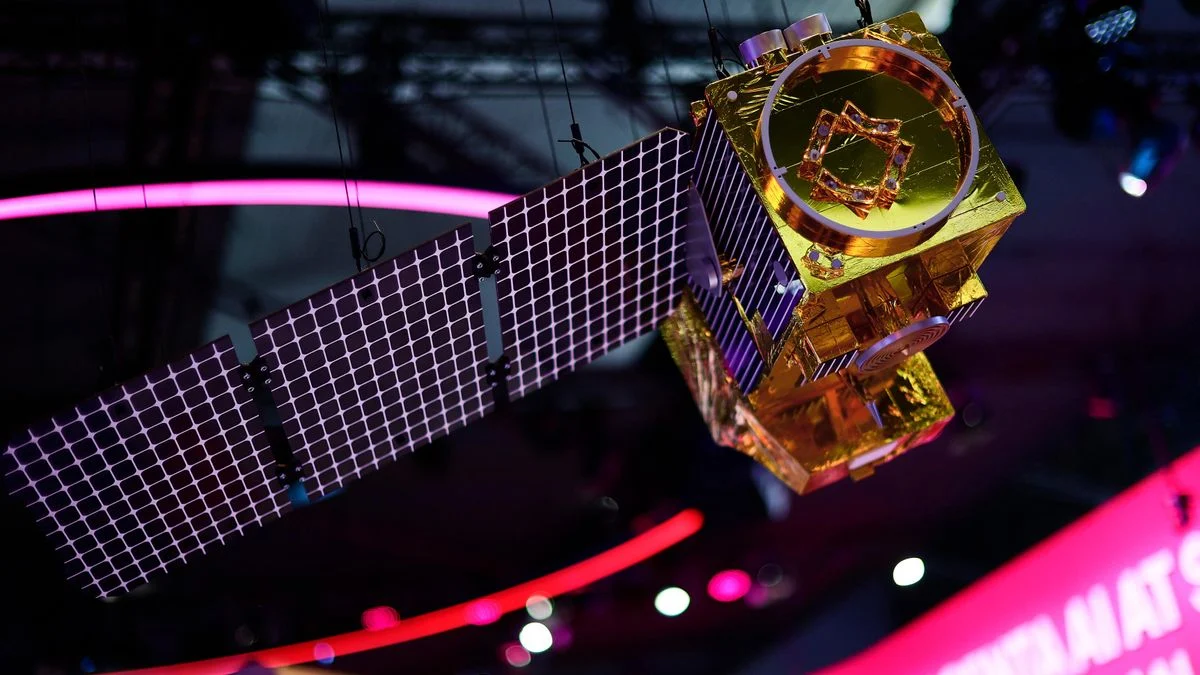
In a strategic move to secure the continent’s digital sovereignty, a consortium of Europe’s largest telecommunications providers is launching a major initiative to build a dedicated satellite-based communication network. The move aims to eliminate regional "dead zones" while effectively countering the rapid market expansion of Elon Musk’s SpaceX.
The Main Facts: A New Frontier in Connectivity
As of October 19, 2026, the telecommunications landscape in Europe is shifting toward the stars. Deutsche Telekom, in collaboration with industry heavyweights Vodafone, Telefónica, and Orange, has announced a joint effort to secure vital satellite radio frequencies. These frequencies are the key to unlocking "Direct-to-Device" (D2D) mobile connectivity, a technology that allows standard smartphones to connect directly to satellites, bypassing the need for terrestrial cell towers.
The European Union is slated to begin the allocation of these frequencies in 2027, with the goal of having the network operational by 2029. This is not merely an infrastructure upgrade; it is a defensive maneuver. The urgency of this project has been dictated by the aggressive expansion of Elon Musk’s SpaceX, which recently moved to purchase a massive portfolio of mobile frequencies in the United States. By selling mobile services directly to consumers via satellite, Musk has effectively bypassed traditional carriers, causing significant market anxiety and share price volatility for companies like T-Mobile, a subsidiary of the German telecommunications giant.
Chronology: From Cooperation to Confrontation
The relationship between traditional European carriers and satellite providers has undergone a dramatic metamorphosis.
- Pre-2026: Satellite technology was viewed as a niche, secondary service—a safety net for emergency calls in remote wilderness areas or a stop-gap measure for rural connectivity where building physical cell towers was not economically viable.
- March 2026: The Deutsche Telekom-Starlink partnership was hailed as a breakthrough, promising to close gaps in European coverage by leveraging Starlink’s existing satellite constellation.
- Summer 2026: The relationship began to fray as SpaceX unveiled plans for a "hybrid network," essentially turning Starlink consumer terminals into localized mini-towers. This effectively positioned SpaceX as a direct competitor rather than a partner.
- October 2026: The current consortium announcement represents the formalization of Europe’s "Plan B." While the Telekom maintains that existing contracts with Starlink will continue, the intent is clear: European providers are now seeking to own the infrastructure that powers their future.
Supporting Data: Why the 2G Sunset Matters
The drive toward satellite integration is fueled by the imminent sunset of legacy networks. By 2028, the shutdown of 2G infrastructure across Europe is expected to create significant coverage voids.
According to data from the Federal Network Agency (Bundesnetzagentur), the reliance on terrestrial towers is no longer sufficient to maintain a "blanket" of coverage. Currently, even with 4G and 5G, significant portions of national territory remain unserved:

- Deutsche Telekom: 1.2% of German territory remains in a dead zone.
- Vodafone: 1.7% of German territory lacks coverage.
- O2 Telefónica: 1.6% of German territory lacks coverage.
While these percentages seem small, they represent thousands of square kilometers where communication is unreliable. Replacing these gaps with physical towers is prohibitively expensive; satellite links offer a scalable, cost-effective solution to ensure that every corner of the continent remains connected.
Official Responses and Geopolitical Friction
The initiative has triggered an immediate and sharp response from the United States. The European Commission, eager to reduce dependence on American tech monopolies, signaled as early as May 2026 that it would prioritize European bidders for these frequency allocations.
The reaction from the U.S. has been swift and combative. Reports from the Financial Times indicate that U.S. Ambassador to the EU, Andrew Puzder, has already raised the specter of retaliatory trade measures. The U.S. administration argues that restricting access for American providers unfairly harms competition.
SpaceX, meanwhile, has taken a more tactical approach in its protest, suggesting that the European plan could inadvertently jeopardize critical infrastructure in Ukraine. By complicating the frequency spectrum, the company argues, the EU might hinder the military and humanitarian communication links that Starlink provides in the conflict zone. Critics view this as a classic "leverage play," using essential global services to influence regional regulatory decisions.
Implications: The Future of European Sovereignty
The implications of this standoff extend far beyond mobile phone signals. At the heart of the matter is the concept of "Digital Sovereignty." European regulators are increasingly wary of allowing a single foreign billionaire to hold the "kill switch" for the continent’s emergency and consumer communications.
1. Technological Hurdles:
While the consortium seeks to lead, they face a daunting reality: D2D technology is not yet a standard feature in the majority of mass-market smartphones. The success of this network relies on hardware manufacturers integrating specialized chips over the next 24 to 36 months.

2. The Physics Problem:
Telekom CEO Tim Höttges has frequently pointed out the inherent physical limitations of satellite communication. Signals traveling from orbit are significantly weaker than those from a nearby tower, often failing to penetrate the thick masonry of modern buildings. This remains the "Achilles’ heel" of the satellite-as-mobile-service model.
3. Economic Realignment:
The European consortium is not necessarily looking to replace terrestrial networks, but to augment them. Their goal is to build a "resilient" network—one that can withstand natural disasters, infrastructure failures, or geopolitical sabotage.
4. The Regulatory Chessboard:
The upcoming Frequenzvergabe (frequency allocation) will be the most significant test of EU regulatory power in the tech sector to date. Will the EU prioritize a homegrown infrastructure project designed to protect its own markets, or will it bow to the economic and political pressure of the United States?
Conclusion: A New Era of Connectivity
As the 2029 deadline approaches, the telecommunications industry finds itself at a crossroads. The dream of seamless, global, satellite-to-phone connectivity is no longer science fiction—it is the next battlefield of the digital age.
For European providers, the mission is twofold: they must manage the transition away from 2G without losing their rural customer base, and they must build a robust, independent alternative to the Starlink hegemony. Whether they succeed will depend not just on the strength of their signal, but on their ability to navigate the complex web of international diplomacy and technological innovation.
One thing is certain: the sky is no longer the limit; it is the arena where the future of European connectivity will be decided.