Main Facts: A War Against the Written Word
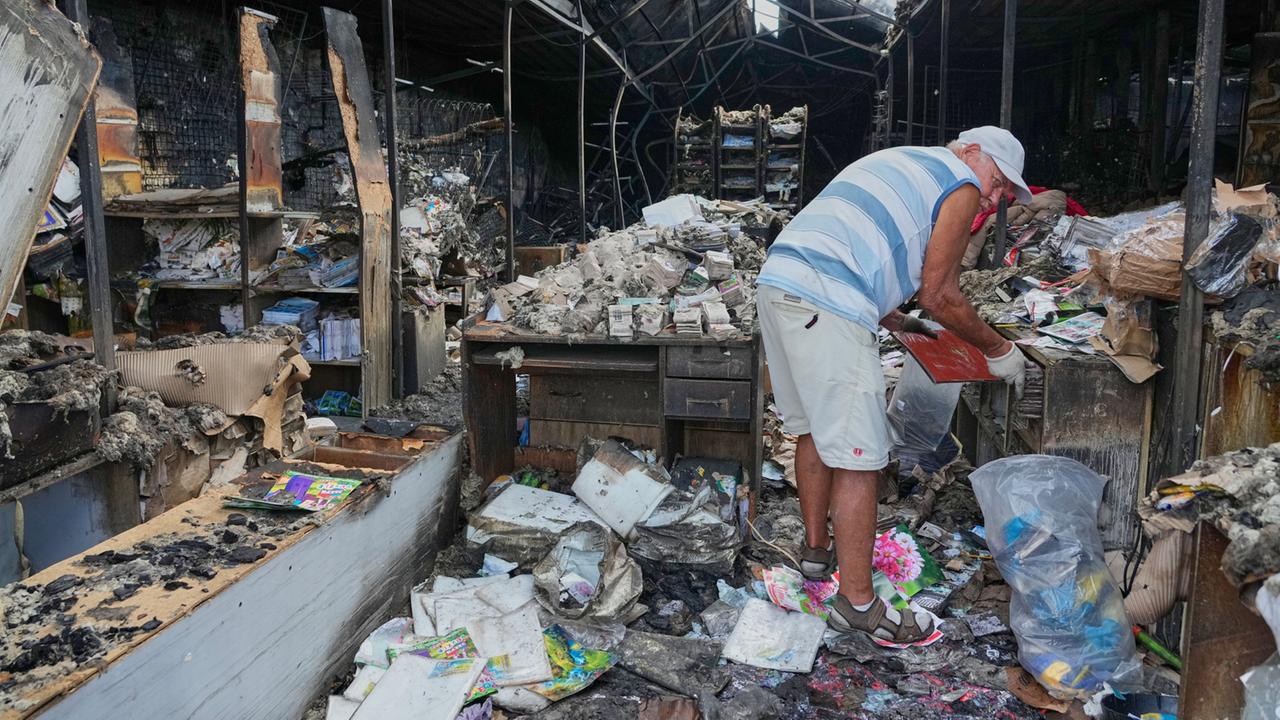
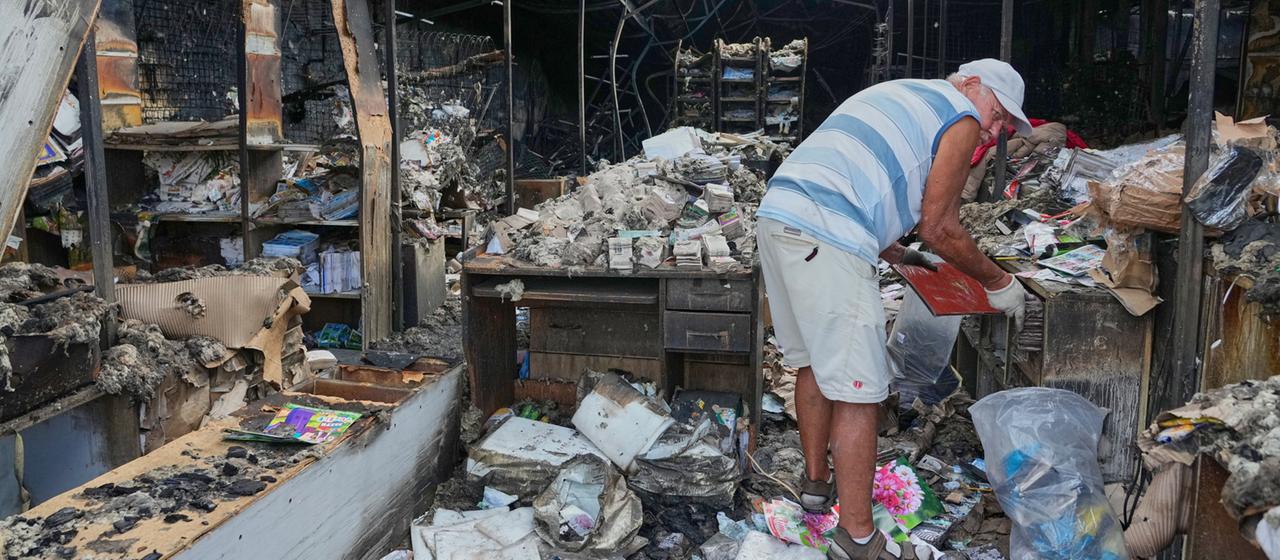
The ongoing conflict in Ukraine has transcended the battlefield, extending its reach into the very heart of the nation’s cultural infrastructure. In a staggering blow to the country’s literary landscape, Russian missile strikes have decimated printing facilities and logistics centers, leading to the destruction of over 13 million books in just the last two and a half months. This figure represents an alarming one-third of all books printed in Ukraine this year.
The consequences are visceral and immediate. For citizens like Yevheniya Rybak, a staff member at the Kyiv-based bookstore "Readeat," the physical evidence of this destruction is heartbreaking. She keeps a small glass display case on a counter—a grim shrine containing a single, half-charred children’s book salvaged from the rubble of the store’s central warehouse. It is one of only eight books recovered from the debris of a massive fire caused by an airstrike.
"When literature is destroyed, it induces a profound sense of despair," Rybak says. "It feels as though they are attempting to excise a part of your own being. They won’t succeed, but the pain is real. Every page represents the collective labor of countless individuals. These books were waiting for children, and children were waiting for them."
Chronology: From Cultural Renaissance to Systematic Destruction
The destruction of Ukraine’s literary assets is not a random byproduct of artillery fire; it is a recurring theme in a historical pattern of suppression.
- 19th Century Origins: Historians, including Volodymyr Yermolenko, president of the Ukrainian PEN Club, point out that the suppression of the Ukrainian language is deeply rooted in history. During the era of the Russian Empire, the Ukrainian language was subjected to systemic prohibitions, aimed at stifling the development of a distinct national consciousness.
- The Post-2022 Escalation: Since the full-scale invasion in February 2022, the targeting of infrastructure has shifted from purely military objectives to include civilian and cultural hubs. The recent surge in attacks on publishing houses and warehouses—which house the finished products of the entire nation’s intellectual output—marks a tactical intensification.
- September 2026: The cancellation of the Kiewer Buchmesse (Kyiv Book Fair) serves as a somber milestone. Due to the increasing frequency and lethality of Russian air raids, the organizers were forced to call off the event, depriving authors and readers of a vital space for cultural exchange.
Supporting Data: The Logistics of a Crippled Industry
The impact on the supply chain is profound. At the "Readeat" bookstore in Kyiv, a sanctuary designed for quiet reflection with armchairs, tables, and coffee, the shelves remain occupied, but the flow of new knowledge has been choked.
A digital message now greets customers upon entry: delivery times, which once took 24 hours, have extended to 15 days, provided the titles are in stock at all. The uncertainty is pervasive. Publishers, struggling to assess the extent of their losses, often cannot verify which titles were lost to fire and which might still be salvaged from regional warehouses.
"The publishers don’t have a clear overview of what has been incinerated and what might still exist elsewhere," Rybak explains. "I ordered books for myself some time ago, but I’m not even sure if they still exist. I’m hoping against hope that copies were printed elsewhere and survived."
This logistical breakdown is symptomatic of a wider crisis. With 13 million books gone, the financial and intellectual loss is estimated in the millions, but the cultural impact is incalculable. The destruction of these books is a direct assault on the "intellectual memory" of a nation, forcing readers to wait for reprints that are becoming increasingly difficult to produce in a wartime economy.
Official Responses and the Perspective of the PEN Club
Volodymyr Yermolenko, a leading voice in the Ukrainian literary community, views these attacks as a deliberate strategy of "cultural genocide."
"The Russians want to subjugate Ukraine," Yermolenko asserts. "They can only succeed if our national consciousness is extinguished. They want us to stop feeling that we are distinct, that we possess a unique culture. By destroying our books, they are attacking our identity. They have done this repeatedly throughout our history."
The PEN Club has been instrumental in documenting these losses and advocating for the resilience of Ukrainian writers. Despite the systematic destruction, Yermolenko notes a paradoxical outcome: a surge in local literary activity. "Ten years ago, we had perhaps three or four book fairs in the entire country," he notes. "Now, we have three or four in every city. Even in places where the war is felt most acutely, like Kharkiv and Odessa, people are organizing cultural festivals. We even held a book fair in Zaporizhzhia."
Implications: Identity Under Siege and the Defiance of Reading
The war has fundamentally altered the reading habits of the Ukrainian populace. Maxym Sjusura, a young reader browsing the "Readeat" shelves, represents a growing demographic that has turned away from Russian literature entirely.
"Before the full-scale invasion, I was interested in Russian literature," Sjusura says. "Now, I read exclusively Ukrainian authors. I want to consciously support our publishing houses."
For many, buying a book is now an act of resistance. When the news of the warehouse fires broke, Sjusura went out immediately to purchase two books, despite his own financial constraints caused by the war. "I promote Ukrainian books to my friends and colleagues," he adds. "It is a way of keeping our culture alive."
The psychological impact of these attacks also shapes the daily lives of citizens. For Yevheniya, reading has become a coping mechanism during the frequent air raids. When the sirens wail, she retreats to the bunker with a book. "It helps to calm me," she admits. "I’m probably not the best advisor when it comes to finding peace, as I tend to read thrillers and horror novels—a bit strange, I know. But the fact that we now have so many talented Ukrainian authors writing in these genres is a testament to our survival."
Conclusion: A Culture That Refuses to Burn
The scorched pages in the glass case at "Readeat" are not merely remnants of a fire; they are symbols of a broader struggle. The Russian attempt to erase the Ukrainian narrative by targeting the physical vessels of that narrative—the books themselves—has met with unexpected resilience.
As the war enters this new, more destructive phase, the relationship between the Ukrainian people and their literature has deepened into a form of active defiance. While the air raids may destroy warehouses and silence the book fairs, they have inadvertently galvanized a new generation of readers and writers. By attempting to burn the culture to the ground, the aggressor has only highlighted its necessity. In the bunkers of Kyiv and the bookstores of the front-line cities, the act of reading has become the most radical act of maintaining a national identity that refuses to be incinerated.