As the 2026 FIFA World Cup progresses through its high-octane group stages across North America, the tournament is proving to be a paradox of immense sporting spectacle and logistical hurdles. From the pristine stadiums of the United States to the passionate fan zones in Canada and Mexico, the competition has been defined by a mix of record-breaking goals, political friction, and a growing controversy over the playing surfaces that host the world’s greatest talents.
The Grass Ceiling: Criticism Mounts over Final Stadium Pitch
The centerpiece of the tournament, the stadium in New York/New Jersey slated to host the July 19th final, has become the subject of intense scrutiny. Leading stars and tactical minds have voiced significant concerns regarding the quality of the playing surface.
French midfielder Adrien Rabiot was among the first to break the professional silence, noting that the pitch feels more akin to artificial turf than high-quality natural grass. His coach, Didier Deschamps, echoed these sentiments, highlighting an "unnatural" bounce of the ball that disrupts the rhythm of high-level play. Perhaps most damning was the assessment from Brazilian superstar Vinícius Júnior, who remarked that the surface is "extremely difficult to play on," adding that it forces the game to slow down, nullifying the pace and technical flair essential to the Brazilian style of play.
These criticisms are not merely aesthetic; they are safety concerns. With millions of dollars in transfer values on the field and the weight of national pride on their shoulders, players are increasingly vocal about how sub-par turf conditions could alter the outcome of the tournament’s most important match.
Chronology: A Snapshot of the Tournament Pulse
The 2026 World Cup has been a whirlwind of activity. Here is a timeline of the most significant developments from the past 48 hours:
- June 21, 2026: Austria’s Ralf Rangnick sparks debate by comparing rising star Lamine Yamal to a young Lionel Messi, setting the stage for a high-stakes clash against Argentina. Meanwhile, the extreme heat wave in Madrid forces the local government to cancel the public viewing of Spain’s match against Saudi Arabia, prioritizing fan safety over the communal experience.
- June 21, 2026: In a show of solidarity and cultural celebration, the Dutch royal family—King Willem-Alexander, Queen Maxima, and Princess Ariane—surprised the Curaçao national team in their locker room following a hard-fought draw against Ecuador. The scene, a departure from the typical, stiff formalities of such visits, was lauded for its genuine warmth.
- June 20, 2026: The Tunisian national team faces internal turmoil. Defender Ali Abdi launched a scathing critique of the national football association, citing a lack of professional planning and a cycle of constant coaching changes that have left the team unable to compete at the highest level.
- June 19, 2026: A wave of nostalgia and concern swept through the Argentine camp as Lionel Messi was visibly emotional after his hat-trick against Algeria. It was later revealed that the emotion stemmed from his father’s ongoing health struggles, which had been the subject of a cruel, false report in the media earlier that day.
Supporting Data: The High-Scoring Trend of 2026
Statistical analysis suggests that the 2026 tournament is on track to be one of the most prolific in history. Through the first 28 matches, the average goals per game stands at a staggering 3.18. This is a significant jump from the 2.39 average recorded at the same stage in the 2022 Qatar tournament.
This surge in goal-scoring is fueling a renewed rivalry in the "all-time World Cup goals" leaderboard. Brazil and Germany have been trading the lead in total tournament goals for decades. As of June 20, Brazil reclaimed the top spot with 235 goals following a 3-0 victory over Haiti, putting them two ahead of Germany. With the DFB squad looking to secure their place in the knockout rounds, the race between these two footballing titans is as competitive as the matches themselves.
Official Responses and FIFA’s Tightening Grip
FIFA’s role as the tournament organizer has faced criticism regarding its rigid enforcement of sponsorship and logistical rules. The "Klebeband" (adhesive tape) phenomenon has become a talking point, with players like Jamal Musiala seen covering non-sponsor logos on their equipment to avoid fines.
Furthermore, the treatment of the Iranian national team has caused a diplomatic stir. The Iranian FA has officially lodged a complaint with FIFA regarding travel restrictions that have forced their squad to arrive at match locations only 24 hours before kickoff. Generalsekretär Hedayat Mombeyni described the situation as a "dark chapter in the history of the World Cup," arguing that these logistical hurdles compromise the integrity of a fair competition.
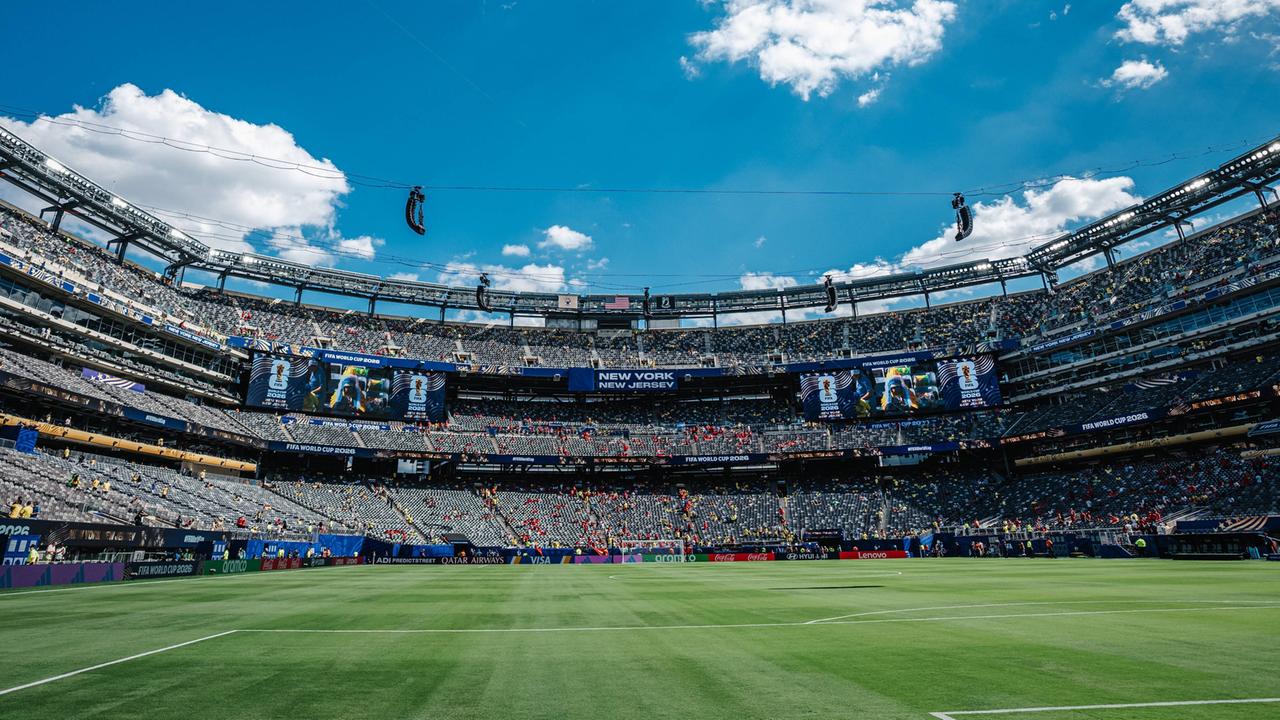
Regarding the controversy over the final stadium’s pitch, FIFA has yet to release a definitive statement, though insiders suggest that emergency horticultural measures are underway to improve the surface quality before the final knockout phases begin.
Implications: The Growth of Football in North America
Despite the turf complaints and logistical frustrations, the "Soccer Hype" in the United States, Canada, and Mexico is undeniable. The emotional response from the host nations is palpable.
In Canada, the success of the national team has been a unifying force. Eishockey icon Leon Draisaitl, a Canadian resident, noted that the current euphoria is "great for the country and great for football," expressing hope that this momentum will transform Canada into a permanent global football power.
Meanwhile, the "Tartan Army"—the massive contingent of Scottish fans in Boston—has sparked an unexpected diplomatic gesture. Boston Mayor Michelle Wu, caught up in the enthusiasm of the visitors, has moved to establish a formal sister-city partnership between Boston and Glasgow. While this has been accompanied by reports of a "beer shortage" in local pubs, the long-term implication is clear: the 2026 World Cup is successfully embedding football into the cultural fabric of North American cities in ways previously thought impossible.
Looking Ahead: The Pressure of the Knockout Stages
As the tournament moves toward the Round of 32, the narrative is shifting from group-stage surprises to the cold, clinical reality of knockout football. The pressure is mounting on underperforming giants like Portugal, who are still grappling with the tactical dilemma of Cristiano Ronaldo’s role in the squad. Coach Roberto Martinez’s insistence on keeping the veteran on the pitch despite lackluster performances has become a microcosm of the internal pressures facing many national teams.
With the heat rising—both on the thermometers in Europe and the intensity on the pitch in North America—the 2026 World Cup is entering its most critical phase. The question remains: will the playing surfaces hold up under the pressure, and which team will emerge from the chaos to claim the trophy?
As the world watches, the tournament continues to prove that while the game of football is played on a field, its true impact is measured in the hearts of the fans, the controversies of the boardroom, and the unpredictable stories written by the players who grace the pitch. Whether it is a king celebrating in a locker room or a referee battling cramps to ensure the game goes on, the 2026 World Cup is already etched into history as a tournament of extremes.
The remaining weeks will undoubtedly bring more drama, more tactical intrigue, and likely more debate over the grass beneath the players’ feet. But for now, the world remains fixated on the beautiful game, played out against the backdrop of a continent fully embraced by the fervor of the World Cup.