Introduction: A Bold Industrial Expansion
In a significant signal of confidence for the European automotive sector, Tesla has announced a massive expansion of its operations at the Gigafactory in Grünheide, near Berlin. The company is set to invest approximately $250 million (roughly €210 million) to dramatically scale up its battery cell production capabilities. This move, which includes the creation of over 1,500 new jobs dedicated specifically to battery manufacturing, marks a pivotal shift in Tesla’s European strategy: moving from a mere assembly hub to a fully integrated, vertically aligned production powerhouse.
By 2027, Tesla aims to master the entire value chain at a single location in Germany—from the raw production of battery cells to the final assembly of finished electric vehicles (EVs). This vertical integration, which the company claims is unprecedented in the European automotive landscape, is designed to bolster supply chain resilience and solidify Tesla’s dominance in the transition to sustainable mobility.
The Chronology of Growth and Adjustment
The journey of the Gigafactory Berlin-Brandenburg has been defined by rapid ambition tempered by the cyclical nature of the global EV market.
- 2020 – The Vision: Tesla CEO Elon Musk first unveiled the plan to make the Berlin plant the "world’s largest battery factory," setting a trajectory for regional industrial dominance.
- 2022 – The Launch: The factory officially opened, with an initial capacity target of 500,000 vehicles per year.
- 2023 – The Headwinds: As the market for EVs faced a cooling period, Tesla experienced a contraction. Employment figures at the plant dipped from a high of approximately 12,400 to 10,700, reflecting a broader effort to optimize production and manage output.
- April 2024 – The Trend Reversal: Responding to a surge in demand, Tesla announced an urgent need for 1,000 new workers to boost production by 20%, aiming for an output of 6,000 vehicles per week.
- Current Status: Tesla has officially signaled a positive outlook, with recent quarterly reports showing growth in both revenue and profit. The focus has now shifted from mere vehicle assembly to the internal production of critical battery components.
Supporting Data: Scaling the Battery Infrastructure
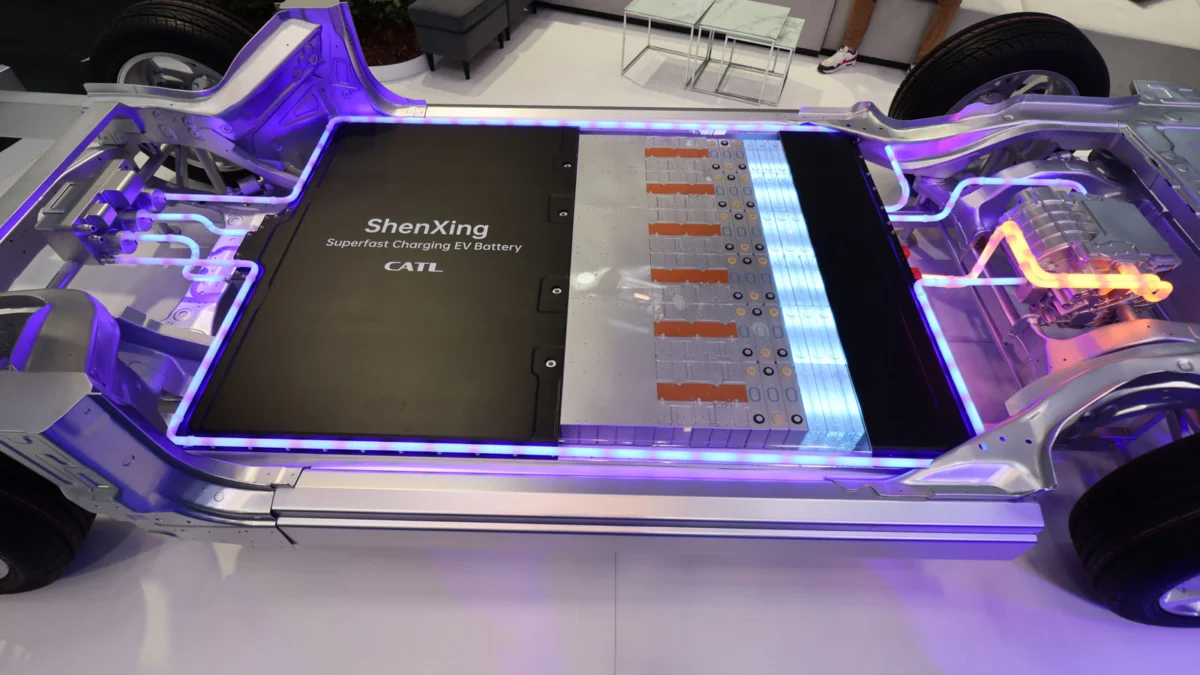
The core of the current announcement is the expansion of battery cell production from a previously planned 8 gigawatt-hours (GWh) to an ambitious 18 GWh annually.
Bridging the Competitiveness Gap
Historically, European automakers have struggled to compete with Asian giants in the mass production of battery cells. Currently, the Grünheide plant performs limited assembly of battery components, with the actual cells being imported from the United States. By bringing this process in-house, Tesla is effectively reducing its reliance on trans-Atlantic logistics, insulating itself from potential supply chain disruptions, and decreasing the carbon footprint associated with vehicle manufacturing.
Labor and Workforce Dynamics
The requirement for 1,500 new specialized employees in the battery sector is a substantial commitment. While internal planning documents reported by the Märkische Allgemeine suggest a rollout of 350 new roles by the end of this year, the total 1,500-person expansion is intended to unfold in the medium term. Furthermore, to stabilize its workforce, Tesla has indicated it intends to transition approximately 500 temporary workers into permanent, full-time employment contracts, signaling a commitment to long-term talent retention.
Official Responses and Political Implications
The announcement has been met with optimism by German policymakers, who view the investment as a much-needed morale boost for the country’s industrial sector.
A Vote of Confidence in the German Industrial Base
Martina Klement, the Minister for Economic Affairs in Brandenburg, praised the investment as a direct counter-argument to prevailing narratives regarding the decline of German industrial competitiveness. "Germany is still capable of attracting large-scale industrial investments," Klement stated. She emphasized that battery technology is the linchpin of modern mobility and future industrial value creation.
For the German government, which has faced mounting pressure regarding high energy costs and bureaucratic hurdles, Tesla’s commitment serves as a high-profile validation of the "Germany as a business location" (Standort Deutschland) brand. It signals that despite economic headwinds, the region remains a viable and attractive hub for high-tech manufacturing.
Implications: The Strategic "Everything-in-One-Place" Model
Tesla’s move toward total site integration carries profound implications for the automotive industry.
1. Supply Chain Resilience
By producing battery cells, chassis, and powertrains in one location, Tesla eliminates the "just-in-time" risks associated with cross-border shipping. In an era of geopolitical uncertainty and volatile shipping costs, controlling the entire manufacturing loop is a significant competitive advantage.
2. Economic Multiplier Effect
The investment of $250 million is not merely about equipment; it is about infrastructure, logistics, and supply chain development. The 1,500 new roles will likely trigger a secondary surge in local service industries, housing, and infrastructure development in the Brandenburg region.
3. Setting a New European Standard
By targeting 2027 as the year of full integration, Tesla is setting a benchmark that European incumbents like Volkswagen, BMW, and Stellantis must now measure themselves against. The "from cell to car" model is expected to become the gold standard for efficiency in the EV age.
4. Navigating Growth Targets
Despite the optimism, the road ahead is not without challenges. Tesla’s initial target of 500,000 cars per year, with hopes to eventually reach one million, remains an ambitious objective. Current production of 6,000 vehicles per week equates to roughly 300,000 units annually. Closing the gap between current production and the one-million-unit goal will require consistent labor stability and continued strong consumer demand.
Conclusion: The Path Forward
Tesla’s decision to double down on its Grünheide facility is a clear indicator that the "EV winter" is viewed by the company as a temporary fluctuation rather than a long-term decline. By investing in the heart of the electric vehicle—the battery cell—Tesla is not just building a factory; it is securing its future as the dominant player in the European market.
As the company transitions from a phase of consolidation to a new era of aggressive expansion, the focus will now shift to its ability to hire and train the workforce necessary to meet these high-tech production demands. For Brandenburg, and for Germany at large, the next three years will be a test of whether the nation can sustain the high-velocity industrial growth required to lead the global energy transition.
Tesla has laid the foundation for a fully integrated, "cell-to-car" ecosystem. Whether this strategy will lead to the predicted dominance in the European EV market remains to be seen, but one thing is certain: the race to dominate the battery supply chain has just entered a new, high-stakes chapter in the heart of Europe.