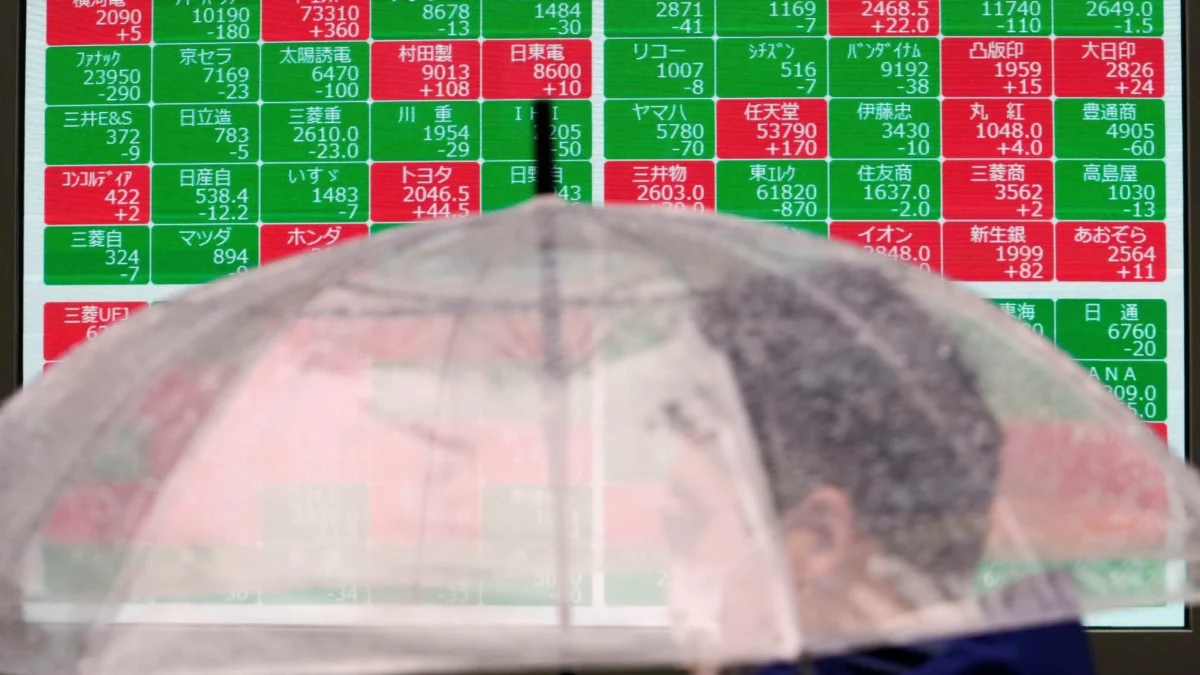
SYDNEY – Asian stock markets experienced a significant boost during Tuesday’s trading session, riding the bullish momentum generated by a historic performance on Wall Street. As the technology sector continues to dominate global investor sentiment, indices across the Asia-Pacific region mirrored the enthusiasm seen in the United States, where the Nasdaq Composite recently closed at an all-time high.
This rally, fueled by a renewed appetite for artificial intelligence (AI) and semiconductor stocks, has provided a much-needed tailwind for Asian equities, which have been navigating a complex landscape of fluctuating interest rates and macroeconomic uncertainty.

Main Facts: The Catalyst Behind the Rally
The primary driver of the current market optimism is the sustained performance of the US technology sector. On Wall Street, the Nasdaq’s ascent to record territory has acted as a beacon for global capital, signaling to investors that the growth story for big tech—and by extension, the AI supply chain—remains intact.
In Asia, this has translated into robust buying pressure for companies heavily involved in hardware, chip manufacturing, and cloud computing infrastructure. From the semiconductor giants in Taiwan and South Korea to major tech conglomerates in Japan, the sentiment is decidedly bullish.

Market analysts note that the fear of a looming recession has receded, replaced by a "soft landing" narrative. With inflation data showing signs of cooling in several key economies, investors are increasingly betting that central banks, including the US Federal Reserve, may soon shift toward a more accommodative monetary policy, or at the very least, halt further aggressive rate hikes.
Chronology of Market Sentiment
To understand the current surge, one must look at the events leading up to this week’s performance:
- Mid-Quarter Volatility: The past several weeks were characterized by heightened anxiety regarding the "higher-for-longer" interest rate environment, which dampened sentiment in emerging markets.
- The Wall Street Pivot: Last week, a series of positive earnings reports from major US technology firms exceeded analyst expectations, reigniting the rally in the Nasdaq and S&P 500.
- Early Tuesday Trading: As Asian markets opened, the positive lead from the US was immediate. Regional indices, particularly those with heavy tech weightings, saw significant opening gains.
- Mid-Session Stability: Throughout the day, the momentum was sustained as investors digested reports of lower oil prices, which served to alleviate concerns regarding global inflationary pressures.
- Closing Bell Outlook: By the close, the optimism remained firm, as regional investors signaled confidence that the current growth trajectory could carry through the remainder of the quarter.
Supporting Data and Market Dynamics
While the tech sector is the clear leader, the broader market environment is being supported by a combination of factors.
The Influence of Oil Prices
One of the most notable developments supporting the equity markets has been the recent downward pressure on oil prices. For many Asian economies, which are net importers of energy, lower oil costs act as a tax cut for consumers and a margin booster for industrial manufacturers. When oil prices moderate, it reduces the input costs for businesses, thereby supporting profitability and tempering the narrative of persistent, energy-driven inflation.

The Bond Market Quandary
Despite the equity rally, a shadow remains in the form of US Treasury yields. Yields on longer-term US government bonds have remained in the vicinity of multi-decade highs. These high yields typically present a hurdle for stocks, as they increase the discount rate applied to future earnings and make risk-free assets more attractive compared to equities. However, the current market resilience suggests that investors are willing to look past these elevated rates, banking on the strong fundamental growth of the AI-driven tech sector to offset borrowing costs.
Analyst Perspective
"The rally at the market level is once again being led by technology," says Kyle Rodda, a senior market analyst at Capital.com. "The dissipation of uncertainty regarding interest rates and a slight easing of geopolitical risks have allowed investors to refocus their attention on the extraordinary profit growth potential of the companies building the infrastructure for the AI revolution."

Global Implications and Strategic Shifts
The surge in Asian markets is more than just a short-term reaction to US trends; it represents a fundamental shift in how global capital is allocated.
The AI Supply Chain
Asia sits at the heart of the global technology supply chain. Countries like Taiwan (home to TSMC) and South Korea (home to Samsung and SK Hynix) are indispensable to the global AI narrative. The current market rally validates the massive capital expenditures these nations have poured into semiconductor fabrication. As demand for high-end GPUs and memory chips continues to outstrip supply, these Asian firms are positioned to remain at the forefront of the global economy for the foreseeable future.

Institutional Rebalancing
Large institutional investors, including pension funds and sovereign wealth funds, have begun to rebalance their portfolios to increase exposure to the Asian technology sector. The recent performance suggests that Asia is no longer just a "value" play, but a core component of the global growth story. This shift is likely to bring more stability and liquidity to regional exchanges over the long term.
Geopolitical Considerations
While the market is currently in a "risk-on" mode, analysts caution that geopolitical tensions remain a latent risk. Issues surrounding trade relations, supply chain security, and regional stability in the South China Sea continue to be monitored closely. However, for the time being, the raw economic data and corporate performance figures are overriding these concerns, leading to a period of relative calm in the markets.

Future Outlook: What Lies Ahead?
As we look toward the coming weeks, the sustainability of this rally will depend on several critical factors:
- Central Bank Policy: Any unexpected hawkish rhetoric from the Federal Reserve or the Bank of Japan could derail the current momentum. The market is currently pricing in a "Goldilocks" scenario—steady growth with declining inflation—and any deviation from this could trigger volatility.
- Corporate Earnings: The tech sector will need to continue delivering on its promise of AI-driven productivity and profitability. Investors are no longer content with "AI potential"; they want to see it reflected in bottom-line growth.
- Macroeconomic Indicators: Continued signs of cooling inflation, particularly in the US and the Eurozone, will be essential to keep the bond market from spiking again and putting pressure on stock valuations.
Conclusion
The recent surge in Asian markets, prompted by a tech-heavy rally on Wall Street, highlights the interconnected nature of the global financial system. By leveraging the technological expertise inherent in the region and benefiting from favorable energy costs, Asian indices have managed to navigate a challenging macroeconomic climate with remarkable resilience.

While the "higher-for-longer" interest rate environment poses a persistent challenge, the sheer weight of the growth story in technology appears to be providing a sufficient counterbalance for now. Investors remain optimistic, though they are cautioned to maintain a balanced view, keeping a watchful eye on central bank policies and the evolving geopolitical landscape.
As the market continues to digest these developments, the focus will likely remain on the companies that are not just participating in the technological revolution, but are actively defining it. The current rally, while impressive, serves as a reminder of how quickly sentiment can shift when supported by concrete earnings and a clear vision for the future of global industry.