


By Sports Desk Analysis
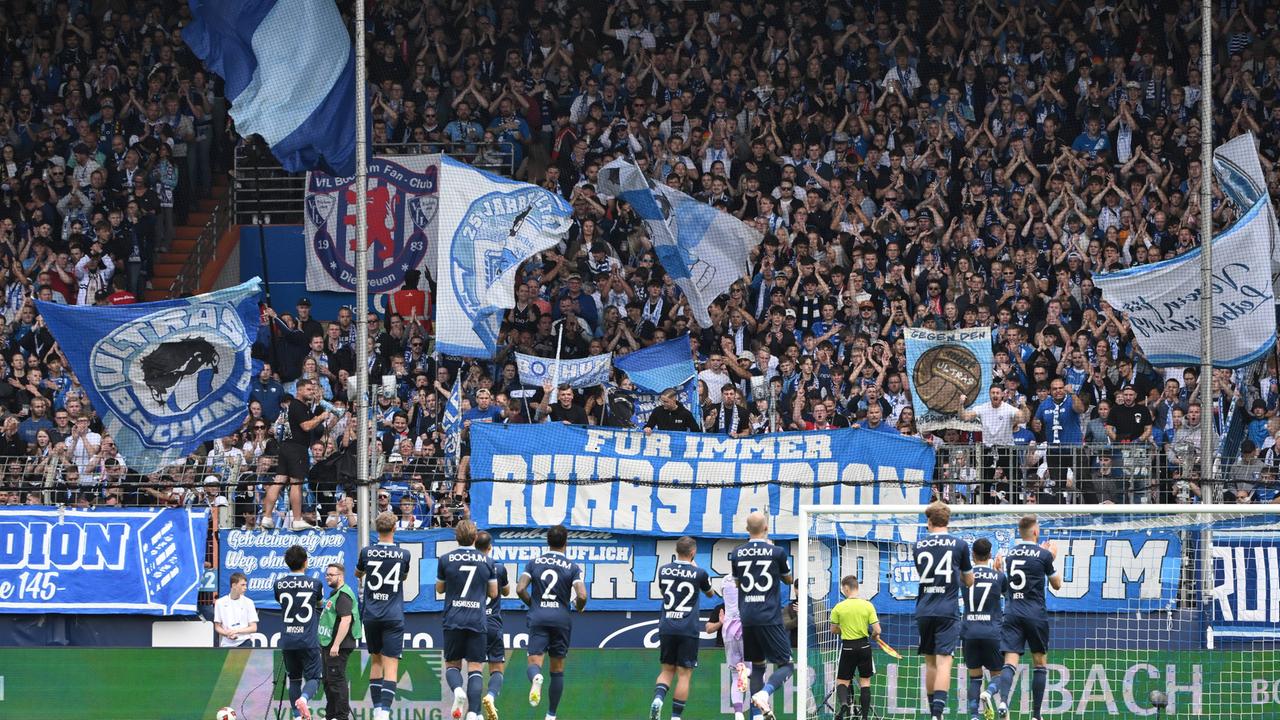
In an unprecedented move that has sent shockwaves through the German footballing community, second-division side VfL Bochum has announced a formal ban on rhythmic jumping and synchronized swaying within the Ostkurve of its historic Ruhrstadion. The directive, issued in coordination with the Bochumer Sportstätten Gesellschaft and local building authorities, will take effect starting with the home fixture against Arminia Bielefeld. While the club maintains that the stadium is not in any immediate danger of structural collapse, the decision highlights a growing tension between the preservation of aging infrastructure and the passionate, physical nature of modern fan culture.
The Technical Catalyst: The "Trampoline Effect"
The decision to implement the ban stems from a series of recent structural surveys conducted during ongoing renovation projects at the Ruhrstadion. Engineering experts identified a specific physical phenomenon known as the "trampoline effect." This occurs when large groups of spectators—typically found in the "hardcore" ultra sections of a stadium—engage in rhythmic, synchronized jumping.
When thousands of people move in perfect cadence, the vertical force exerted on the terracing can reach frequencies that match the natural resonance of the structure. If the frequency of the jumping matches the resonant frequency of the stand, it creates a feedback loop. This not only causes significant structural stress but also induces a sense of vertigo and acute physical discomfort among those in the stands, potentially triggering a panic response.
Local authorities have emphasized that this is a precautionary measure. There is no evidence that the stands are currently unstable or unsafe under normal conditions; however, the potential for uncontrolled oscillation has reached a threshold that officials are no longer willing to ignore.
A Chronology of Escalation and Regulatory Intervention
The path to the current ban has been marked by a shift in how authorities perceive the safety of multi-purpose sporting arenas.
- Mid-2026: Extensive structural inspections were carried out as part of the long-term renovation plan for the Ruhrstadion, which is scheduled to conclude in 2028.
- Late September 2026: Final reports from independent engineers confirmed that the resonance caused by organized jumping in the Ostkurve exceeded safety guidelines established for public infrastructure.
- October 7, 2026: The club officially announced the "Hüpfverbot" (Jumping Ban) for blocks N2, O, P, and Q.
- October 11, 2026: The first match under the new regulations, against Arminia Bielefeld, marks the trial period for these enforcement measures.
The decision was not made in isolation. Bochum officials consulted with engineering teams from Magdeburg, who dealt with a similar scenario in 2016. In that instance, the 1. FC Magdeburg stadium was subjected to a similar ban after fans triggered vibrations that breached the "panic threshold." While the Magdeburg facility was relatively new at the time of its incident, the Bochum situation is more complex due to the aging nature of the Ruhrstadion, which requires significantly more care as it undergoes modernization.
The Three-Point Enforcement Plan
The enforcement of this ban is governed by the DFL (Deutsche Fußball Liga) protocols, which rely on a tiered escalation system designed to prioritize safety without resorting to immediate match abandonment.
- Stage One: Should organized, rhythmic jumping be detected, a formal announcement will be made over the stadium’s public address system, instructing fans to cease the activity immediately.
- Stage Two: If the behavior continues, the match officials will be instructed to pause the game and send the players to the locker rooms as a cooling-off measure. This will be accompanied by a second, more severe warning to the stands.
- Stage Three: If the warning is ignored a second time, the referee is authorized to abandon the match entirely.
Furthermore, the club has warned that failure to comply could result in the total closure of the Ostkurve, affecting up to 10,000 spectators. This threat underscores the seriousness with which the club views the structural safety reports.
Official Responses and Stakeholder Friction
The reaction to the news has been polarized. While the club, the city, and the safety authorities are aligned in their justification of the ban, the fan base has expressed deep frustration.
The Club’s Stance
A spokesperson for VfL Bochum acknowledged the difficulty of the situation in an interview with the WDR. "We are in constant, intense dialogue with the fan groups," the representative stated. "We understand that this impacts the core of the stadium experience. However, our primary duty is to ensure the safety of every person within our walls. We will be using every channel available to inform our supporters about why these measures are necessary and what the consequences of non-compliance are."
The Fan Perspective
For many supporters, jumping is not merely an activity; it is a fundamental expression of loyalty and emotion. Fans like "Eren," a long-time season ticket holder in the affected block, voiced a sentiment common among the ultras: "By banning this, you are stripping away the soul of the matchday experience. When a goal is scored, the physical release is part of the celebration. To call it a safety risk feels like a bureaucratic overreach."
While some supporters have accepted the necessity of the ban, citing the structural evidence provided by the engineers, others have labeled it "nonsense" or a "joke." The consensus among the hardcore fan base is that the ban will be incredibly difficult to enforce in the heat of a high-stakes match.
Broader Implications for German Football
The Bochum incident serves as a bellwether for the future of German stadium infrastructure. As stadiums age and safety regulations become increasingly stringent, clubs are finding themselves in a bind: either invest heavily in rapid, expensive structural reinforcement or impose restrictive rules on the very fan culture that makes the Bundesliga famous.
The recent incident involving the 1. FC Kaiserslautern fans, who caused a bridge to oscillate while walking to a match in Mannheim, has heightened the sensitivity of local authorities toward "synchronized crowd movement." It has set a precedent where authorities are now more likely to intervene in public gatherings where mass movement might interact with the resonant frequency of bridges, platforms, or stadium stands.
Looking Toward 2028: A Long-Term Challenge
The "Hüpfverbot" is intended to remain in effect until the conclusion of the Ruhrstadion’s massive renovation project in 2028. By that time, engineers hope that the structural reinforcement of the stands will allow fans to return to their traditional ways of supporting the team.
Until then, the club faces a delicate balancing act. They must appease the local building authorities to avoid stadium closures, while simultaneously preventing a complete breakdown in relations with their most vocal and loyal supporters. The match against Arminia Bielefeld will be the true test of this fragile equilibrium. If the fans refuse to comply, the club will be forced into a position where they must choose between the safety of the structure and the presence of their supporters—a choice no club wants to make.
As the footballing world looks on, the situation in Bochum highlights a sobering reality: in the modern era, the raw passion of the stands must increasingly coexist with the cold, hard mathematics of structural engineering. Whether this can be achieved without permanently damaging the atmosphere of the Ruhrstadion remains to be seen.












