Byline: Daniela Schmidt
Date: October 19, 2026
"The sky is cold and vast. It has snowed on the Milky Way. You hear your footsteps wandering, as if they were the steps of another, and you walk with yourself in pairs." These lines from Dresden author Erich Kästner’s poem Exemplarische Herbstnacht (Exemplary Autumn Night) capture a timeless human sentiment. Kästner suggests that a walk in the crisp autumn air can alleviate the isolation of cold times, offering a sense of companionship even in solitude. As it turns out, modern science is increasingly validating this literary intuition.
In cities across Germany and beyond, a new phenomenon is taking root: the organized "walking club." Far from being a niche pastime for the elderly, these clubs are becoming a vital urban trend, specifically targeted at combating the growing epidemic of loneliness among younger generations.
The Birth of a Movement: From Isolation to Community
"Will you walk with us?" reads the white T-shirt worn by Julia, a psychology student in her mid-20s. As one of the organizers of the Leipzig Spazierclub (Walking Club), she has seen firsthand how a simple, low-barrier activity can transform lives. Regularly, dozens—sometimes hundreds—of people sign up to traverse the city together.
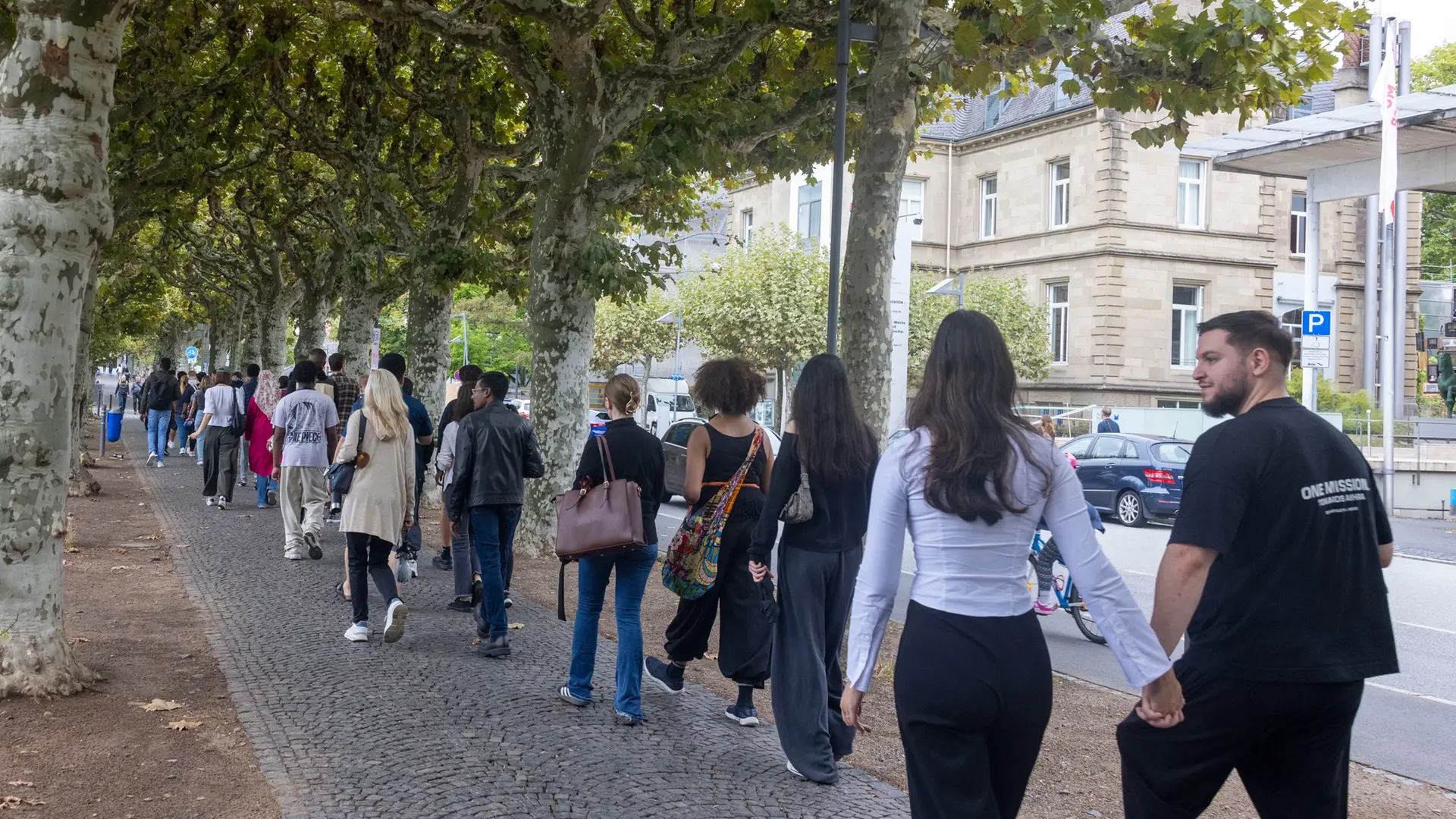
The necessity for such groups is clear. While many might ask, "Why not just walk alone?" the answer lies in the byproduct of the activity. "People tell us that through the walking club, they’ve formed tight-knit groups of friends, that they go out to dinner together, and attend parties," Julia explains. "It fills the heart, and that was exactly the intention behind starting this."
The Scope of the Loneliness Crisis
Organized group walking may seem like a simple solution, but it addresses a profound societal malaise. According to the TK Loneliness Report 2024, 59 percent of respondents admitted to having felt lonely. The Federal Statistical Office reports that single-person households now account for over 42 percent of all households in Germany. While living alone does not automatically equate to being unhappy, the trend is exacerbated by demographic shifts—particularly in eastern Germany—where aging populations and rural-to-urban migration have significantly heightened the risk of social isolation.
Loneliness is no longer just a "senior issue." It is increasingly affecting younger adults, particularly in high-density urban environments where the paradox of being "surrounded by people yet feeling alone" has become a defining characteristic of the 21st-century experience.
The Science of Motion: A Buffer Against the Blues
Why does walking, specifically, work as a therapeutic tool? Recent research provides compelling evidence. A study published in the journal Nature in 2024, involving 317 young adults, utilized activity sensors, brain scans, and daily mood diaries to measure the impact of movement on social isolation.

The first finding was predictable: loneliness worsened the subjects’ moods. However, the second finding was groundbreaking: physical activity served as a powerful "buffer." Even moderate movement, such as a casual walk, was enough to significantly mitigate the negative emotional impact of loneliness and lack of social contact.
"People felt emotionally worse when social contacts were missing, but they felt significantly less distressed when they were physically active," the researchers concluded. Crucially, the study emphasizes that a walk does not "erase" loneliness or replace the need for deep, meaningful human connections. Instead, it acts as a protective mechanism, preventing the full weight of negative emotions from overwhelming the psyche.
The Evolutionary Perspective: Why We Need to Move
Psychologist and mountain guide Jan Mersch views the benefits of walking through an evolutionary lens. His concept, "Man and Mountains," integrates therapeutic support with hiking, based on the theory that human biology is not designed for the sedentary nature of modern office life or the detachment of global travel.
"When we walk, our body feels closer to our evolutionary past," Mersch explains. "Our subconscious mind controls much more of our emotional state than we often care to admit."

Mersch describes the act of walking as a "transmission break"—a necessary pause for the brain. The physiological benefits are well-documented: a positive influence on heart rate and blood pressure, a reduction in stress hormones like cortisol, normalized breathing, and the mitigation of chronic pain. When we walk, we are essentially returning to our "factory settings" as nomadic, social animals.
The "Green" Advantage: Environment Matters
Where we walk is as important as the act of walking itself. A 2026 Chinese study compared two groups: those who walked through an urban forest and those who walked on a treadmill indoors. The outdoor group exhibited significantly lower cortisol levels, improved mood, and greater cognitive focus.
Furthermore, a Stanford University study highlights the difference between "green" and "urban" environments. Participants who walked in nature showed a marked reduction in rumination—the repetitive, negative thought cycles associated with depression. By contrast, those walking in heavy urban settings did not experience the same level of neurological "reset."
Chronology of a Trend: The Lasting Impact of the Pandemic
The current surge in walking clubs is not an accident of history; it is a direct legacy of the COVID-19 pandemic. During lockdowns, when theaters, cinemas, and restaurants were shuttered, people rediscovered the public sphere through the only channel available to them: their own two feet.
A comprehensive mobility study by the Technical University of Dresden, which analyzed the movement patterns of residents in 30 German cities, confirms this. The number of trips taken on foot increased significantly between 2018 (pre-pandemic) and 2023. What started as a survival mechanism during quarantine evolved into a lifestyle choice. Today, these clubs range from informal "dog-walking" meetups to organized groups like the "muDDi Club" in Dresden, which focuses on parents with strollers, proving that the trend has permeated every demographic.
The Inner "Pack Animal"
Humans are, fundamentally, pack animals. Psychologist Jan Mersch notes that being in a group, even a small one, triggers a sense of belonging—one of the four fundamental needs of the human personality, alongside orientation/control, pleasure, and self-esteem.
Beyond simple companionship, walking side-by-side facilitates a unique form of communication. A 2017 study from Columbia University found that people are more likely to resolve conflicts and exhibit higher levels of empathy when they are walking together compared to sitting across from each other in a room. The lack of direct, intense eye contact inherent in walking allows for a more relaxed, less confrontational exchange of ideas.
Redefining Health: Beyond the 10,000-Step Myth
For years, the "10,000 steps" goal has been the gold standard of fitness. However, a major meta-analysis by researchers at the University of Sydney in 2025 has effectively dismantled this myth. The study revealed that 7,000 steps per day are sufficient to achieve the vast majority of health benefits.
The implications are profound:
- Cardiovascular Health: The risk of premature death from heart disease drops by 47 percent with consistent, moderate walking.
- Cancer Prevention: The risk of dying from cancer is reduced by 37 percent.
- Cognitive Preservation: The likelihood of developing dementia decreases by 38 percent.
The American College of Cardiology has echoed these findings, suggesting that "moderate movement" should be prescribed as a primary component of preventative healthcare, as personalized and sustainable as any medication.
Implications and Future Outlook: From Club to "Lifemates"
The transformation of the Leipzig Spazierclub into "Lifemates Leipzig" serves as a poignant epilogue to this movement. Organizers report that the group has evolved from a simple walking club into a community of people who support each other through life’s challenges. They have documented the first "walking club romance," but more importantly, they have documented a reduction in the existential loneliness that plagues modern city dwellers.
As we look toward the future, the integration of "social walking" into urban planning and public health policy seems not just beneficial, but necessary. Whether it is a solo hike in the woods to clear the mind or a group trek through a city square to find a new friend, the message remains the same: In a world that is increasingly digital, fast-paced, and fragmented, the most radical thing we can do for our health and our happiness is to simply step outside, put one foot in front of the other, and invite someone else to join us.
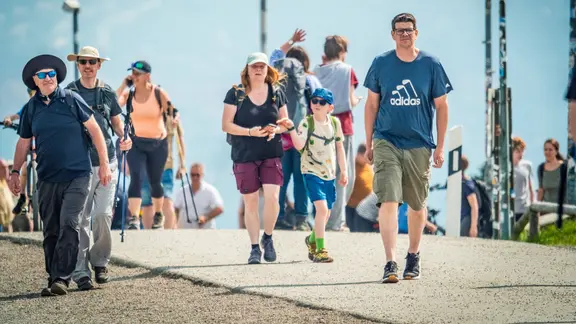
The science is clear, the literature is supportive, and the evidence is visible on every walking path in the country. We are not meant to be still, and we are certainly not meant to be alone. As the seasons change and the autumn air cools, perhaps it is time to take Kästner’s advice and walk with ourselves—and with others—in pairs.