

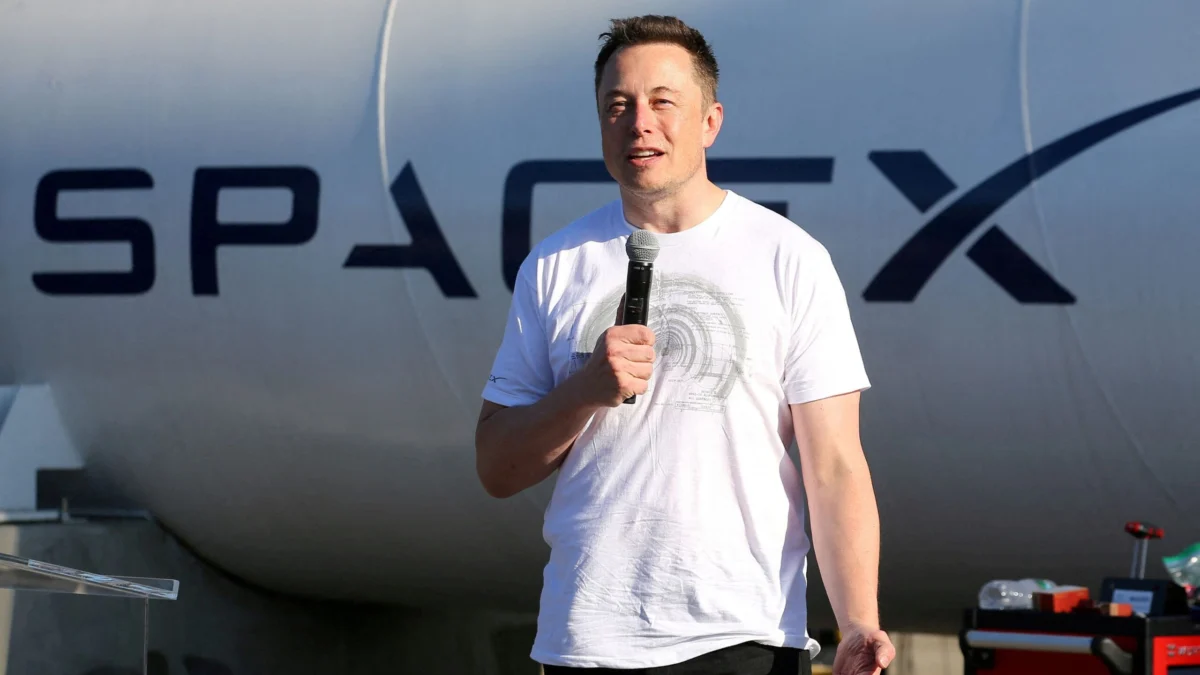
STARBASE, Texas — In a move that has sent shockwaves through the telecommunications industry, Elon Musk’s aerospace giant, SpaceX, has signaled an aggressive expansion of its Starlink satellite constellation. By securing a critical nationwide portfolio of low-frequency spectrum, SpaceX is positioning itself not merely as a broadband provider, but as a direct competitor to terrestrial wireless incumbents like T-Mobile US, Verizon, and AT&T.
The announcement, which broke on Thursday, revealed that SpaceX has entered into an agreement to acquire a significant block of 800-megahertz spectrum from the private equity firm Grain Management. While the financial terms of the deal remain undisclosed, the strategic implications are profound. This acquisition represents a pivotal step in Musk’s long-term vision: enabling mobile devices to connect directly to satellites, effectively eliminating "dead zones" and challenging the traditional infrastructure-heavy model of cellular carriers.
The Core Strategy: Solving the Physics of Connectivity
To understand the weight of this acquisition, one must look at the physics of radio wave propagation. SpaceX’s current Starlink Mobile operations have largely relied on the 2-gigahertz (GHz) spectrum. While this band is excellent for transmitting high-speed data, it faces significant challenges when it comes to "penetration"—the ability of signals to pass through obstacles like dense foliage, heavy rain, or even the walls of buildings.
By acquiring the 800-MHz low-frequency spectrum, SpaceX is addressing one of the most significant technical hurdles in satellite-to-phone communication. Lower frequencies have longer wavelengths, which are far more effective at traveling around obstacles and penetrating physical structures. By integrating this spectrum into its satellite network, SpaceX significantly increases the reliability of its "Direct-to-Cell" service, making it a viable alternative for users who require connectivity in remote areas or inside indoor environments where terrestrial towers may be absent or overloaded.
Chronology of an Industry Disruption
The path to this moment has been characterized by rapid iteration and persistent regulatory maneuvering.
- 2019-2021: SpaceX begins launching its Starlink V1 satellites, proving the viability of low-earth orbit (LEO) broadband. The company begins lobbying the Federal Communications Commission (FCC) for the rights to use spectrum for direct-to-mobile applications.
- August 2022: SpaceX and T-Mobile US announce a landmark partnership under the banner "Coverage Above and Beyond." The goal: eliminate mobile dead zones using Starlink satellites to provide text messaging and eventually voice and data services to existing smartphones.
- 2023: SpaceX begins testing its Direct-to-Cell technology on its V2 Mini satellites. Engineers successfully send and receive text messages via satellite using unmodified, off-the-shelf smartphones.
- Early 2024: The FCC grants regulatory approval for the second generation of Starlink satellites. This greenlight allows SpaceX to deploy up to 15,000 additional satellites optimized for the 2-GHz spectrum, creating the necessary density for global coverage.
- Late 2024 (The Current Acquisition): SpaceX signs the agreement with Grain Management to acquire the 800-MHz spectrum, effectively broadening the technological capability of its satellite constellation beyond just high-speed data to include robust, penetration-friendly mobile service.
Financial Implications and Market Reaction
The reaction from Wall Street was immediate and severe. As news of the deal broke, shares of major US wireless carriers experienced a sharp decline, with T-Mobile, Verizon, and AT&T all dropping by more than 5% in after-hours trading.
Investors are wary of a potential paradigm shift. For decades, companies like Verizon and AT&T have invested billions of dollars into building, maintaining, and upgrading terrestrial cell towers. This capital-intensive "moat" has protected their market share. However, if a satellite-based provider can offer universal, nationwide, and eventually global coverage at a lower cost, the valuation of these traditional tower-based businesses could be forced into a defensive posture.
Market analysts suggest that while SpaceX may not replace the need for high-density 5G urban networks in the near term, it creates a massive "pricing ceiling." Carriers may struggle to justify premium pricing if a low-cost satellite option provides reliable coverage in the very regions where they previously held a monopoly.
Regulatory Hurdles and the FCC’s Role
Despite the strategic brilliance of the move, the deal is not yet a reality. The acquisition of the 800-MHz spectrum is subject to rigorous review by the Federal Communications Commission.
The FCC must determine if the concentration of this spectrum in the hands of a single private company—SpaceX—is in the public interest. Critics and competitors are expected to argue that SpaceX could monopolize a scarce resource, potentially limiting the ability of other providers to innovate. Conversely, proponents argue that the "public interest" is best served by bringing connectivity to the millions of Americans who currently live in "digital deserts."
The recent approval for the 15,000-satellite expansion indicates that the FCC is generally supportive of the Starlink ecosystem, but the agency is notoriously cautious regarding spectrum allocation. The review process is likely to be the next major bottleneck for Musk’s ambitions.
The Competitive Landscape: A War for the Sky
SpaceX is not acting alone in its pursuit of satellite-based mobile services. Several other players are vying for a piece of the pie:
- AST SpaceMobile: A direct competitor that has already successfully demonstrated voice calls and 5G data speeds via satellite using unmodified phones. They have secured partnerships with AT&T and Vodafone.
- Lynk Global: Another satellite startup focused on providing "cell-tower-in-space" connectivity.
- Apple and Globalstar: While currently limited to Emergency SOS services, Apple’s integration of satellite hardware into the iPhone sets a precedent for consumer expectations.
The competition is no longer just about who has the best signal strength in a city; it is about who can bridge the gap between space and the device in your pocket. SpaceX’s acquisition of the 800-MHz spectrum is a direct strike against these competitors, providing them with a "low-frequency advantage" that could make their service more resilient than that of their rivals.
Future Implications: The "Globalized" Phone
Looking toward the end of the decade, the implications of this development are transformative. We are moving toward an era where the concept of "roaming" may become obsolete. If a user’s phone can switch seamlessly between a local cell tower and a Starlink satellite, the need for international roaming agreements, physical SIM cards, and localized network dependencies begins to dissolve.
This shift has major geopolitical consequences as well. For nations with underdeveloped telecommunications infrastructure, the ability to bypass the construction of thousands of miles of fiber optic cable and cell towers in favor of satellite coverage is an attractive proposition. It could accelerate digital inclusion in developing economies, though it also raises questions about data sovereignty and the influence of a single private entity over global communication infrastructure.
Conclusion: A New Frontier
The acquisition of the 800-MHz spectrum by SpaceX is more than a simple corporate transaction; it is a declaration of war on the status quo of global telecommunications. By combining the orbital reach of the Starlink constellation with the signal-penetration capabilities of low-frequency radio waves, Elon Musk is building a network that is increasingly difficult for traditional terrestrial carriers to ignore.
As the industry waits for the FCC’s verdict, one thing is clear: the future of mobile connectivity is looking up. Whether this leads to a more competitive, lower-cost environment for consumers or a new era of satellite-based monopolies remains to be seen. However, the days of relying solely on a tower at the end of the street are rapidly coming to an end. The smartphone of the future will be a space-faring device, and for SpaceX, the sky is no longer the limit—it is the platform.


























