

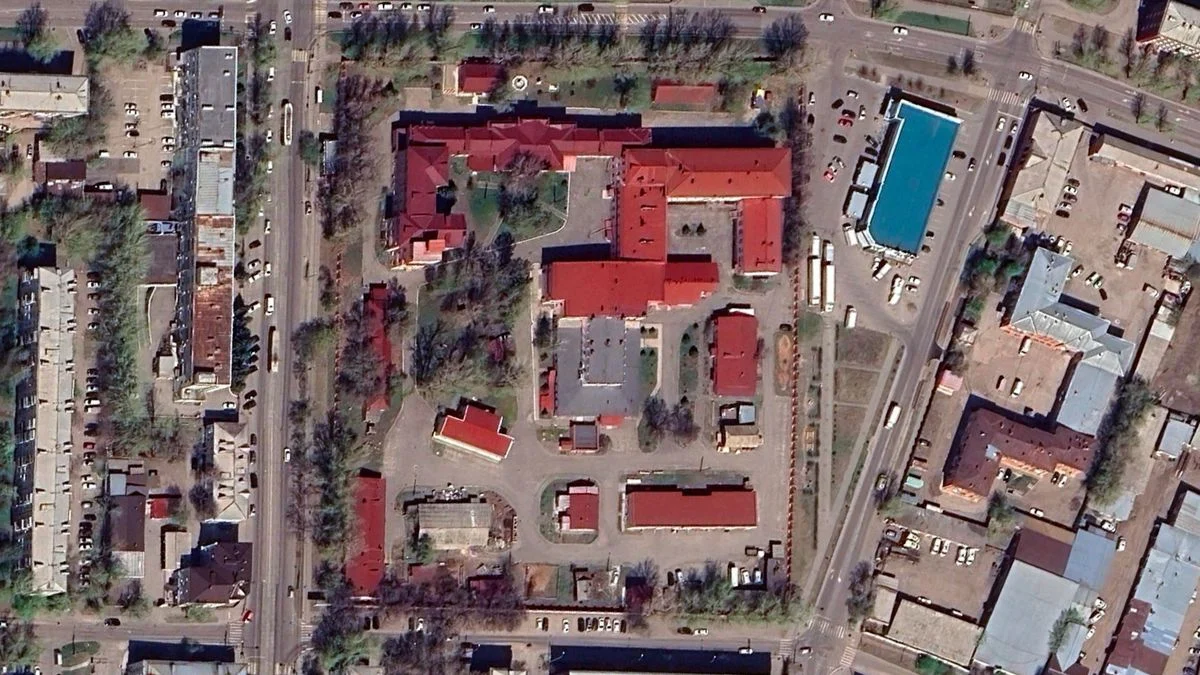
The death of a 28-year-old laboratory technician in the Siberian region of Irkutsk has triggered an international diplomatic and public health standoff. As conflicting narratives emerge from Moscow and Washington, the incident has reignited fears of a potential pathogen leak, drawing parallels to the early, opaque stages of the COVID-19 pandemic. At the heart of the crisis is the question of transparency: Was the victim’s death the result of a routine medical complication, or did it involve a catastrophic failure in biosecurity protocols involving one of humanity’s most feared diseases?
The Facts: A Fatal Incident in Schelechow
The sequence of events began late last week when a 28-year-old woman employed at a specialized institute dedicated to the study and combat of plague-related diseases passed away at a district hospital in the city of Schelechow, near Irkutsk.
Initial reports suggested a harrowing scenario: the woman, who worked directly with high-risk pathogens, had allegedly contracted the plague during her professional duties. Following her death, rumors spread rapidly, claiming that dozens of her contacts had been placed into mandatory quarantine to prevent an outbreak.
The Russian state authorities, specifically the agency responsible for epidemiological control, moved quickly to suppress the narrative of a plague outbreak. In an official statement, the agency declared that the cause of death was not a plague pathogen, but rather "pneumonia of unknown origin." Despite this, the lack of granular data, clinical logs, or transparent investigative reporting from Russian sources has created a vacuum of information that has been swiftly filled by global speculation.
Chronology of a Growing Diplomatic Crisis
- Late Last Week: The 28-year-old technician dies at the Schelechow district hospital. Initial internal reports suggest a potential infection related to her research work.
- Early Week: Unverified reports surface regarding a "plague outbreak" and mass quarantines, causing concern in local and international medical circles.
- Mid-Week: The U.S. Centers for Disease Control and Prevention (CDC) releases a statement via social media, confirming they are aware of reports regarding a suspected pneumonic plague case in the Irkutsk region. The CDC notes that while the reports are concerning, the case remains unconfirmed.
- Diplomatic Escalation: The U.S. State Department formally pressures Moscow to provide transparent information. The Wall Street Journal reports that the U.S. government has warned Russia that withholding details violates international health obligations.
- Presidential Intervention: U.S. President Donald Trump confirms he is scheduled to hold a phone call with Russian President Vladimir Putin to discuss the situation, reflecting the severity of the geopolitical tension surrounding the incident.
The Ghost of Pandemics Past: Why the World is Watching
The heightened international interest in this case is not merely about the specific medical diagnosis of one individual. It is symptomatic of a world still traumatized by the memory of the COVID-19 pandemic. In an era where "strange lung diseases" carry a specific, terrifying weight in the global consciousness, the Russian authorities’ reticence has been interpreted by many Western observers as a potential cover-up.
For international health agencies, the primary concern is the nature of the facility where the woman worked. If a death occurs within a specialized institute designed to study Yersinia pestis—the causative agent of the plague—the burden of proof lies heavily on the host nation to demonstrate that strict biosafety standards were maintained and that no secondary transmission occurred.
Official Responses and the Information Gap
The divide between Moscow and Washington regarding this case is stark. On one side, the Russian health authorities maintain a rigid position: the woman died of a respiratory illness unrelated to her work. They have provided minimal documentation to support this, leading to accusations from the U.S. that Moscow is failing its international obligations.
The U.S. State Department has not minced words. In addition to demanding transparency, the U.S. Embassy in Moscow has issued travel advisories that underscore the growing difficulty of operating within the Russian Federation. The embassy noted that its ability to assist American citizens in Russia is increasingly restricted, particularly outside the capital, and warned that government employees may face travel limitations due to "health and safety concerns." This suggests that the U.S. government is treating the situation as a potential threat to their own personnel on the ground.
Understanding the Threat: Pneumonic Plague
To understand the urgency of the U.S. response, one must understand the nature of the suspected pathogen. Pneumonic plague is the most severe form of the disease caused by the bacterium Yersinia pestis. Unlike the bubonic form, which is typically spread by fleas, the pneumonic form is highly contagious and can be transmitted from person to person through respiratory droplets.
If left untreated, the mortality rate for pneumonic plague is near 100 percent. The incubation period is remarkably short—often as little as 24 to 48 hours—meaning that an outbreak can spread through a population with devastating speed. This is why the mention of a "lab worker" and "pneumonia" in the same report triggers a high-alert status in global health security circles. The fear is not just of the disease itself, but of a laboratory-acquired infection (LAI) that could escape the confines of a controlled facility.
Geopolitical Implications: Trust in a Fragile Era
The impending conversation between Donald Trump and Vladimir Putin highlights that this is no longer just a medical issue; it is a matter of high-level statecraft. In an environment where U.S.-Russia relations are at an all-time low, the "plague incident" serves as a proxy for a deeper lack of trust.
If the Kremlin persists in withholding data, it validates the U.S. narrative that Russia is an unreliable actor in the global health security architecture. Conversely, if the Kremlin were to open the laboratory in Irkutsk to international observers—an unlikely scenario—it would represent a significant concession of sovereignty.
Furthermore, the incident forces the international community to grapple with the limitations of the World Health Organization (WHO) and other bodies in compelling states to disclose information during potential biosecurity breaches. When a nation treats health data as a state secret, the entire global chain of defense against emerging pathogens is broken.
Conclusion: The Need for Transparency
The death of the laboratory technician remains, for now, a puzzle with missing pieces. Whether it was a tragic but isolated medical event or the first sign of a failure in containment, the global reaction has been shaped by a lack of communication.
As President Trump prepares his call with President Putin, the world is waiting for more than just rhetoric. It is waiting for biological transparency. In the context of modern infectious disease, the silence of a state is often more alarming than the disease itself. Until independent verification can be provided—or until the Russian authorities offer a detailed, evidence-based account of the woman’s death—the international community will continue to view the Siberian incident with profound skepticism.
The incident serves as a grim reminder that in a globalized world, a localized tragedy in a remote region can become a catalyst for international crisis. The lessons of the past few years are clear: in the face of a potential biological threat, transparency is not just a diplomatic courtesy; it is a requirement for global survival. Whether this message will penetrate the walls of the Kremlin remains the central question of the week.










