


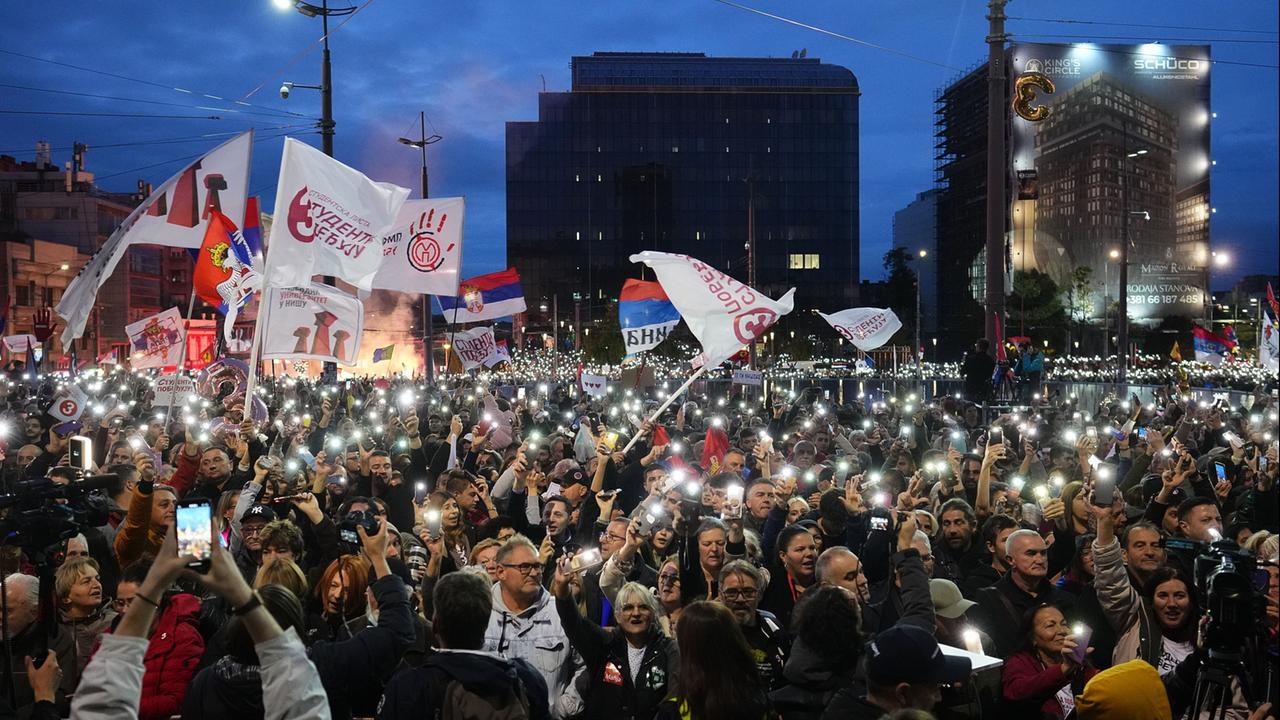
Belgrade, Serbia – October 23, 2026 – In a powerful display of public dissent, tens of thousands of Serbians, galvanized by the opposition’s "Student List" movement, converged on the capital, Belgrade, for a massive closing rally just three days before a pivotal parliamentary election. The event, held at Salvija Square, saw an estimated 150,000 participants, signaling a fervent desire for a change in leadership after more than 14 years of rule by President Aleksandar Vučić and his right-wing Serbian Progressive Party (SNS).
The "Student List – Students Win" initiative, a grassroots movement driven by the nation’s youth, has set its sights on ousting the entrenched SNS government in Sunday’s vote. Their massive demonstration underscores the growing frustration with current governance and the widespread call for a new political direction.
A Nation at a Crossroads: The Anatomy of the Protest
The sheer scale of the rally on Thursday evening was a stark testament to the deep-seated discontent simmering within Serbia. Organized by the "Student List" coalition, the demonstration saw a sea of Serbian flags and banners stretching across the city’s main thoroughfares before culminating in a powerful gathering on Salvija Square. The atmosphere was charged with a palpable mix of hope and determination, as speakers addressed the crowd, articulating a vision for a Serbia free from perceived corruption and authoritarian tendencies.
The "Student List" itself represents a significant shift in the Serbian political landscape. Emerging from student-led protests, the movement has successfully broadened its appeal, attracting a diverse range of citizens weary of the status quo. Their platform centers on a fundamental critique of the current government’s policies and its perceived erosion of democratic institutions. The movement’s slogan, "Students Win," resonates with a younger generation eager to shape their future and a broader electorate seeking accountability and transparency.
The rally served as a potent final push for the opposition, aiming to consolidate support and maximize voter turnout. The juxtaposition of this massive display of popular will against the backdrop of an upcoming election creates a high-stakes environment, with the outcome poised to significantly alter Serbia’s political trajectory.
The Genesis of Change: A Chronology of Dissent
The current political climate in Serbia has been shaped by a series of events, most notably the tragic accident in Novi Sad in November 2024, which claimed the lives of 16 people when a train station canopy collapsed. This incident, initially a catalyst for student-led protests demanding accountability for the tragedy, quickly evolved into a broader indictment of the government.
President Aleksandar Vučić’s strategic move to resign from his nine-year presidency in late September 2026, and subsequently announce his candidacy for Prime Minister – a position he previously held – has been a defining moment. This maneuver directly addressed a key demand of the student protest movement: the holding of early parliamentary elections. By stepping down from the presidency, Vučić effectively paved the way for these elections, a concession widely interpreted as a response to the mounting pressure from the public and the student-led demonstrations.
The protests themselves have been a slow burn, gradually escalating in scope and intensity. What began as a focused demand for an investigation into the Novi Sad disaster and the prosecution of those responsible, soon broadened to encompass systemic issues. Citizens began voicing concerns about rampant corruption, the perceived lack of independent judiciary, and the government’s increasingly centralized control over state institutions. The student movement, with its youthful energy and unwavering commitment, has become the vanguard of this widespread discontent.
Supporting Data: A Snapshot of Public Sentiment
While precise polling data from the immediate pre-election period is often subject to variation and interpretation, anecdotal evidence and the sheer scale of the opposition’s final rally suggest a significant shift in public mood. The "Student List" has tapped into a reservoir of frustration, particularly among young people who feel disenfranchised and concerned about their future prospects in Serbia.
Reports from the ground indicate a growing disillusionment with the economic policies of the current government, with concerns about rising inflation, unemployment, and a perceived lack of investment in crucial sectors. Furthermore, the ongoing debate surrounding Serbia’s relationship with both the European Union and Russia continues to be a salient issue, with differing views on foreign policy impacting voter sentiment.
The "Student List" has effectively articulated a narrative of change, promising a more transparent and accountable government, a renewed focus on democratic reforms, and a commitment to tackling corruption head-on. Their message appears to be resonating with a significant portion of the electorate, suggesting that the upcoming election could be a closely contested affair.
Official Responses and Political Maneuvers
The Serbian government, led by President Vučić, has maintained a public stance of confidence, emphasizing the stability and progress achieved during their tenure. While acknowledging the right to protest, government officials have often characterized the opposition’s demands as politically motivated and aimed at destabilizing the country.
Vučić’s decision to run for Prime Minister can be viewed as a strategic gambit. By returning to the executive leadership role, he aims to consolidate his influence and project an image of experienced leadership at a critical juncture. His campaign has focused on his track record of economic development and his commitment to Serbia’s European Union aspirations, while simultaneously asserting the importance of maintaining strong ties with Russia, even amidst the ongoing conflict in Ukraine.
The ruling SNS party has also been actively engaging in its own campaign events, highlighting perceived achievements and warning of the potential negative consequences of an opposition victory. The political discourse has been characterized by strong rhetoric from both sides, with each camp seeking to mobilize their core supporters and persuade undecided voters.
Implications for Serbia’s Future
The outcome of Sunday’s parliamentary elections holds profound implications for Serbia’s domestic and foreign policy.
Domestic Policy: A victory for the "Student List" and its allied opposition parties could herald a period of significant reform. This would likely include efforts to strengthen democratic institutions, enhance judicial independence, and implement robust anti-corruption measures. A new government might also prioritize investments in education, healthcare, and infrastructure, with a focus on creating more opportunities for young Serbians. Conversely, a continuation of the SNS’s rule would likely mean a continuation of current policies, with an emphasis on economic development and maintaining existing geopolitical alignments.
Foreign Policy: Serbia’s relationship with the European Union has been a long-standing aspiration. An opposition government might accelerate the path towards EU accession, potentially aligning Serbia more closely with Western democratic norms and values. However, the country’s complex relationship with Russia will remain a delicate balancing act. While the "Student List" may lean towards stronger Western integration, the pragmatic realities of Serbia’s geopolitical position and historical ties with Russia will undoubtedly influence any new government’s foreign policy decisions.
The upcoming election represents a critical juncture for Serbia. The massive turnout at the opposition’s final rally underscores the deep desire for change among a significant portion of the population. The coming days will reveal whether this widespread sentiment translates into a decisive electoral victory, ushering in a new era for the Balkan nation. The world watches closely as Serbia stands on the precipice of a potentially transformative political moment.



