

By Editorial Staff
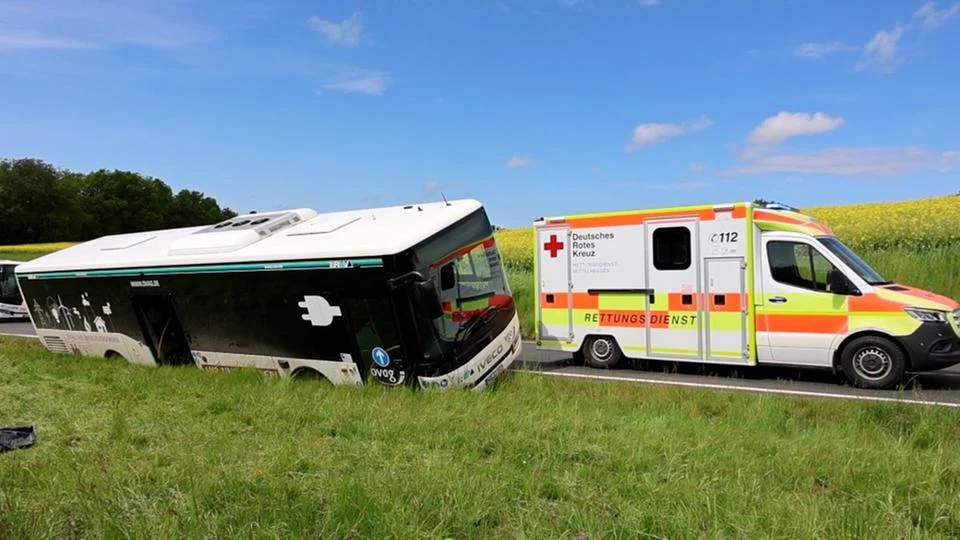
A routine afternoon commute turned into a scene of distress on Wednesday in the Vogelsberg district of Hesse, Germany. A public transport bus, primarily occupied by students returning from school, veered off the L3160 state road and came to a halt in a roadside ditch. The incident, which occurred between the localities of Eifa and Grebenau, triggered a significant emergency response and left nine individuals requiring medical attention.
As authorities continue to investigate the cause of the accident, the local community remains shaken by the event, which highlights the inherent risks associated with rural transit routes during the transition between the afternoon and evening hours.
Main Facts: The Incident at a Glance
The accident occurred at approximately 2:00 PM on the L3160, a winding stretch of road known for its rural character. According to reports provided by the local police department, a 69-year-old bus driver was navigating the route when the vehicle unexpectedly deviated to the right.
The bus, a standard-size municipal line vehicle, exited the asphalt surface and slid into a ditch adjacent to the road. At the time of the incident, there were 31 passengers on board, the vast majority of whom were students traveling home from their respective schools.
The human toll of the accident, while fortunately avoiding fatalities or life-threatening injuries, was significant enough to require a multi-agency response. Nine individuals sustained injuries classified by emergency services as "minor." Of these, seven people—including the driver and six students—were transported to local hospitals for further diagnostic assessment and treatment. Two other passengers were evaluated and treated by paramedics directly at the scene.
The remaining 22 passengers, who were physically unharmed, were provided with emotional and logistical support by emergency responders on-site before being reunited with their families.
Chronology of Events: From Impact to Resolution
The timeline of the afternoon reflects the efficiency of the local emergency response infrastructure in the Vogelsberg region.
14:00 – The Incident
The driver loses control of the vehicle on the L3160. The bus drifts off the right side of the road and settles into the ditch. The impact causes enough internal movement to result in minor injuries among the passengers.
14:15 – Initial Response
Emergency calls reach local dispatch. Given the nature of the vehicle—a bus—and the involvement of minors, the situation is treated with high priority. Multiple ambulances, police units, and local fire departments are dispatched to the scene.
14:45 – On-Site Stabilization
First responders arrive. The site is secured, and the L3160 is cordoned off to prevent further traffic incidents. Paramedics begin the process of triaging the 31 passengers. A mobile triage unit is established to distinguish between those requiring hospital care and those who can be treated on-site.
15:30 – Hospital Transport and Reunification
The seven injured individuals are loaded into ambulances and transported to nearby medical facilities. Meanwhile, the uninjured students are moved to a secure area where they are provided with water and psychological support. Local authorities begin the process of contacting parents and guardians to facilitate pick-ups.
17:00 – Scene Clearance
As the evening approaches, the investigative team completes its initial forensic scan of the road and the bus. Arrangements are made for a heavy-duty recovery vehicle to extract the bus from the ditch.
Supporting Data: Infrastructure and Safety Parameters
The L3160 is a critical artery for students living in the outlying areas of Alsfeld and the surrounding Vogelsberg municipalities. The topography of this region—characterized by undulating hills, dense forest patches, and narrow road shoulders—presents unique challenges for heavy transport vehicles.
Vehicle Specifications and Safety
The bus involved is a standard public transit vehicle. While these vehicles are built to stringent European safety standards, they are designed primarily for urban or semi-urban use. When traversing rural roads, the lack of guardrails in certain sections, combined with the weight of a full passenger load, means that even a minor loss of traction can lead to significant departures from the roadway.
Traffic Volume and Road Conditions
Preliminary reports suggest that the weather conditions at the time of the incident were stable, suggesting that the primary cause of the accident lies either in mechanical failure, driver error, or an external environmental factor that has yet to be identified. The damage to the bus itself has been described by local authorities as "minor," suggesting that the velocity of the vehicle at the moment of impact with the ditch was relatively low.
Official Responses and Investigative Status
The investigation into the cause of the crash is being led by the regional police, who have classified the incident as a "solo accident." This designation implies that no other vehicles were involved and that the bus was not forced off the road by another driver or an animal crossing the path.
The Question of "Why"
"We are currently reviewing all possibilities," a police spokesperson stated during a press briefing. The investigators are looking into three primary avenues:
- Mechanical Integrity: Was there a failure in the steering or braking systems of the bus?
- Human Factor: Did the driver experience a momentary distraction, a health-related event, or fatigue?
- Environmental Factors: Was there debris on the road, a slick patch, or a hidden obstacle that caused the sudden drift?
A technical inspection of the vehicle is expected to be completed within the coming days, which should clarify whether a mechanical issue played a role.
Implications for Rural Transit
The incident in the Vogelsberg district has sparked a wider conversation about the safety of rural school transportation. In many parts of Hesse, the integration of school transport into the public line network is a cost-effective solution, but it places a significant responsibility on transport operators to ensure their drivers are adequately rested and their vehicles are suited for the specific hazards of rural routes.
Psychological Impact on Students
While the physical injuries were labeled as minor, the psychological impact on the young passengers cannot be overlooked. The experience of being involved in a transit accident is traumatic for adolescents. Local school boards have already indicated that they will be providing counselors to the affected schools to assist students who may be experiencing post-traumatic stress or anxiety about returning to their daily commute.
Infrastructure Demands
Local advocacy groups are already calling for a review of the L3160’s safety features. The accident serves as a stark reminder that rural roads often lack the protective infrastructure—such as wider shoulders or crash barriers—that might prevent a vehicle from ending up in a ditch. Whether this leads to increased funding for road safety in the region remains to be seen, but the debate is expected to gain momentum in the upcoming district council meetings.
Communication and Parental Concerns
The efficient notification process used by the authorities yesterday was praised by many parents. However, the event has highlighted the need for robust emergency protocols for school transport operators. Ensuring that every driver has an immediate, direct line of communication to school administrators and parent contact databases is essential for ensuring that in a crisis, information reaches families before misinformation can spread via social media.
Conclusion
As the L3160 returns to normal operation, the focus shifts from emergency response to long-term recovery and prevention. The nine individuals injured are expected to make a full recovery, but the event serves as a sobering reminder of the fragility of our daily transport routines. The authorities continue to urge witnesses who may have been in the vicinity of Eifa or Grebenau around 2:00 PM on Wednesday to come forward with any dashcam footage or observations that could help piece together the final moments before the bus left the road.
For the residents of the Vogelsberg, the event is a prompt to re-evaluate the safety protocols that protect the most vulnerable commuters—the students—who rely on the regional transit network to bridge the gap between their homes and their future.









Leave a Reply