


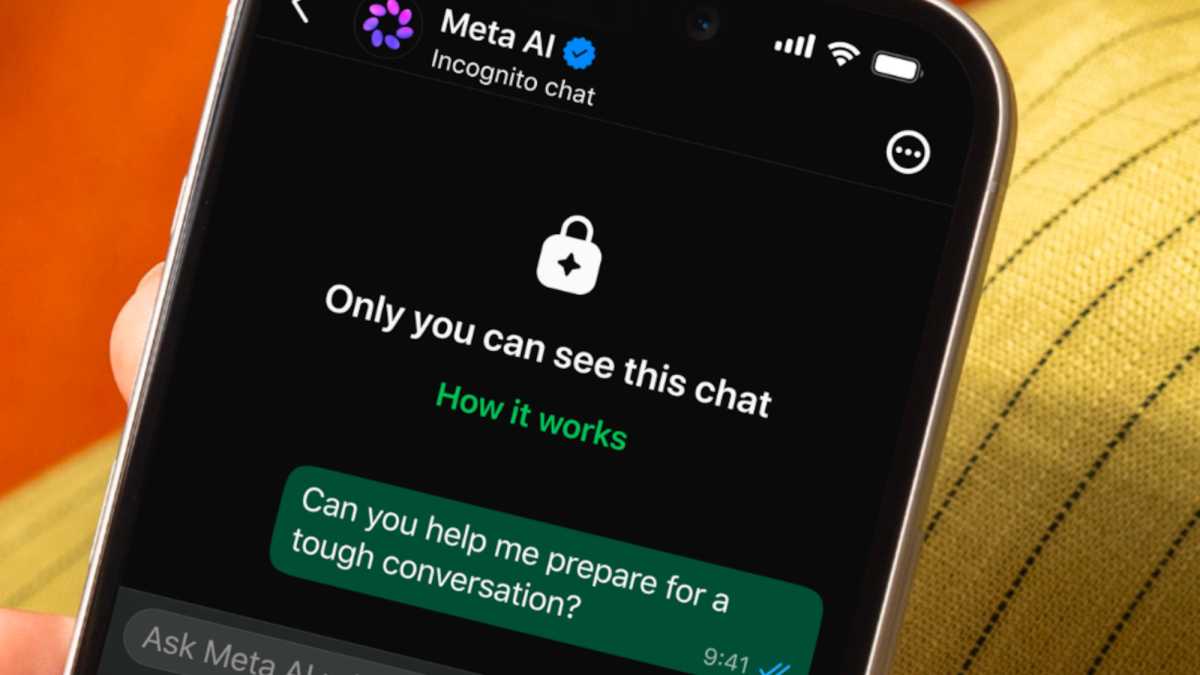
In a major shift toward user privacy within the artificial intelligence landscape, Meta has announced the rollout of "Incognito" mode for its Meta AI assistant, available within WhatsApp and the standalone Meta AI application. This strategic move aims to address one of the most significant consumer concerns regarding generative AI: the fear that sensitive, private, or potentially embarrassing personal queries are being stored, analyzed, and integrated into future training datasets.
By implementing "Private Processing," Meta claims to offer a sanctuary for users to ask sensitive questions—ranging from health concerns to personal advice—without the data ever reaching Meta’s central servers in a readable format. However, the move arrives amidst a climate of intense scrutiny regarding how tech giants handle user data, prompting both praise for the initiative and cautious skepticism from privacy advocates.
The Core Concept: Why Privacy Matters in AI
Generative AI platforms like ChatGPT, Gemini, and Claude are inherently built on data collection. For an AI to "learn," it must process massive volumes of human interaction. However, this process often creates a "panopticon effect" for the user. When a person asks an AI about the symptoms of a delicate medical condition, concerns about intimacy, or private financial dilemmas, they are effectively entrusting that data to a corporation.
Meta’s new Incognito feature is designed to bridge this gap. By utilizing end-to-end encryption protocols and a "Private Processing" architecture, the company asserts that queries made within this specific mode are shielded. According to Meta, this means that not only are the chats hidden from the public, but they are also inaccessible to Meta itself.
The "Stigma Gap" in AI Adoption
There is a specific category of queries that users hesitate to type into a standard AI interface. These include:

- Medical Inquiries: Questions regarding sexually transmitted infections (STIs), incontinence, or chronic conditions that users may feel too embarrassed to discuss with a human doctor immediately.
- Social & Interpersonal Conflicts: Navigating complex relationship issues, including infidelity or domestic disputes.
- Health and Wellness: Questions regarding hygiene, bad breath, or sensitive aesthetic concerns.
Until now, the trade-off for getting an instant answer from an AI was the permanence of the data. Meta’s latest initiative is a direct response to this "stigma gap," acknowledging that for AI to become a truly universal utility, users must be able to treat it as a private confidant rather than a public search engine.
A Chronology of Meta’s Privacy Evolution
Meta’s journey toward this announcement has been marked by a series of pivots and regulatory pressures.
- Phase 1: The Integration of Meta AI. Meta first introduced its AI assistant across its family of apps (WhatsApp, Instagram, Messenger) to compete with OpenAI’s dominance. Initially, these interactions were treated similarly to standard user data.
- Phase 2: The Regulatory Backlash. Throughout 2024 and 2025, Meta faced mounting pressure from European and North American regulators regarding the training of its AI models on user content. The "opt-out" mechanisms were criticized for being overly complex.
- Phase 3: The Pivot to "Private Processing." Recognizing that trust is a barrier to adoption, Meta’s engineering teams began developing the "Private Processing" framework. This architecture ensures that when a user engages in an Incognito chat, the decryption and processing happen locally or through a secure, blind gateway that prevents metadata logging.
- Phase 4: The Official Rollout. In May 2026, Meta formally announced the integration of these features into WhatsApp, positioning it as the most secure way to interact with an AI assistant on a mobile device.
Supporting Data and Technical Architecture
To understand the significance of this update, one must look at the technical whitepaper provided by Meta. The core of the technology relies on "Private Processing," which diverges from traditional cloud-based AI processing.
Key Technical Pillars:
- Zero-Knowledge Architecture: Meta utilizes encryption protocols that theoretically prevent the company from viewing the decrypted prompts. The AI model operates within a secure enclave where it generates an answer and then flushes the context window immediately upon session termination.
- Decoupling from Model Training: Data from Incognito chats is explicitly marked as "non-trainable." This ensures that the user’s personal information—no matter how detailed—is not ingested into the large language models (LLMs) that power the broader Meta ecosystem.
- Local Metadata Minimization: Standard chats often log metadata (the time, frequency, and device type of the user). In Incognito mode, Meta claims to strip away these identifiers, ensuring that even the metadata trail is severed from the user’s primary account.
Official Responses and Industry Skepticism
Meta’s PR team has been vocal about the intent behind this feature. In a recent blog post, a company spokesperson emphasized: "Our goal is to ensure that every user feels comfortable exploring the potential of AI without sacrificing their personal dignity or privacy. With Incognito mode, you are in control of your digital footprint."
However, the tech community has responded with a mixture of optimism and "wait-and-see" caution.
Privacy Advocacy Perspective:
Advocates from organizations such as the Electronic Frontier Foundation (EFF) have historically cautioned against "trust-based" security models. While the technical documentation appears sound, critics argue that a "black box" approach—where the user must take the company’s word that data is being processed privately—is not the same as open-source, verifiable privacy.
Corporate Strategy Perspective:
Market analysts view this move as a masterstroke in user retention. By providing a "safe space," Meta ensures that WhatsApp remains the primary interface for users, effectively preventing them from migrating to competitors like ChatGPT or Gemini for sensitive, high-value queries. By capturing this data, even if it is not used for training, Meta cements its dominance in the daily lives of its users.
Implications for the Future of Generative AI
The introduction of Incognito AI chats is likely to trigger a domino effect across the industry. If Meta successfully markets this as the "gold standard" for private AI, competitors will be forced to follow suit.
1. The Rise of "Privacy-First" AI
We are entering an era where privacy is no longer a niche feature but a competitive differentiator. Expect other major players like Google and OpenAI to introduce similar "private" tiers, potentially as part of premium subscription packages.
2. Regulatory Normalization
This move by Meta sets a new benchmark that regulators may soon demand of all AI companies. If one company can offer truly private AI processing, the argument that "training requires mass data harvesting" may lose its legal weight in courts, potentially leading to stricter global privacy legislation.
3. Changes in User Behavior
As users become accustomed to the idea that their AI assistant is "private," we will likely see a surge in AI utilization for sensitive tasks. This could revolutionize areas like telehealth, personal counseling, and private research. However, this also carries a risk: users may become too comfortable, leading them to share information that, if the system were ever compromised, could lead to massive data leaks.
4. The Trust Economy
Meta’s reputation has been historically checkered regarding user privacy. By staking its AI future on the promise of "Private Processing," the company is making a high-stakes bet. If they can successfully implement this without a data breach, it could mark the beginning of a brand renaissance for Meta. Conversely, any failure to uphold these privacy promises would be catastrophic for the company’s standing in the AI race.
Conclusion
The launch of Incognito chats for Meta AI on WhatsApp is a significant step forward in the maturation of generative AI. By acknowledging the human need for discretion, Meta is attempting to remove the biggest psychological barrier to AI adoption.
The feature represents a sophisticated balance between corporate utility and individual privacy. Whether this is a genuine paradigm shift or a clever marketing maneuver remains to be seen. For the average user, however, the choice is clear: Meta is offering a tool that promises to listen, assist, and then disappear. In the increasingly intrusive world of digital technology, that is a compelling proposition—provided the company can keep its promise. As users begin to test the boundaries of this new mode, the eyes of the privacy community will be watching closely, ensuring that "Incognito" truly means what it says.























Leave a Reply