


By Sports Editorial Staff
Updated October 5, 2026
In a display of tactical discipline and individual brilliance, the Portuguese national football team has officially punched its ticket to the UEFA Nations League quarter-finals. Despite the absence of its most decorated icon, Cristiano Ronaldo, the Seleção das Quinas maintained their flawless record, defeating Norway 2-1 in a high-octane encounter.
While the victory cements Portugal’s status as a tournament favorite, the narrative surrounding the team remains inextricably linked to the ongoing power struggle between head coach Jorge Jesus and the legendary forward. As the dust settles on another hard-fought win, the footballing world is left to ponder whether this marks the beginning of a new era or a temporary schism in the heart of Portuguese football.
The Main Facts: A Clinical Performance
Portugal’s victory on October 4, 2026, was a testament to the squad’s depth. By securing a 2-1 win over the Norwegians, Portugal moved to 12 points, guaranteeing their progression to the knockout stages with games to spare.
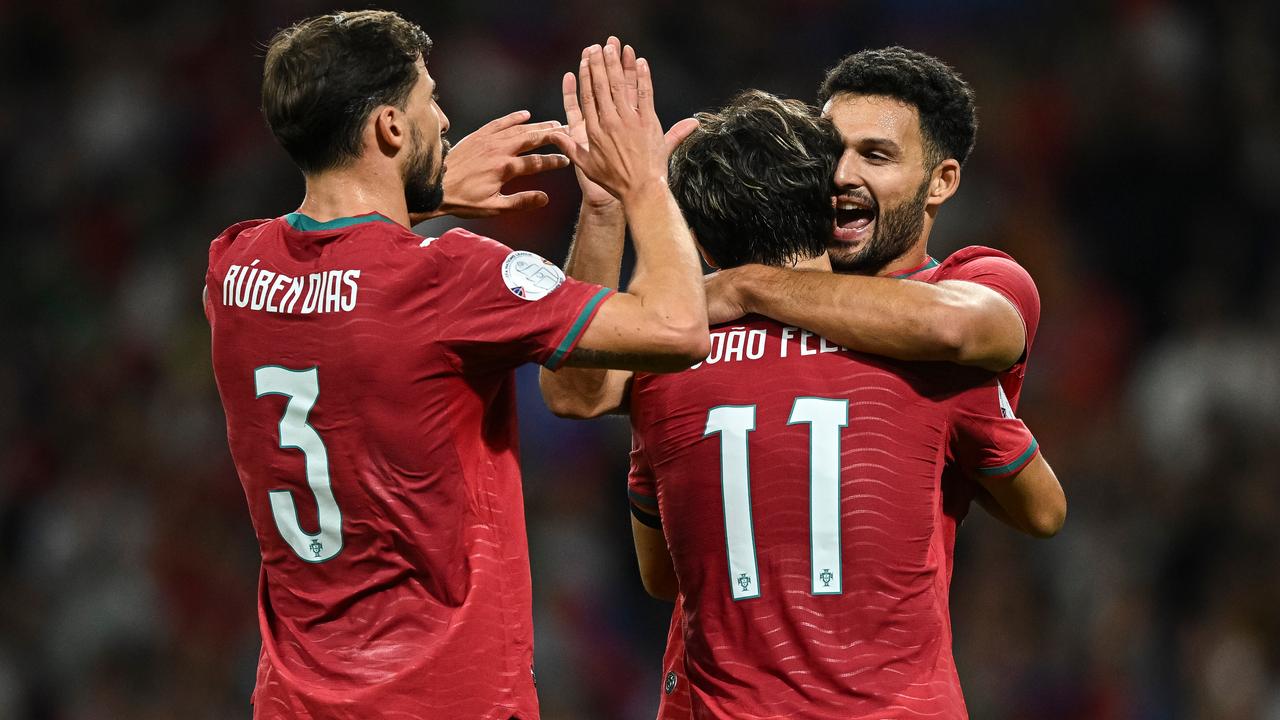
The match was defined by two moments of individual magic that elevated an otherwise tactical chess match. After falling behind in the 36th minute, Portugal’s Joao Cancelo responded almost immediately with a thunderous strike from the edge of the box. The game-winner, however, belonged to Gonçalo Ramos, who has successfully stepped into the limelight as the team’s primary offensive focal point. Ramos’s 79th-minute strike effectively neutralized Norway’s defensive efforts, securing the three points despite a late-match red card for Francisco Conceição, which forced the hosts to weather a tense final few minutes with ten men.
Chronological Breakdown: How the Match Unfolded
The encounter began with a feeling-out period, as Norway, desperate for points, implemented a high-press strategy designed to frustrate Portugal’s midfield transition.
First Half: A Duel of Volleys
Norway’s persistence paid off in the 36th minute. A well-worked corner routine found Kristoffer Ajer in space; the defender connected with a spectacular half-volley that left the Portuguese goalkeeper with no chance. The home crowd’s silence was brief, however. Just two minutes later, Joao Cancelo ignited the stadium. Receiving the ball on the periphery of the penalty area, Cancelo unleashed a clinical strike that whistled into the bottom corner, leveling the score and shifting the momentum back to the hosts.
Second Half: The Turning Point and Haaland’s Exit
The second half saw a more cautious approach from both sides, characterized by physical midfield duels. The tension reached a boiling point in the 65th minute when Erling Haaland, Norway’s talisman, went down clutching his hamstring. His subsequent substitution, which saw him hobbling off the pitch, was a significant blow to Norway’s hopes of mounting a late comeback.
With the Norwegian attack blunted, Portugal capitalized on the lack of structure in the opposition’s final third. Gonçalo Ramos, displaying the composure that has made him a target for Europe’s elite clubs, found the back of the net in the 79th minute. The final ten minutes were chaotic, with Francisco Conceição receiving a second yellow card in the 86th minute, forcing Portugal to retreat into a defensive shell until the final whistle.
Supporting Data: The Post-Ronaldo Reality
The statistics paint a compelling picture of a team in transition. Portugal has now played three consecutive matches without Cristiano Ronaldo, winning all three. This streak suggests that Jorge Jesus’s system—which prioritizes rapid transition and fluid movement—is functioning at a high level.
- Tournament Standing: Portugal sits atop their group with four wins from four matches.
- Goal Scoring: Gonçalo Ramos has now recorded three goals in the last four Nations League fixtures, effectively filling the void left by the veteran superstar.
- Disciplinary Record: Portugal’s aggression is a double-edged sword; the team has accumulated two red cards in the last four matches, highlighting a high-intensity, albeit occasionally reckless, defensive style.
Norway’s outlook, conversely, is bleak. Having suffered their third consecutive 2-1 loss, they are now mathematically eliminated from contention for the top spot, a disappointing outcome for a squad built around the prolific Haaland.
Official Responses: The Door Left Ajar
The post-match press conference was dominated not by the tactical nuances of the game, but by the elephant in the room: the status of Cristiano Ronaldo. Following his sudden departure from the team’s training camp in Denmark earlier in the week, questions regarding his future in the national team have reached a fever pitch.
Head coach Jorge Jesus, known for his uncompromising management style, addressed the situation with calculated nuance. "If he wants to return, the door is open. The decision lies with Cris," Jesus stated during his briefing. "For me, for the next international break—provided he is playing consistently at Al-Nassr—he is a player who can be selected. There is no personal vendetta here; there is only the team."
This olive branch comes after reports that Ronaldo departed the training camp in a private jet under the cover of night, reportedly frustrated by Jesus’s repeated insistence that the 41-year-old would start on the bench. The rift, which stems from a clash of philosophies regarding team hierarchy and age-management, remains the primary distraction for the Portuguese Football Federation.
Implications: A Team at a Crossroads
The ramifications of this victory are two-fold.
1. Tactical Evolution
Portugal is proving that they can evolve. The shift away from a system centered on a singular, static focal point has allowed players like Ramos, Joao Felix, and Rafael Leão to occupy more space. The team’s ability to win without their historic captain validates Jesus’s long-term project of "democratizing" the attack.
2. The Cultural Challenge
Despite the on-pitch success, the cultural challenge remains immense. Ronaldo is not just a player; he is a national institution. The sight of him leaving the camp in a private jet to Madrid, signaling the potential end of his international career, sent shockwaves through the Portuguese fanbase. Should Jesus continue to win, he will be hailed as the architect of a new golden generation. However, should the team face a slump, the absence of Ronaldo will inevitably be used as a stick with which to beat the coaching staff.
3. Norway’s Uncertain Future
For Norway, the focus must shift toward injury management. The sight of Erling Haaland limping off the pitch is a concern not just for his national side, but for the entire European footballing landscape. As they look toward the next cycle of qualifiers, their inability to close out tight matches against elite opponents remains their Achilles’ heel.
Final Thoughts
As Portugal prepares for the quarter-finals, they do so as a team that has found its rhythm. They have demonstrated that they are capable of winning "the ugly way" and the "beautiful way," regardless of who wears the captain’s armband. The question is no longer whether Portugal can survive without Ronaldo, but rather, what kind of legacy they will write in his absence.
Whether the superstar returns to the fold remains a matter of personal pride and tactical necessity. For now, the scoreboard speaks louder than the headlines: Portugal is in the quarter-finals, and they are a force to be reckoned with.












