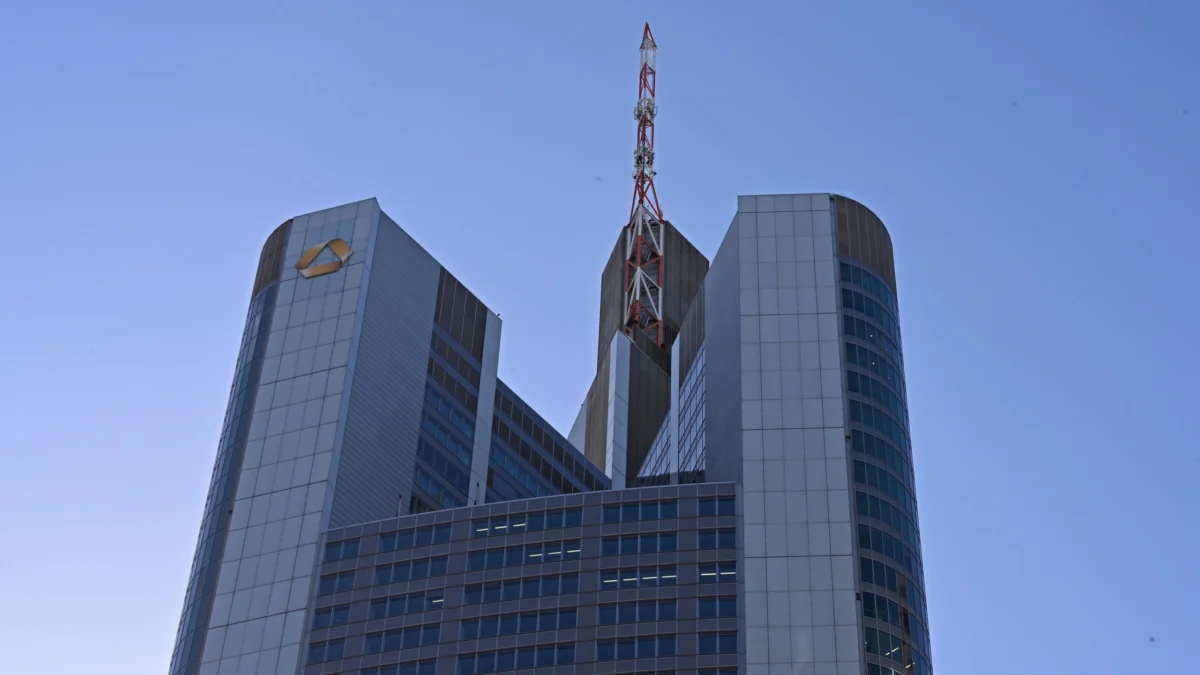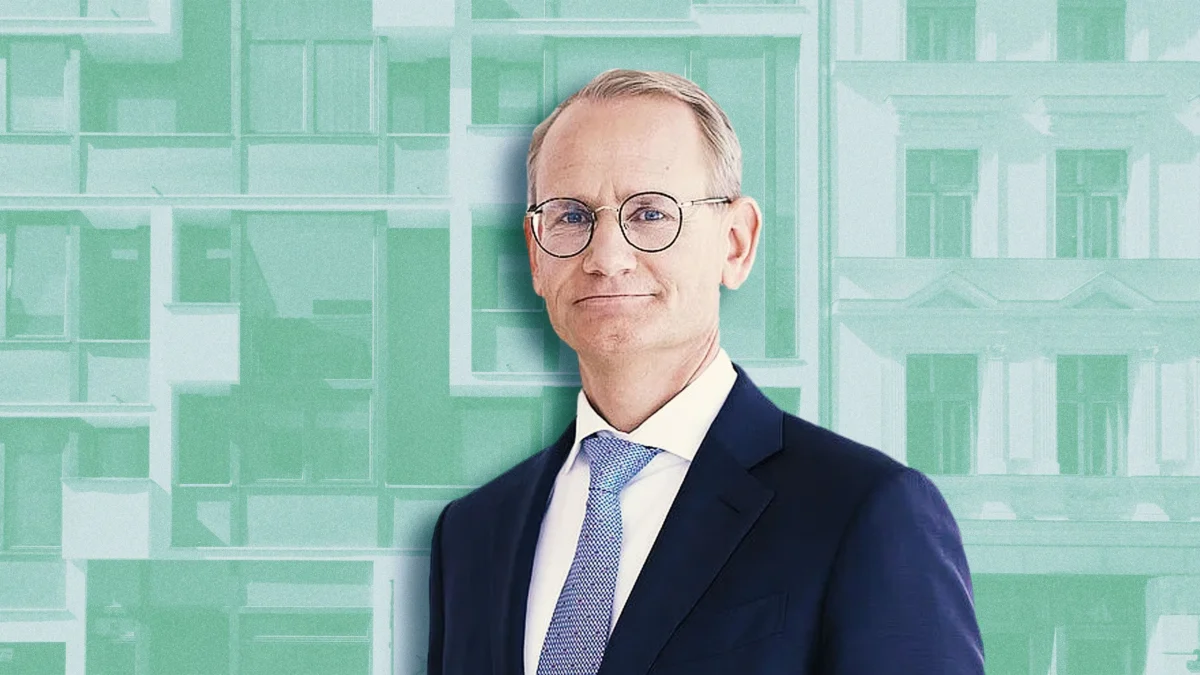
The German real estate sector, long considered a bastion of stability for institutional investors and private homeowners alike, is currently navigating its most turbulent period since the 2008 financial crisis. With construction financing costs reaching levels not seen in over a decade, the industry is grappling with a shift in the economic paradigm. Lars von Lackum, CEO of LEG Immobilien, one of Germany’s largest residential property companies, recently sat down to address the mounting pressures of interest rate hikes, the stagnating transaction market, and the intensifying political discourse surrounding housing policy.
Main Facts: The Interest Rate Conundrum
The core challenge facing the German property market today is the rapid escalation of refinancing costs. For firms like LEG, which must refinance roughly one billion euros annually, a 100-basis-point increase in interest rates translates into approximately ten million euros in additional annual costs.
While von Lackum resists characterizing the current situation as a "shock"—arguing instead for a measured, strategic approach—he acknowledges that the landscape has fundamentally shifted. For a company of LEG’s scale, these additional costs represent roughly five percent of their total earnings. While manageable through operational efficiency, organic growth, and calibrated rent adjustments, the impact is undeniable. The primary concern is not necessarily the current year, but the ripple effects expected in 2026 and beyond, as the cost of capital continues to weigh on long-term investment cycles and new development projects.

Chronology: From Stability to Tightening Markets
To understand the current malaise, one must look at the recent trajectory of the market:
- Pre-2023: The market benefited from a long period of low interest rates, facilitating a boom in residential construction and consistent property value appreciation.
- Early 2024: The industry saw a brief period of optimism in the first half of the year, with transaction volumes showing signs of a robust rebound.
- Late 2024: Momentum stalled. Following a nine-month stagnation, transaction volumes began to flatten, trailing behind the previous year’s figures.
- Looking Ahead (2025-2026): Analysts and industry leaders anticipate a continuation of the "cold wind" blowing through the sector. The market is increasingly characterized by "small-scale" activity, with large-scale, high-value deals becoming a rarity as uncertainty regarding future property valuations persists.
Supporting Data and Financial Strategy
LEG Immobilien’s response to these conditions is anchored in a rigorous, scenario-based planning model. Every autumn, the company stress-tests its medium-term strategy against various interest rate hikes—including hypothetical scenarios where rates climb by an additional 100 basis points.
The "AFFO" Benchmark
Despite the macro-economic headwinds, LEG maintains its guidance for the Adjusted Funds From Operations (AFFO), a critical metric for real estate firms representing the cash flow from operations after accounting for capitalized investments. The company projects an AFFO in the range of 220 to 240 million euros. If achieved, this would represent a new record for the firm, highlighting that while the environment is difficult, the underlying business remains resilient.

Rent Adjustments
The debate over rent affordability is central to the firm’s strategy. LEG has projected a rent increase of 3.8 to 4.0 percent for the current year, which includes a "catch-up" effect for cost-linked rents. Excluding specific regulatory adjustments for state-subsidized housing, the underlying increase is closer to 3.3 to 3.5 percent. With an average net cold rent of 7.21 euros per square meter, the company maintains that its pricing remains firmly within the realm of the "affordable," pushing back against critics who characterize large landlords as a "rent mafia."
Official Responses: The Political Minefield
The real estate market is no longer just a financial issue; it has become a hot-button political topic. In Berlin, the debate regarding the potential "socialization" (or state acquisition) of large residential portfolios has reached a fever pitch.
The Risks of Socialization
Lars von Lackum has been a vocal critic of the socialization proposals. Drawing from his observations of the housing market in Eastern Germany post-reunification, he argues that state control often leads to a "dramatic" decline in the quality of the building stock. He contends that such measures would not create a single new apartment and would only serve to make the market more rigid and unresponsive to the needs of tenants.

Impact on Global Investor Confidence
The mere discussion of expropriation has caused ripples internationally. Large foreign institutional investors, who provide the capital necessary for large-scale housing projects, have reached out to leadership at companies like LEG to express their concerns. The recurring question from abroad is whether Germany is shifting toward a socialist economic model—a perception that threatens to chill foreign direct investment in the country’s infrastructure.
Implications for the Future
The implications of this environment are far-reaching, affecting everything from bank lending policies to the political stability of the nation.
1. The "Banker’s Perspective" and the Pfandbrief
The crisis has put the banking sector on high alert. The German Pfandbrief—a highly secure covered bond—is the backbone of real estate financing. If the value of the underlying collateral (the property) is threatened by political intervention like forced socialization, the risk premiums on these bonds will rise. This, in turn, increases borrowing costs for all market participants, essentially penalizing every homebuyer and tenant across the country for local political instability in specific municipalities.

2. A Call for Political Clarity
Von Lackum emphasizes that the housing shortage is a "quantity problem," not an ownership problem. Solving it requires more building, not changing who holds the title to existing units. As the German government signals intent to pass legislation preventing state-level socialization, there is a cautious hope that legal certainty will return.
3. Corporate Responsibility and the Rise of Populism
Beyond the balance sheet, the industry faces a societal mandate. With extreme political parties gaining traction in recent regional elections, von Lackum argues that the business community must take a more active role in defending democratic and liberal economic values. He specifically condemns nationalist rhetoric, such as "German apartments for Germans," noting that Germany’s economic and social future depends on qualified immigration. A healthy, open, and functioning housing market is, in his view, a fundamental requirement for a stable democracy.
Conclusion: A New Era of Discipline
The era of "easy money" for the German real estate sector has definitively ended. As the industry moves forward, it is entering a period of increased discipline, where companies must justify every investment and every rent increase through the lens of long-term sustainability and economic reality.

For LEG Immobilien, the strategy is clear: focus on operational excellence, maintain a disciplined approach to capital allocation, and engage in the public discourse to steer policy away from measures that could stifle development. While the path ahead is fraught with the uncertainty of interest rates and the volatility of political agendas, the focus remains on the fundamentals—providing quality housing at an affordable price while ensuring the long-term viability of the enterprise. As von Lackum aptly puts it, the wind may be cold, but for those with a solid plan and a firm grasp of their finances, it is a challenge that can be met and weathered.