Two weeks after the implementation of a government-mandated fuel tax cut, economic experts and regulators are raising alarm bells. While the initiative was designed to provide immediate relief at the pump, new data from the German Institute for Economic Research (DIW) suggests that oil companies are pocketing a significant portion of the savings. As drivers struggle with persistent inflation, the clash between industry claims and empirical evidence has sparked a heated debate over market competition and transparency.
The Core Conflict: Where Did the Money Go?
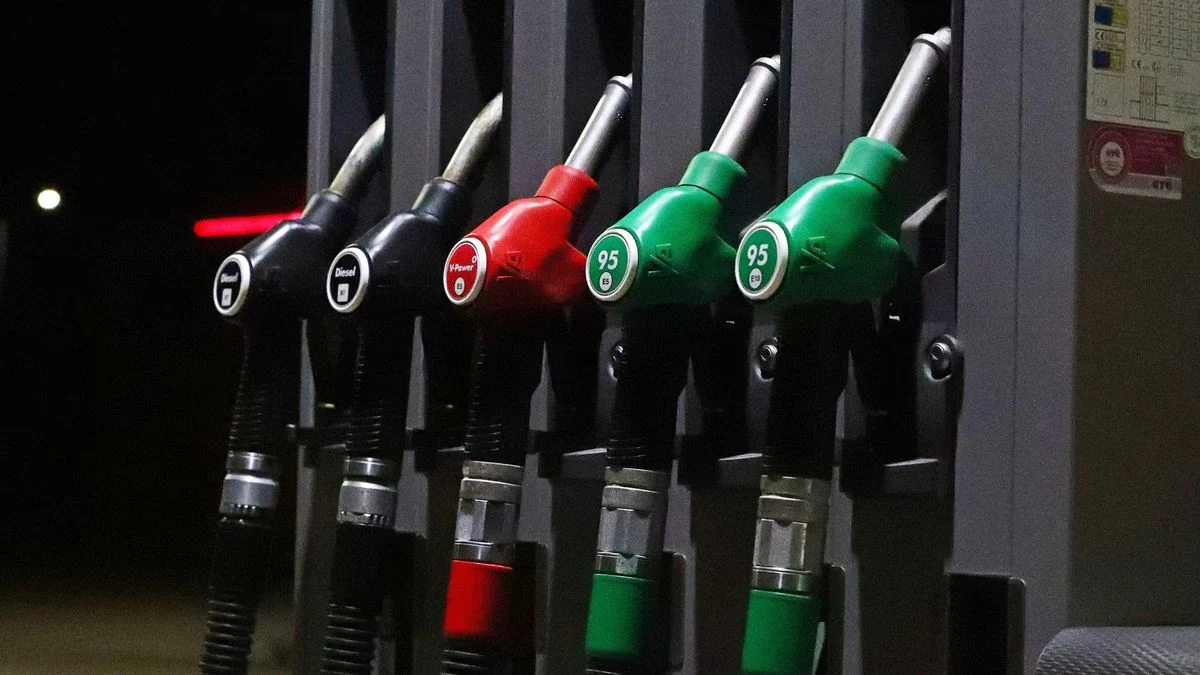
Since October 1, German motorists have been waiting for the promised relief at the fuel pump—a reduction of 16.7 cents per liter intended to mitigate the burden of soaring energy costs. However, the initial optimism has been dampened by cold, hard data. According to recent analyses from the German Institute for Economic Research (DIW) and the Ifo Institute, the anticipated savings are not reaching consumers in their entirety.
Tomaso Duso, a leading competition expert at the DIW, paints a sobering picture: only about two-thirds of the tax relief is currently reflected in the prices paid by the average consumer. While the government sacrificed tax revenue to keep the economy moving and households afloat, the benefits appear to be getting "lost" somewhere in the supply chain—specifically between the refineries and the wholesalers.
A Chronology of the Discrepancy
To understand the scope of the problem, one must look at the timeline of the price movements since the policy went into effect on October 1.
- October 1–7: The initial phase of the tax cut saw an immediate, albeit partial, reaction at the pump. Comparative data from France—which has no such tax relief—suggests that German prices dropped by approximately 10 to 11 cents more than those in neighboring countries. While this confirms that the tax cut had an effect, it already fell short of the 16.7-cent target.
- October 8–13: As the days progressed, the efficiency of the tax pass-through appeared to deteriorate. DIW data indicates that the effective relief dropped to an average of just 9 cents per liter during this period.
- The Weekend of October 11–13: The Ifo Institute’s researchers observed the most significant gaps during the second weekend of October. While they noted a slightly better performance than the DIW (with savings of 13 cents for E10, 14.7 cents for E5, and 13.5 cents for Diesel), the figures remained stubbornly below the legislated 16.7-cent reduction.
This downward trend in the "pass-through rate" suggests that the longer the policy is in effect, the less the consumer benefits, raising questions about whether the market is naturally absorbing the relief or if strategic pricing is at play.
Supporting Data and Economic Analysis
The disparity between the legislated 16.7 cents and the actual consumer savings has forced regulators to take notice. The Federal Cartel Office (Bundeskartellamt), Germany’s antitrust watchdog, has echoed the concerns of academic researchers.
"Our evaluations suggest that the pass-through of the tax reduction has occurred to a large extent, but not completely, at the level of refineries and wholesalers," stated Andreas Mundt, President of the Federal Cartel Office. He noted that the discrepancy is slightly more pronounced for gasoline than for diesel.

Competition Concerns
Dr. Tomaso Duso of the DIW argues that the root cause lies in the structure of the oil industry. "The tax cut arrives first at the refinery and wholesale level. Whether it is passed on depends entirely on the level of competition at that stage," Duso explained. "There are clear indications that competition at this level is weak."
For Duso, this is not merely a temporary issue related to the current tax cut, but a structural systemic failure. He advocates for a more aggressive, long-term investigation into the refinery and wholesale sectors, suggesting that the current lack of transparency in pricing allows dominant players to exert influence over the market that ultimately harms the end consumer.
The Industry Defense: A World Market Argument
Facing mounting pressure from policymakers and public frustration, the mineral oil industry has launched a robust defense. The industry association Fuels and Energie (En2x) categorically rejects the accusation that they are withholding the tax savings.
A spokesperson for En2x stated: "The tax reduction is being passed on in full by our member companies—the branded gas stations." The industry points to the volatility of the global crude oil and refined product markets as the primary culprit for the perceived price stagnation.
According to the association, the international product price for Super E10 has risen by approximately 5 cents per liter since September 30. "What is often ignored when looking at the pump price is that world market prices are constantly in motion," the spokesperson added. "The fact that the prices at the pump remain roughly 17 cents cheaper than they would be without the tax cut is proof that the discount is being applied."
In essence, the industry argues that without the tax cut, prices would be even higher due to these rising global costs, and that the "gap" identified by researchers is simply the market adjusting to global commodity fluctuations.
The Broader European Context
The debate is further complicated by Germany’s standing within the European Union. Despite the tax intervention, Germany remains one of the more expensive countries for fuel in the EU.

Data from the European Commission as of mid-October confirms that even with the tax relief, the average price for E10 in Germany ranks as the fourth highest in the bloc, trailing behind Denmark, the Netherlands, and Finland. For diesel, Germany holds the sixth-highest price, significantly trailing Finland, Denmark, and the Netherlands.
While the tax cut did offer some relief—moving Germany from the third-most expensive spot for gasoline down to fourth—the effect is marginal when viewed against the backdrop of the continent. The price volatility continues to be the dominant narrative; on a single Wednesday in mid-October, the average cost for E10 was roughly three cents higher than it was on the first day of the tax cut, despite the government’s efforts to lower the ceiling.
Implications for Future Policy
The current situation serves as a litmus test for government intervention in energy markets. Several key implications emerge:
- The Limits of Targeted Intervention: The experience suggests that government tax cuts are highly vulnerable to being absorbed by supply-side dynamics. Without mechanisms to enforce the pass-through or to regulate wholesale pricing, the "leaking" of such relief is almost inevitable in concentrated markets.
- Regulatory Scrutiny: The Federal Cartel Office is now under pressure to prove its effectiveness. If they cannot identify and penalize the source of the "missing" cents, the public perception of the office as a consumer protector will weaken.
- Market Transparency: The argument between the DIW and En2x highlights a fundamental lack of transparency. If the industry and the researchers cannot agree on a baseline for "what the price should be," consumers are left in the dark, fueling skepticism toward both political promises and corporate practices.
As the weeks go by, the focus will likely shift from the immediate impact of the tax cut to the structural health of the German energy market. For the average motorist, however, the technical debate over refinery competition is of little comfort. Every time they pull up to the pump, the reality remains: the promised relief is thinner than expected, and the global price of fuel continues to be an unpredictable, often unforgiving force.
The government’s attempt to provide a "cushion" against inflation has succeeded in preventing an even sharper price surge, but it has failed to deliver the direct, 16.7-cent relief that was advertised, leaving a bitter taste for consumers who expected more at the pump.