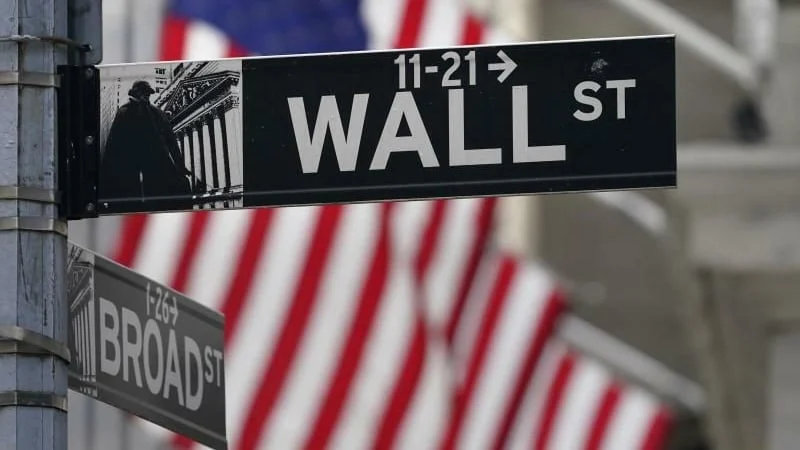
As the calendar pages turn toward the final two months of the year, global investors are fixated on a singular, high-stakes question: Is the current rally in US equities approaching a cliff, or does the momentum have enough fuel to extend into a rare fifth consecutive year of gains?
For the US stock market, the performance in 2024 has been nothing short of resilient. With the S&P 500 up by approximately 13 percent year-to-date, the index is firmly on a path to sustain its long-term bullish trend. In contrast, the German DAX index presents a more nuanced picture, hovering at a modest four percent gain, leaving its final year-end standing more ambiguous. However, for those watching the pulse of global finance, the S&P 500 remains the ultimate barometer of investor sentiment.
The prevailing mood among market participants is a mixture of jubilation and apprehension. After four years of consistent growth, a "fear of the peak" has begun to permeate trading floors. Investors are increasingly asking: Is it statistically inevitable that a correction is overdue? To find the answer, one must look beyond current headlines and dive into 150 years of market history, the foundational principles of Charles Dow, and even the complex mathematical legacy of Sir Isaac Newton.

The Historical Context: The Persistence of Bull Markets
History teaches us that bull markets do not simply expire because of old age. While there is a common psychological urge to believe that "what goes up must come down," the data suggests that long-term trends are driven by structural economic shifts rather than arbitrary time limits.
The 150-Year Perspective
A review of the S&P 500’s performance dating back to the late 19th century reveals that periods of sustained growth are not as rare as some skeptics suggest. While we have witnessed significant market shocks—including the Great Depression, the 1970s stagflation, and the 2008 financial crisis—the long-term trajectory of the US equity market has been characterized by extended cycles of accumulation.
When we isolate four-year winning streaks, we find that subsequent years often depend less on the duration of the rally and more on the underlying macroeconomic environment, specifically interest rate policies and corporate earnings growth. Historically, the market has shown an uncanny ability to "climb the wall of worry," continuing to rise even when valuation multiples seem stretched.

The Legacy of Charles Dow
Charles Dow, the father of modern technical analysis and co-founder of the Dow Jones Industrial Average, argued that the market is a reflection of collective human behavior. Dow’s theory emphasizes that market trends are not random; they are persistent. According to Dow, a primary trend—a bull market—remains in effect until there is a clear, definitive signal of a reversal.
Currently, the structural components of the market—corporate profitability, technological integration, and resilient consumer spending—do not yet signal a definitive end to the primary bull trend. Investors who bet against the market solely based on the duration of the rally often find themselves sidelined during the most profitable final stages of a cycle.
Scientific Skepticism: What Newton Can Teach Investors
The intersection of physics and finance has long been a source of fascination. Sir Isaac Newton, a man whose laws of motion define our understanding of the physical world, famously lost a fortune in the South Sea Bubble of 1720. His regretful admission—"I can calculate the motion of heavenly bodies, but not the madness of people"—remains the most important lesson for any investor.
The Fallacy of "Mean Reversion"
Newton’s laws suggest that for every action, there is an equal and opposite reaction. In finance, this is often misinterpreted as "mean reversion"—the idea that a period of outsized returns must be followed by a period of losses. However, the stock market is not a closed physical system. It is an adaptive, complex system driven by human innovation, capital allocation, and productivity gains.
The mistake investors often make is treating the market like a pendulum that must swing back to the center. In reality, the market acts more like a compounding machine. As long as corporations continue to innovate and expand their margins, the "baseline" of the market shifts upward. Thus, the expectation that the market must "correct" simply because it has risen for four years is a misunderstanding of how wealth is created in an equity-based economy.
Supporting Data: Factors Driving the 2024 Performance
The 13 percent gain in the S&P 500 this year is not a fluke. It is supported by three primary pillars:

- Earnings Resilience: Despite high interest rates, S&P 500 companies have managed to protect margins. The integration of Artificial Intelligence and digital transformation has allowed firms to do more with less, keeping profitability high even in an uncertain macroeconomic climate.
- The "Soft Landing" Narrative: Throughout 2024, the prevailing fear was a recession induced by central bank tightening. Instead, the US economy has demonstrated remarkable stamina, with inflation cooling and employment remaining stable. This "Goldilocks" environment has provided the perfect backdrop for equity expansion.
- Institutional Liquidity: There is a massive amount of capital currently parked in money market funds. As interest rates begin to stabilize or decline, this "dry powder" is expected to rotate back into equities, providing a floor for stock prices even if volatility increases.
Implications for the Portfolio: Strategy for a Late-Cycle Market
If the market is indeed entering a fifth year of growth, what does this mean for the individual and institutional investor?
The Danger of Market Timing
The most significant risk in a long-running bull market is not the crash itself, but the cost of being out of the market. Investors who attempt to "time" the exit often miss the final, most parabolic phase of the rally. Professional consensus suggests that rather than attempting to predict the exact peak, investors should focus on rebalancing.
Quality Over Speculation
As a bull market matures, the quality of companies often becomes more important than the sector trends. In a fifth year of a cycle, companies with strong balance sheets, high free cash flow, and significant pricing power are the most likely to survive any potential volatility. Investors should rotate away from highly speculative growth stocks that rely on cheap debt and move toward "quality compounders."

The Role of Global Diversification
While the US market leads the pack, the divergence between the S&P 500 and the DAX serves as a reminder that global markets do not move in lockstep. A balanced portfolio should account for the fact that if the US market does hit a ceiling, emerging markets or undervalued European indices might provide the necessary ballast to maintain portfolio performance.
Expert Analysis: A Consensus on Caution and Optimism
Financial analysts remain divided, but the majority sentiment is one of "cautious optimism."
"We are not looking at a bubble in the traditional sense," notes one prominent market strategist. "Valuations are elevated, yes, but they are supported by real earnings growth. The danger is not the duration of the market, but the complacency of the investor. As long as there is fear, there is room for the market to climb."

Conversely, some institutional voices warn that the concentration of market gains in a handful of technology stocks presents a fragility that cannot be ignored. If those specific leaders falter, the headline indices could see a sharp, though likely short-term, correction.
Conclusion: The Path Forward
As we look toward the end of the year, the history of the US stock market, the wisdom of Charles Dow, and the lessons of Isaac Newton all point to the same conclusion: The market does not operate on a schedule.
A fifth year of gains is not only possible; it is a testament to the persistent nature of economic growth in a dynamic society. While it is wise to maintain a degree of skepticism and to protect one’s gains through prudent asset allocation, betting against the market based solely on the length of its winning streak is a strategy that has historically resulted in missed opportunities.

For now, the indicators remain green. The rally may be maturing, but it has not yet reached its conclusion. Investors who remain disciplined, focused on fundamental quality, and immune to the "madness of crowds" are the ones best positioned to navigate the final months of this remarkable, four-year—and potentially five-year—run.
Key Takeaways for the Investor
- Don’t Fear the Duration: Market cycles are driven by fundamentals, not calendars.
- Focus on Quality: In late-cycle markets, companies with strong cash flow outperform speculative growth.
- Avoid Timing: The risk of missing the end of a bull run is statistically higher than the risk of riding a minor correction.
- Balance the Portfolio: Use the current strength of the US market to ensure your portfolio is well-diversified across sectors and geographies.