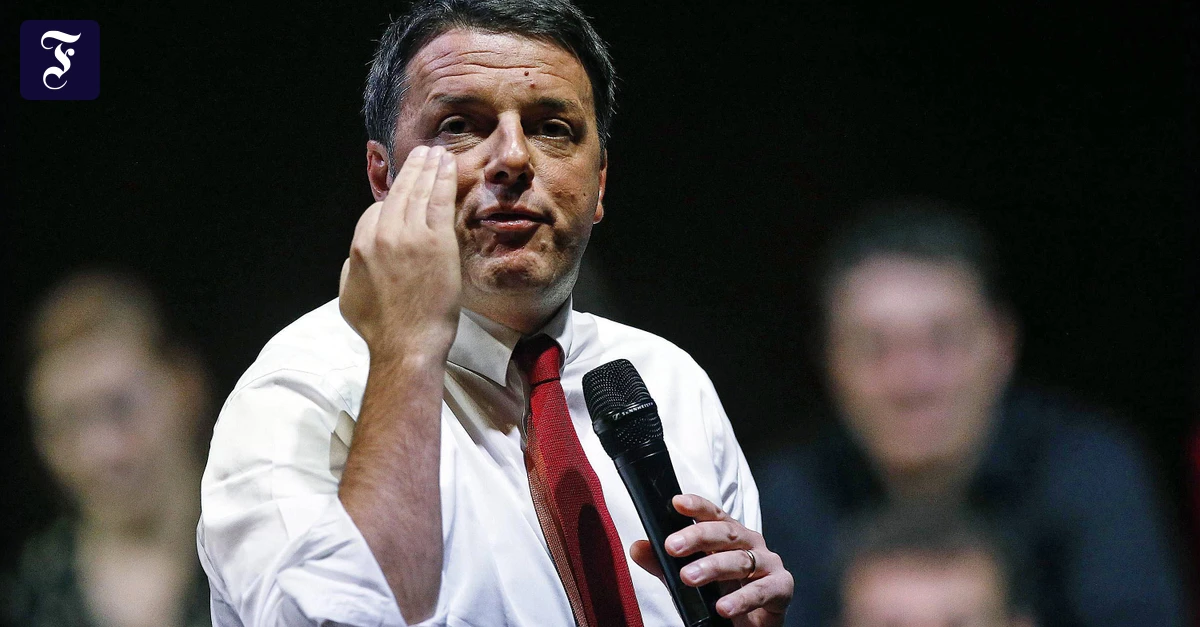
Rome, Italy – December 4, 2016 – Italy stands on the precipice of a pivotal moment, as Prime Minister Matteo Renzi has placed his political future squarely on the outcome of a national referendum on constitutional reform. The vote, scheduled for this Sunday, concerns a package of amendments designed to streamline Italy’s legislative process, primarily by significantly curtailing the powers of the Senate. Renzi, a dynamic figure who rose to power with promises of decisive change, has declared he will not cling to office if the nation rejects his proposals, framing the referendum as a fundamental choice between stagnation and progress.
Renzi’s defiant stance, a characteristic trait of his political persona, represents a bold gamble. The Prime Minister, born in Florence in 1975 into a Christian Democratic family, has repeatedly asserted his commitment to governing only if he can enact meaningful change for Italy. This personalization of the vote, however, has been widely criticized as a strategic misstep, potentially oversimplifying a complex issue and elevating personal political survival above the intricacies of constitutional law. The proposed reforms, which aim to dismantle the complete bicameralism that distinguishes Italy from most other European Union member states, are not solely Renzi’s brainchild, yet he has embraced them as his own. This consolidation of the reform’s ownership onto his shoulders has amplified the stakes of the referendum, transforming it into a referendum on his leadership and vision for Italy.
The Core of the Proposed Reforms: Streamlining Governance
At the heart of the referendum lies a proposed overhaul of Italy’s bicameral parliamentary system. For decades, Italy has operated with two equally powerful legislative chambers: the Chamber of Deputies and the Senate. This dual-chamber structure, while intended to provide a system of checks and balances, has often been cited as a major contributor to political instability and legislative gridlock. Bills must pass both chambers in identical form, a process that can be protracted and susceptible to political maneuvering, leading to frequent government collapses and a perceived inability to implement decisive policies.
The proposed constitutional amendments seek to address this perceived inefficiency by fundamentally altering the role and composition of the Senate. Key changes include:
- Abolition of Perfect Bicameralism: The reform aims to end the current system where both the Chamber of Deputies and the Senate have identical legislative powers. The Chamber of Deputies would become the primary legislative body, with the Senate’s powers significantly reduced.
- Reduced Senate Size and Composition: The number of senators would be drastically cut from 315 elected members to 100. These senators would no longer be directly elected by the populace. Instead, they would be composed of regional councilors and mayors, appointed for five-year terms. This aims to create a more professional and less politically charged Senate, focused on specific oversight functions rather than day-to-day legislative battles.
- Limited Legislative Powers for the Senate: The reformed Senate would retain the ability to review legislation related to constitutional matters, regional affairs, and civil liberties. However, its power to block or amend most ordinary legislation would be curtailed, with the Chamber of Deputies having the final say in most instances.
- Abolition of Regional Councils’ Direct Influence: The reform seeks to weaken the direct influence of regional governments on national legislation, aiming to create a more unified national policy framework.
- Streamlined Confidence Votes: The government would only need to secure a vote of confidence from the Chamber of Deputies, not both chambers, thus reducing the risk of early government collapse.
Proponents of the reform argue that these changes are essential to modernize Italy’s governance, making it more efficient, stable, and capable of enacting necessary reforms in a timely manner. They contend that the current system is a relic of the past that hinders Italy’s ability to compete on the global stage and address pressing economic and social challenges.
A Chronology of the Reform’s Journey
The genesis of this constitutional reform can be traced back to a broader desire for political modernization in Italy, a sentiment that has been present for many years. However, the current push gained significant momentum with the rise of Matteo Renzi and his Democratic Party (Partito Democratico – PD).
- February 2014: Matteo Renzi becomes Prime Minister, succeeding Enrico Letta. Renzi immediately signals his intention to pursue significant institutional reforms, including constitutional changes.
- March 2014: The Italian government presents its initial proposals for constitutional reform. These proposals undergo considerable debate and revision within Parliament.
- April 2015: The Chamber of Deputies approves the first version of the reform bill.
- July 2015: The Senate approves the reform bill, but with amendments, triggering a second round of parliamentary approval.
- February 2016: After a series of parliamentary votes and negotiations, the final text of the constitutional reform bill is approved by both the Chamber of Deputies and the Senate, meeting the constitutional requirement for a second reading in each chamber. This paved the way for the referendum.
- April 2016: Prime Minister Renzi announces that he will resign if the referendum results in a "No" vote. This decision to personalize the referendum significantly raises the political stakes.
- September – November 2016: The official campaign period intensifies, with both "Yes" and "No" campaigns vigorously advocating their positions. Debates are often heated, focusing on the potential consequences of the reform, both positive and negative.
- December 4, 2016: The referendum is held across Italy.
The legislative journey of the reform through Parliament was itself a testament to the deeply entrenched divisions and the complex political landscape of Italy. While the reform passed parliamentary hurdles, it did so without the broad consensus that many had hoped for, underscoring the polarization of the debate.
Supporting Data and Arguments: The Case for Change and Opposition
The debate surrounding the referendum is fueled by contrasting interpretations of Italy’s current political and economic situation, and the potential impact of the proposed reforms.
Arguments for the "Yes" Vote (Supporting the Reform):
- Economic Efficiency and Competitiveness: Supporters argue that a more efficient legislative process will allow Italy to implement crucial economic reforms faster, boosting investor confidence and economic growth. They point to Italy’s persistent sluggish growth and high public debt as evidence of the need for a more agile government.
- Political Stability: The current system’s propensity for frequent government collapses is seen as a major impediment to long-term policy planning and execution. A streamlined parliament, with confidence votes only in the Chamber of Deputies, is expected to lead to more stable governments.
- Reduced Bureaucracy and Costs: A smaller, less powerful Senate and a more efficient legislative process are anticipated to reduce bureaucratic hurdles and potentially lower the costs associated with running Parliament.
- Alignment with European Norms: Italy’s complete bicameralism is an outlier among major EU economies. The reform aims to bring Italy’s legislative structure more in line with other European democracies, which generally feature more streamlined parliamentary systems.
- Focus on National Interest: By reducing the power of regional councils and creating a Senate with appointed members, the reform aims to foster a stronger sense of national unity and prioritize national interests over regional considerations.
Arguments for the "No" Vote (Opposing the Reform):
- Risk of Authoritarianism: Critics warn that concentrating power in the Chamber of Deputies, which is elected under a potentially problematic electoral law (the "Italicum," though its future is also uncertain), could lead to an overconcentration of power and a weakening of democratic checks and balances. They fear a "super-parliament" that could be easily dominated by the executive.
- Undermining Democracy: The abolition of direct election for senators and the significant reduction of their powers are seen by some as a move away from democratic principles and a weakening of representation. The argument is that the Senate, despite its flaws, has served as a vital counterbalance.
- Uncertainty of Electoral Law: The reform is intertwined with the future of Italy’s electoral law. Critics argue that the reform should not be voted on before a clear and stable electoral law is in place, as the two are intrinsically linked in shaping the future of Italian democracy.
- Lack of Consensus and "Too Much Power" for the PM: Opponents criticize the perceived rushed nature of the reform and the personalization of the vote by Renzi. They argue that such fundamental changes should be based on broader national consensus, not on a leader’s political survival.
- Potential for Regional Disenfranchisement: While proponents see the reform as strengthening national unity, opponents fear it could diminish the voice of the regions and their specific concerns within the national legislative process.
Supporting Data:
- Italy’s Legislative Efficiency: Studies have often highlighted the lengthy legislative process in Italy compared to other European countries. For example, data from the European Parliament Research Service and other think tanks have illustrated the time taken for bills to pass through both Italian chambers.
- Government Instability: Historical data on Italian governments shows a significant number of short-lived administrations, contributing to policy discontinuity and a lack of long-term planning.
- Public Debt and Economic Performance: Italy’s persistently high public debt-to-GDP ratio and its anemic economic growth rates are often cited by proponents as evidence of the need for structural reforms that a more efficient government could deliver.
- Regional Representation: Statistics on the composition and voting patterns of the current Senate can be used to illustrate the current dynamics of regional representation and how the reform might alter them.
Official Responses and International Reactions
The referendum has garnered significant attention both domestically and internationally, with various political actors and institutions weighing in on its potential consequences.
Domestic Responses:
- Prime Minister Matteo Renzi (PD): The staunchest advocate for the reform, Renzi has framed the vote as a historic opportunity to modernize Italy and make it governable. His personal commitment has been the defining characteristic of the "Yes" campaign.
- Opposition Parties (Five Star Movement, Northern League, Forza Italia): These parties have largely coalesced in opposition to the reform, though their motivations and specific critiques vary. The Five Star Movement, in particular, has positioned itself as the champion of direct democracy and has strongly advocated for a "No" vote.
- Former Prime Ministers and Constitutional Experts: Italy has a rich tradition of political debate, and former leaders and prominent legal scholars have taken public stances, often highlighting the complex legal and constitutional implications of the proposed changes.
- President Sergio Mattarella: As Head of State, President Mattarella has maintained a neutral stance throughout the campaign, emphasizing the importance of democratic participation and respecting the outcome of the referendum. He has consistently called for a calm and respectful debate.
International Reactions:
- European Union Leaders: Many EU leaders have expressed concern about the potential for political instability in Italy, a major Eurozone economy, regardless of the referendum’s outcome. They generally favor reforms that would strengthen Italy’s economic and political stability, but have refrained from explicit endorsements of the "Yes" or "No" vote, respecting Italy’s sovereignty.
- International Financial Markets: Markets have been closely watching the referendum, with concerns that a "No" vote could trigger a period of uncertainty, potentially impacting Italian banks (which are already under pressure) and the broader Eurozone economy. Ratings agencies have also issued warnings about the potential credit rating implications.
- International Media: Global news outlets have extensively covered the referendum, highlighting its significance not only for Italy but also for the future of the European Union, given Italy’s economic weight and its role in the bloc.
Implications: A Fork in the Road for Italy
The outcome of this referendum carries profound implications for Italy and potentially for the wider European landscape.
If the "Yes" Vote Prevails:
- Renzi’s Political Future Secured (Temporarily): A "Yes" vote would be a significant personal victory for Matteo Renzi, strengthening his mandate and likely allowing him to continue with his reform agenda.
- Streamlined Governance: Italy would embark on a path towards a more efficient legislative process, potentially leading to greater political stability and the ability to implement economic reforms more swiftly.
- Potential for Economic Boost: Proponents would hope that the perceived political stability and the promise of future reforms would attract investment and stimulate economic growth.
- Shifting Political Landscape: The balance of power between the Chamber of Deputies and the Senate would fundamentally change, altering the dynamics of Italian politics for years to come.
If the "No" Vote Prevails:
- Renzi’s Resignation and Political Uncertainty: The most immediate consequence would be Matteo Renzi’s promised resignation, plunging Italy into a period of political uncertainty.
- Government Crisis and Potential Early Elections: A government crisis would likely ensue, potentially leading to the formation of a technocratic government or, more significantly, early general elections.
- Setback for Reform Agenda: The constitutional reform, as proposed, would be defeated, and any future attempts at similar institutional overhauls would face significant hurdles.
- Impact on Italian Banks and Markets: A "No" vote could trigger market volatility, exacerbating existing concerns about the stability of the Italian banking sector and potentially impacting the broader Eurozone.
- Rise of Populist Forces: A rejection of Renzi’s reforms could be interpreted as a victory for anti-establishment and populist forces, potentially emboldening parties like the Five Star Movement and the Northern League.
- Continued Legislative Gridlock: Without the proposed reforms, Italy would likely continue to grapple with its long-standing issues of legislative inefficiency and political instability.
In conclusion, the Italian constitutional referendum is far more than a mere parliamentary procedural vote. It represents a critical juncture for Italy, forcing its citizens to decide between maintaining a familiar, albeit often criticized, system of governance and embracing a radical restructuring with both promising potential and significant risks. The choice made on Sunday will undoubtedly shape the political and economic trajectory of Italy for years to come, with reverberations felt far beyond its borders.