

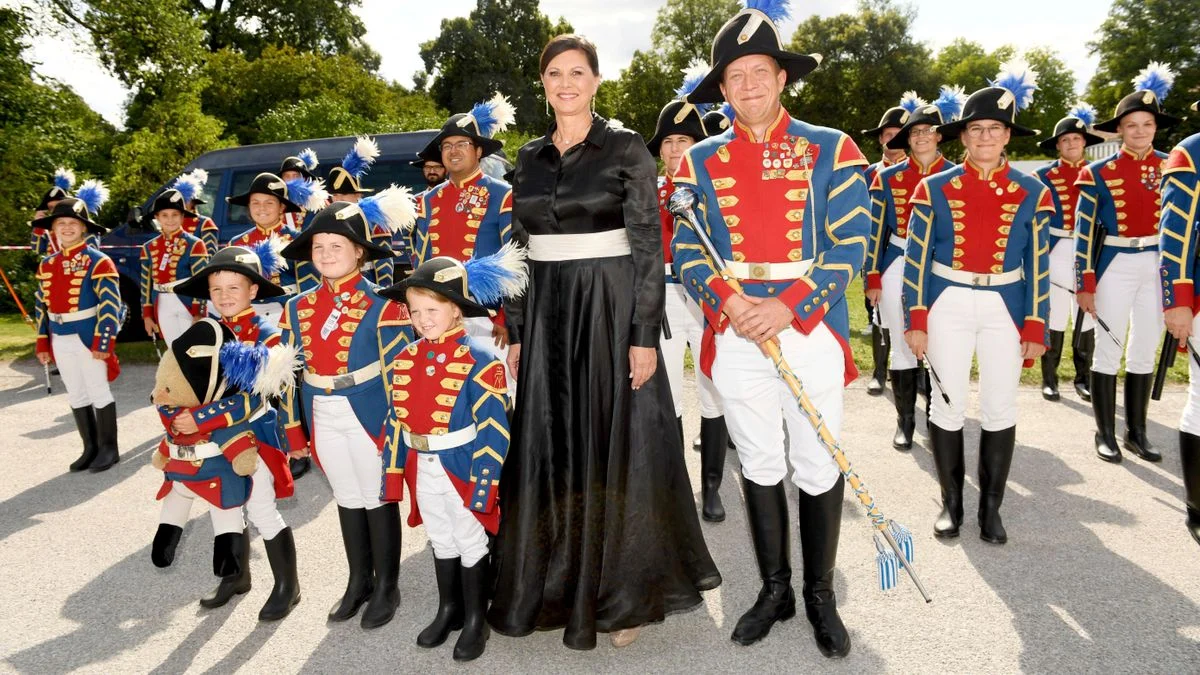
Berlin, Germany – In a move signaling a potential new era of political cooperation and a historic milestone for gender equality, Ilse Aigner, a prominent figure from Bavaria’s Christian Social Union (CSU), has emerged as the leading candidate for Germany’s highest state office, the Federal Presidency. The surprising consensus has been forged between her own party and the Social Democratic Party (SPD), typically ideological rivals, who are reportedly united in their desire to see Aigner become the first woman to hold the largely ceremonial yet deeply symbolic position of Federal President.
The discussions, which have been conducted with notable discretion over recent weeks, culminated in informal but firm commitments from both parties. Sources close to the negotiations indicate that both the CSU leadership, keen to present a unifying national figure, and the SPD, seeking a candidate with broad appeal beyond traditional party lines, found common ground in Aigner’s extensive experience, reputation for pragmatism, and ability to foster dialogue. Her potential nomination represents a significant departure from past elections for the Bundespräsident, which have often been characterized by more contentious, partisan maneuvering. Should she be successfully elected by the Federal Convention, Aigner would not only break a historical barrier but also embody a renewed call for unity in a politically fragmented Germany.
Main Facts: A Bold Bipartisan Proposal
The proposal to nominate Ilse Aigner for the Federal Presidency represents a confluence of strategic political calculations and a genuine desire to install a figurehead capable of uniting a diverse nation. Aigner, currently serving as the President of the Bavarian Landtag (state parliament), boasts a distinguished political career spanning over two decades at both federal and state levels. Her resume includes stints as a Federal Minister and as Deputy Minister-President of Bavaria, demonstrating a versatile capacity for leadership and governance.
The gravity of this cross-party endorsement cannot be overstated. In Germany’s often fiercely competitive political landscape, a joint nomination for such a high office is rare. It underscores the perceived need for a unifying personality at the helm of the state, particularly in an era marked by geopolitical uncertainties, domestic social divisions, and a pressing need for institutional stability. Both the CSU and SPD recognize Aigner’s unique ability to transcend partisan divides, a quality essential for a Federal President whose role is primarily to represent all Germans and provide moral guidance.
Beyond the immediate political implications, Aigner’s potential ascension carries immense symbolic weight. As the first woman to be seriously considered, and now jointly backed, for the Federal Presidency, her nomination would send a powerful message about gender equality and the breaking of glass ceilings in German politics. It would acknowledge the contributions of women in leadership and inspire future generations, reinforcing Germany’s commitment to progressive values on the global stage. Her candidacy is being framed not just as a political appointment but as a cultural and societal landmark.
Chronology: From Bavarian Roots to National Acclaim
Ilse Aigner’s journey to becoming a leading candidate for Germany’s highest office is a testament to a career built on dedication, pragmatism, and an unwavering commitment to public service.
A Career of Public Service
Born in 1964 in Feldkirchen-Westerham, Bavaria, Ilse Aigner’s political career began in local politics before her election to the Bundestag, the German federal parliament, in 1998. During her time as a Member of Parliament until 2013, she gained a reputation as a diligent and detail-oriented legislator, focusing particularly on issues related to consumer protection and rural development. Her federal profile significantly rose when she was appointed Federal Minister of Food, Agriculture and Consumer Protection in 2008, serving in Chancellor Angela Merkel’s cabinet until 2013. In this role, Aigner navigated complex issues ranging from food safety scandals to agricultural policy reforms, demonstrating a firm grasp of policy and a calm demeanor under pressure. She championed consumer rights and advocated for sustainable agricultural practices, earning respect across the political spectrum for her evidence-based approach and willingness to engage with diverse stakeholders.
In 2013, Aigner transitioned back to Bavarian state politics, assuming the influential roles of Deputy Minister-President and State Minister for Economic Affairs, Media, Energy and Technology. During this period, she played a pivotal role in shaping Bavaria’s economic future, promoting innovation, and overseeing the state’s energy transition. Her tenure was marked by strong economic growth and significant investments in research and development, solidifying her reputation as a capable and results-oriented administrator. Since 2018, Aigner has held the prestigious position of President of the Bavarian Landtag, a role akin to the President of the Bundestag at the federal level. In this capacity, she has overseen parliamentary proceedings, upheld democratic principles, and acted as a neutral arbiter, further burnishing her image as a stateswoman with cross-party appeal and a deep understanding of institutional integrity. This current role, requiring impartiality and a unifying presence, has undoubtedly prepared her for the demands of the Federal Presidency.
The Genesis of a Cross-Party Proposal
The idea of a joint CSU-SPD candidate for the Federal Presidency began to circulate in unofficial political circles several months ago. With the term of the incumbent Federal President nearing its end, discussions intensified within both parties about the ideal profile for the next head of state. Against a backdrop of increasing political fragmentation and the rise of populist sentiments, there was a growing recognition within the mainstream parties of the need for a truly unifying figure, someone who could command respect across ideological divides and restore public trust in democratic institutions.
Initial exploratory talks between senior CSU and SPD strategists reportedly began in late autumn. Sources suggest that key figures from both sides, including party leaders and parliamentary group chairs, engaged in discreet consultations. The name of Ilse Aigner quickly emerged as a serious contender. Her record as a pragmatic problem-solver, her experience in both federal and state government, and her current role as Landtag President, which demands a non-partisan approach, made her an attractive option. Crucially, her moderate stance and respectful communication style were seen as assets in bridging the traditional chasm between the conservative CSU and the social democratic SPD. These initial discussions were characterized by a mutual desire to avoid a divisive electoral battle and instead present a candidate who could garner overwhelming support in the Federal Convention.
Formal Endorsement and Public Announcement
The behind-the-scenes negotiations gained momentum in the early weeks of the new year. As consensus solidified around Aigner, formal consultations began within the respective party executive committees. For the CSU, Aigner’s nomination was a source of immense pride, highlighting a prominent Bavarian politician on the national stage. For the SPD, endorsing a CSU figure represented a strategic concession, but one viewed as necessary to secure a broadly acceptable and highly qualified candidate, and to demonstrate their commitment to national unity over narrow partisan interests.
The formal endorsement from both parties is expected to be announced simultaneously in the coming days, likely through joint press conferences or coordinated statements from the respective party chairs and parliamentary leaders. This coordinated unveiling is designed to underscore the unprecedented unity behind Aigner’s candidacy and to set a tone of constructive collaboration for the upcoming election process. The public will be presented with a united front, signaling a powerful message of stability and shared national purpose from Germany’s two largest political forces.
Supporting Data and Political Landscape
The decision to back Ilse Aigner for the Federal Presidency is not merely a political maneuver; it reflects a deep understanding of Germany’s current political landscape and a strategic response to several key trends.
Germany’s Search for a Unifying Figure
In recent years, Germany, like many other Western democracies, has experienced a degree of political polarization. Debates on immigration, climate change, economic policy, and social justice have often been sharply divided, leading to a sense of fragmentation within the electorate. Trust in established political institutions, while still relatively high compared to some other countries, has shown signs of erosion. In this environment, the role of the Federal President as a non-partisan figurehead, a moral compass, and a unifying voice has become increasingly vital.
Ilse Aigner’s profile aligns perfectly with this national need. Her career has been characterized by a willingness to seek common ground and to engage respectfully with dissenting opinions. As President of the Bavarian Landtag, she has consistently demonstrated an ability to preside over diverse political factions with fairness and impartiality. This track record makes her an ideal candidate to embody the unity and stability that many Germans crave. Her selection would signal a deliberate effort by the political establishment to project an image of cohesion and shared purpose, addressing the public’s desire for leadership that can bridge divides rather than exacerbate them.
The Federal Convention: The Electoral Mechanism
The Federal President of Germany is not directly elected by the public but by the Federal Convention (Bundesversammlung), a unique constitutional body convened specifically for this purpose. The Convention comprises all members of the Bundestag (the federal parliament) and an equal number of delegates chosen by the state parliaments (Landtage) in proportion to their populations. This electoral mechanism ensures that the President has a broad mandate reflecting both federal and state representation, and crucially, often necessitates cross-party consensus for a successful candidate.
With the current composition of the Bundestag and the various state parliaments, neither the CSU-allied conservative bloc nor the SPD-allied progressive bloc would likely be able to elect a candidate solely on their own. A candidate typically needs an absolute majority of the votes in the first two ballots, or a simple majority in the third. By jointly endorsing Ilse Aigner, the CSU and SPD effectively pool their electoral strength, making her election highly probable, if not virtually assured, in the first or second ballot. This strategic alliance avoids a protracted and potentially divisive electoral process, reinforcing the message of national unity that her candidacy aims to project. The numbers within the Federal Convention will comfortably support Aigner, provided the coalition holds firm.
Public Opinion and Initial Reactions
While official polling specifically on Aigner’s potential candidacy is yet to emerge, initial reactions from political commentators and early sentiment analyses suggest a largely positive reception. Her long-standing public service and relatively unblemished record are seen as significant assets. There is an appreciation for her steady hand and her ability to articulate complex issues in an accessible manner.
However, some skepticism is also present, particularly among those who question the nature of such a bipartisan deal. Some commentators from smaller parties or more radical fringes might criticize the perceived "backroom deal" between the two largest parties, suggesting it stifles genuine democratic debate. Despite this, the overall mood appears to be one of cautious optimism, with many recognizing the symbolic importance of a female head of state and the practical benefits of a unifying figure in turbulent times. The public’s desire for stability and competent leadership is likely to outweigh minor criticisms regarding the selection process.
Official Responses and Party Dynamics
The joint endorsement of Ilse Aigner has triggered a wave of reactions across the German political spectrum, highlighting the strategic considerations and underlying dynamics within each party.
Statements from CSU Leadership
Leading figures within the CSU have reacted with enthusiastic support for Aigner’s candidacy. Markus Söder, the Minister-President of Bavaria and CSU leader, is expected to issue a statement praising Aigner as an "outstanding Bavarian stateswoman with a deep understanding of Germany’s challenges and opportunities." He would likely emphasize her long-standing commitment to conservative values tempered with a pragmatic approach, making her an ideal representative for the entire nation. Other CSU officials are likely to highlight her strong roots in Bavaria, her connection to rural communities, and her proven ability to connect with ordinary citizens, stressing that she represents a bridge between traditional values and modern Germany. The CSU sees this as an opportunity to place one of their most respected figures in a position of national prominence, enhancing the party’s image as a responsible and unifying force.
SPD’s Strategic Calculus
For the SPD, endorsing a candidate from the CSU represents a significant political concession, but one that is justified by a broader strategic vision. Olaf Scholz, the current Chancellor and a leading SPD figure, is anticipated to underscore the importance of national unity and the need for a Federal President who can truly represent all segments of society. He would likely commend Aigner’s integrity, her experience, and her capacity for dialogue, framing her as a consensus candidate who transcends partisan divides. SPD General Secretary Lars Klingbeil might emphasize the historic nature of electing the first female Federal President, aligning the party with progressive ideals while simultaneously demonstrating a capacity for responsible governance and cross-party collaboration. The SPD’s calculation is that supporting a highly qualified, unifying candidate, even from a rival party, ultimately serves the national interest and strengthens democratic institutions, while also allowing them to share in the historic achievement of electing a female head of state.
Reactions from Other Parties
Reactions from other political parties are mixed but generally lean towards cautious acceptance. The Green Party, while traditionally critical of the CSU, is likely to express appreciation for the historic step of nominating a woman for the highest office. They might, however, emphasize the need for the President to actively champion environmental protection and social justice. The Free Democratic Party (FDP) would likely welcome the choice of a qualified candidate and the display of cross-party cooperation, though they might also express a desire for more transparent selection processes in the future.
The Left Party (Die Linke) might voice more skepticism, potentially criticizing the perceived lack of democratic choice in a consensus candidate and questioning the implications of such a "grand coalition" approach to the presidency. The Alternative for Germany (AfD), known for its populist and often confrontational stance, is expected to be the most critical, potentially dismissing the bipartisan choice as an elite consensus that ignores the will of the people or as an attempt by the establishment to shut out alternative voices. However, the overwhelming majority that Aigner is likely to command in the Federal Convention would effectively marginalize any such opposition.
Aigner’s Own Stance
Ilse Aigner herself is known for her composed and modest demeanor. Upon the official announcement, she is expected to react with humility, expressing deep gratitude for the trust placed in her by both parties. Her initial statements would likely focus on the immense responsibility of the office, her commitment to serving all Germans, and her dedication to fostering unity and strengthening democratic values. She would likely emphasize the importance of dialogue, respect, and mutual understanding in navigating Germany’s future challenges, positioning herself as a bridge-builder and a voice of reason for the nation.
Implications and Future Outlook
The potential election of Ilse Aigner as Germany’s first female Federal President carries profound implications, not just for the immediate political landscape but for the country’s long-term trajectory and its self-perception.
A New Era of Political Cooperation?
One of the most significant implications of this cross-party consensus is the possibility of signaling a new era of political cooperation in Germany. In an increasingly fragmented political environment, the ability of two major, traditionally rival parties to agree on a common candidate for such a high office could set a precedent for future collaborations on critical national issues. It suggests a willingness to prioritize national interest and stability over narrow partisan gain, a quality that many citizens feel has been lacking in recent years. This bipartisan approach could foster a more constructive political culture, encouraging dialogue and compromise rather than perpetual confrontation. It could also strengthen the perception of Germany’s democratic institutions as robust and adaptable, capable of producing consensus even in challenging times.
Challenges and Expectations
Should Aigner assume the presidency, she will face numerous challenges and high expectations. While the Federal President’s role is largely ceremonial, it carries significant moral authority and the power to influence public discourse. She will be expected to articulate a clear vision for Germany’s future, both domestically and internationally. This includes addressing pressing issues such as climate change, social cohesion, digital transformation, and Germany’s role in a volatile global order. As the first woman in the office, she will also be under particular scrutiny, with expectations that she will bring a fresh perspective and perhaps a different leadership style to the role. She will need to define how she interprets and exercises the powers of the office, leveraging its unifying potential to inspire confidence and national pride.
The Road Ahead: Campaign and Election
Following the formal announcement, a period of informal campaigning and public engagement will ensue. While Aigner is not expected to run a traditional campaign, she will likely undertake a series of engagements to meet with delegates of the Federal Convention, address various interest groups, and present her vision for the presidency. This will be an opportunity for her to articulate her priorities and reassure any hesitant delegates. The Federal Convention will then convene, typically in the Reichstag building in Berlin, to elect the new Federal President. Given the strong bipartisan backing, Aigner’s election is widely anticipated, likely in the first or second ballot, solidifying her mandate and paving the way for her inauguration.
Broader Societal Impact
The election of Ilse Aigner would have a profound broader societal impact. For women in Germany and beyond, it would serve as a powerful symbol of progress and an inspiration to pursue leadership roles in all sectors. It would underscore the principle that gender is not a barrier to the highest offices of state and reinforce Germany’s commitment to equality. Furthermore, as a Bavarian, her election would also highlight the strength of Germany’s federal system and the rich diversity of its political talent drawn from across its states. Her tenure would be watched closely as a benchmark for female leadership in a traditionally male-dominated political arena.
In conclusion, Ilse Aigner’s emergence as a consensus candidate for the German Federal Presidency marks a pivotal moment in German politics. It is a testament to her distinguished career, her unifying qualities, and the willingness of major political parties to prioritize national cohesion. Her potential election would not only be a historic step for gender equality but also a powerful statement about Germany’s commitment to stability, dialogue, and a shared future in an increasingly complex world.















