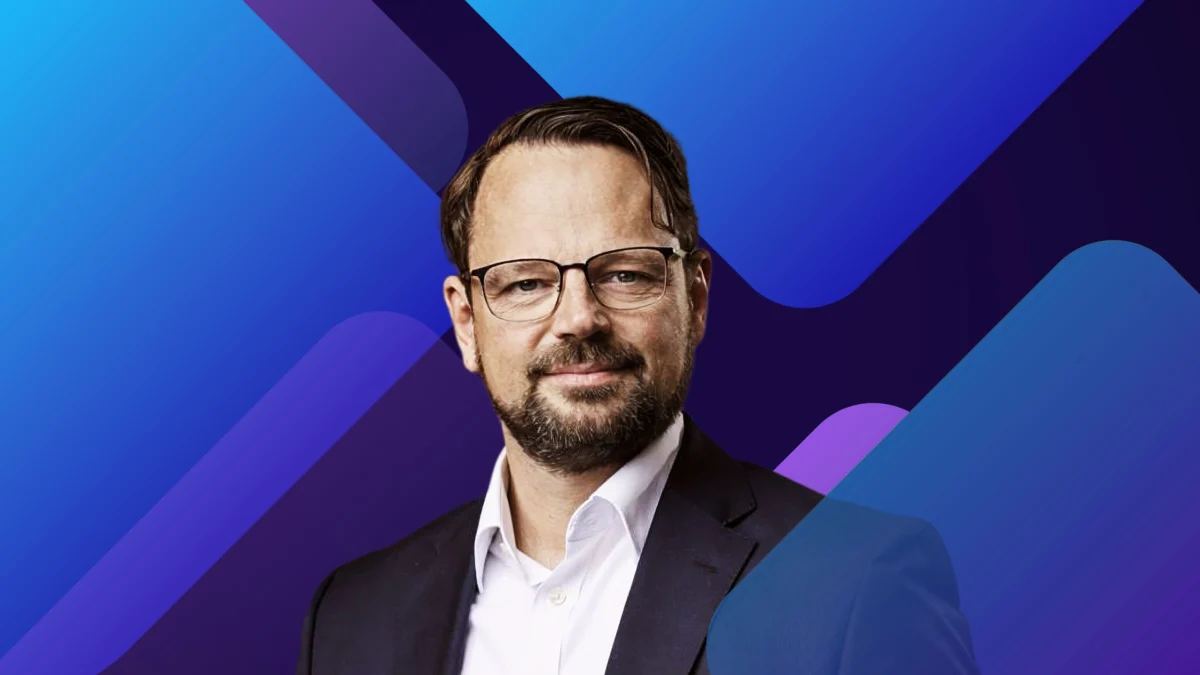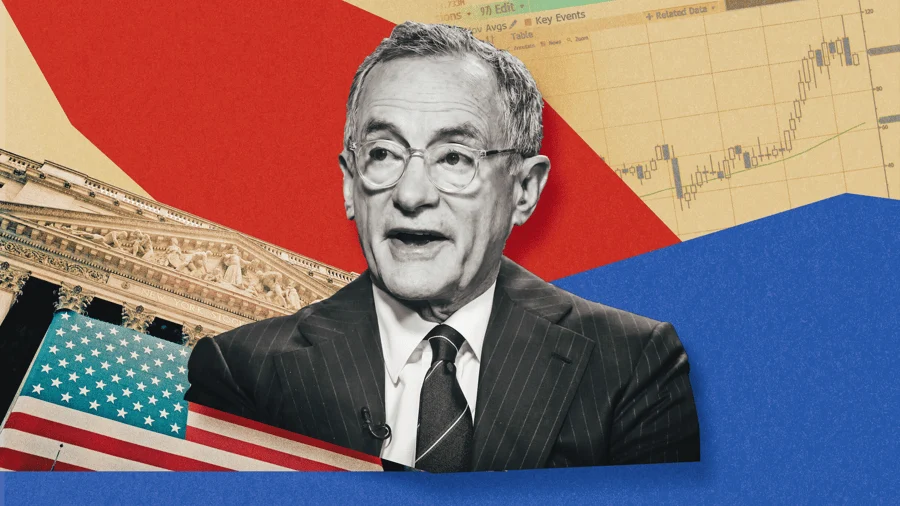
For over half a century, Howard Marks has been the quintessential voice of reason on Wall Street. As the co-founder of Oaktree Capital Management, he has steered billions through the treacherous waters of market cycles, specializing in the niche, high-stakes world of distressed debt and high-yield bonds. To many, he is more than just a legendary investor; he is an oracle of market psychology whose memos are required reading for everyone from hedge fund managers to the legendary Warren Buffett himself.
In a recent appearance on the Handelsblatt Invest podcast, Marks shared his latest assessment of the global financial landscape. His conclusion is as sobering as it is pragmatic: the era of "easy money" is firmly in the rearview mirror. For investors and corporations alike, the environment has fundamentally shifted, and those waiting for a return to the zero-interest-rate policy (ZIRP) of the last decade are likely to be waiting in vain.
The New Normal: Why Interest Rates Are No Longer "High"
The prevailing sentiment among many market participants is that the current interest rate environment is restrictive—an anomaly that policy-makers should seek to correct as quickly as possible. Marks, however, rejects this framing entirely.

"The interest rates we see today are reasonable," Marks stated during the interview. To understand his perspective, one must look at the historical context. For much of the 2010s, global central banks suppressed rates to near zero, and in some cases, even pushed them into negative territory. This period, while beneficial for borrowers and asset prices, was an extreme departure from historical norms.
Marks argues that the return to a more standard interest rate environment—one where capital has a tangible cost—is a return to sanity. For the economy, this means that the "cost of failure" is no longer subsidized by cheap debt. Companies that were kept on life support by low borrowing costs will find themselves under increasing pressure, leading to what Marks anticipates as a cycle of increased bankruptcies and corporate restructurings.
A Chronology of the Shift: From ZIRP to Reality
To appreciate the weight of Marks’s warning, it is necessary to track the trajectory of the markets over the last fifteen years:
- 2008–2015 (The Crisis Response): In the wake of the Global Financial Crisis, the Federal Reserve and other major central banks slashed rates to zero to prevent a systemic collapse.
- 2016–2019 (The Prolonged Stimulus): Even as the economy recovered, central banks were hesitant to raise rates, fearing a premature tightening would trigger a new recession.
- 2020–2021 (The Pandemic Surge): The COVID-19 pandemic led to unprecedented monetary and fiscal stimulus, further inflating asset prices and encouraging excessive corporate leverage.
- 2022–2023 (The Inflation Awakening): Faced with surging inflation, central banks began the most aggressive rate-hiking cycle in decades.
- 2024–2026 (The Current Calibration): Markets are now grappling with the realization that inflation is stickier than expected, and the "neutral" interest rate is likely higher than the market had priced in for the better part of a decade.
Marks views this current phase not as a "high rate" environment, but as a "normalization." For a veteran who navigated the high-inflation 1970s and the credit crunches of the 90s, today’s rates are not a crisis; they are simply the cost of doing business.
The Oaktree Thesis: Preparing for Distress
As a pioneer in distressed debt, Howard Marks has built a career on the principle that "when others are fearful, be greedy." His firm, Oaktree Capital, has historically performed best when the economy stumbles. Marks’s commentary suggests that the firm is once again shifting gears to prepare for an uptick in deal activity.
The Rise of Corporate Fragility
The primary implication of higher, "reasonable" rates is the inevitable stress on highly leveraged companies. During the decade of cheap debt, many corporations engaged in aggressive "zombie" financing—taking on debt not to grow, but to pay interest on existing debt. With rates now at sustainable, non-zero levels, the math of these business models is breaking down.

The Opportunity in Restructuring
Marks notes that in an environment where capital is expensive, the difference between a high-quality company and a failing one becomes stark. This creates a fertile ground for firms like Oaktree. By providing capital to struggling entities or purchasing discounted debt from those unable to refinance, Oaktree is positioning itself to be a primary beneficiary of the upcoming wave of corporate restructuring.
Supporting Data: The Changing Cost of Capital
The data supports Marks’s assertion that we are in a different regime. Looking at the yield on 10-year Treasury notes compared to the S&P 500 earnings yield, the "equity risk premium" has narrowed significantly.
- Debt Servicing Costs: Corporate debt service coverage ratios have hit their lowest levels since the 2008 crisis for small-to-mid-cap firms.
- Refinancing Walls: A significant portion of corporate debt issued during the pandemic stimulus years will hit maturity in 2026 and 2027. Borrowers will be forced to refinance at rates 300 to 500 basis points higher than their original issuance.
- Default Rates: According to recent market reports, default rates in the high-yield bond market have begun to tick upward, particularly in sectors highly sensitive to consumer spending and interest rate volatility.
These metrics suggest that the "market" is not merely reacting to news, but is undergoing a structural deleveraging process. Marks’s observation that "we will see more failures" is backed by the mathematical reality of current debt maturity schedules.
Implications for Investors: Beyond the Buy-and-Hold
If Howard Marks is correct, the investment strategies that worked during the 2010s will likely fail in the coming years.
The End of the Passive Era
During the ZIRP era, passive index investing and "growth at any price" were the winning strategies. In a world where the cost of capital is 4%–5% rather than 0%, the focus must shift to fundamental value and cash flow generation. Investors can no longer ignore the balance sheet.
Quality and Defensive Positioning
Marks has frequently advocated for a balanced approach. He suggests that investors should be "defensive" but not necessarily "out of the market." In his view, the key is to avoid companies that rely on constant access to cheap refinancing. Investors should prioritize businesses with:

- Strong, fixed-rate debt structures.
- Pricing power that can offset inflationary pressures.
- Robust free cash flow that does not depend on market sentiment.
Patience is a Virtue
Perhaps the most crucial takeaway from Marks is the importance of patience. He notes that the best opportunities are created by market volatility. By waiting for the "more failures" he predicts, investors can acquire high-quality assets at distressed prices. It is a philosophy of disciplined opportunism.
Official Responses and Market Skepticism
While Marks’s track record is formidable, there are, of course, dissenting voices in the financial community. Some analysts argue that central banks will be forced to pivot to lower rates sooner than anticipated to prevent a recession, effectively "saving" the companies that Marks expects to fail.
Furthermore, the integration of Artificial Intelligence and productivity-enhancing technologies is cited by some as a deflationary force that could allow central banks to lower rates without triggering inflation. However, Marks’s focus remains on the cost of capital, not just the inflation rate. He maintains that even if inflation stabilizes, the era of artificial rate suppression is likely over due to political and fiscal pressures, including massive government debt loads that require higher yields to attract buyers.

Conclusion: A Call to Financial Maturity
Howard Marks’s warning serves as a timely reminder that the global economy is entering a period of financial maturity. We are moving away from a period of experimental monetary policy and toward a more traditional economic cycle.
For the average investor, this is not necessarily a cause for panic, but it is a cause for adjustment. The "reasonable" interest rates that Marks describes represent a system that is healthier in the long run—one where risk is properly priced and capital is allocated to productive, efficient ends.
As we look toward the remainder of the decade, the winners will be those who heed the advice of the seasoned veteran: recognize the shift, prepare for the volatility, and look for value in the wreckage of a cycle that is finally returning to reality. The days of "free money" are over; the days of disciplined, fundamentals-based investing have returned.