Executive Summary: A Digital Near-Miss
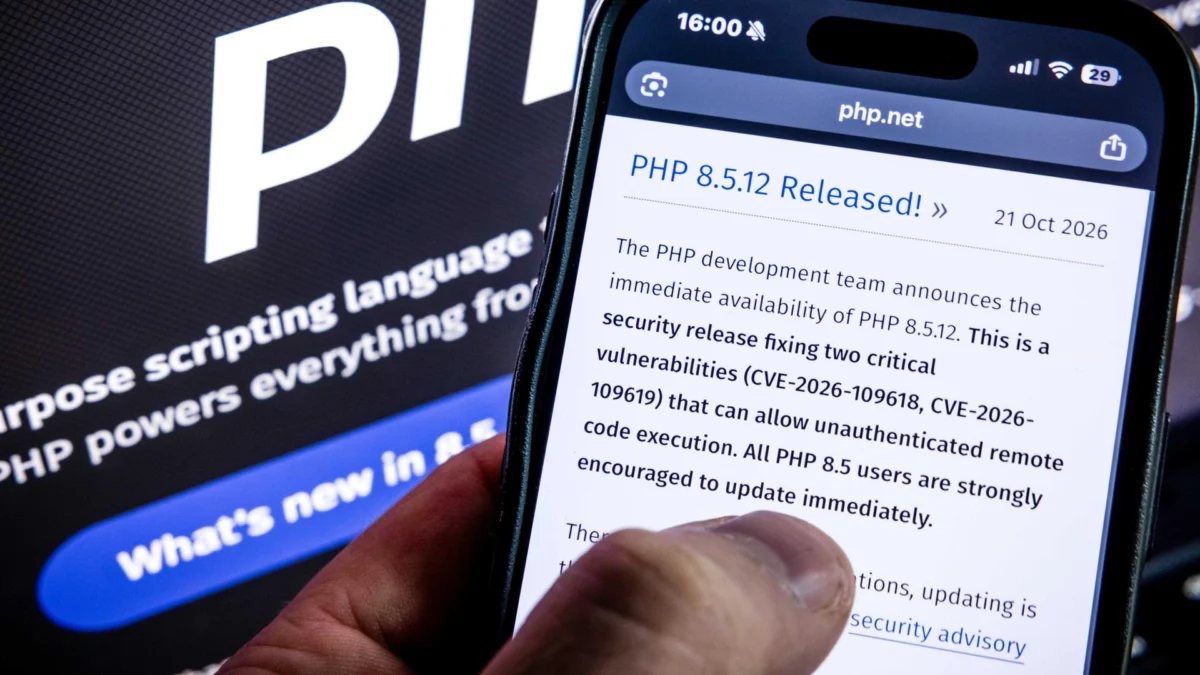
In a coordinated effort to stave off a potentially catastrophic cyber-attack, numerous Hessian ministries, municipal authorities, and critical digital services were taken offline earlier this week. The preemptive blackout was triggered by the discovery of a severe, high-criticality security vulnerability within PHP, the programming language that serves as the backbone for a staggering portion of the modern internet.
While the majority of these portals have since been restored to public access, the incident serves as a stark reminder of the fragile interconnectedness of digital infrastructure. From local city administrations to federal security agencies, the vulnerability threatened to grant unauthorized actors unfettered access to server databases and sensitive backend systems.
Chronology of the Crisis
The unfolding of the situation followed a rapid, high-stakes timeline that highlighted both the vulnerability and the resilience of German state digital infrastructure.
The Initial Alarm
The alarm was sounded following an industry-wide discovery of a flaw in the PHP environment. PHP is used in everything from personal blogs to enterprise-level content management systems (CMS) like WordPress, which powers an estimated 400 to 500 million websites globally.
On Wednesday evening, the Hessian State Chancellery made the difficult decision to pull major platforms—including the official state portal hessen.de and various ministerial sites—off the public internet. This "hard kill" approach was designed to prevent hackers from exploiting the vulnerability before security patches could be verified and deployed.
The Restoration Phase
By Thursday morning, the state government reported that the most critical systems had been successfully patched and brought back online. The Hessian State Chancellery confirmed that "technical adjustments" were successfully implemented across their digital ecosystem.
However, the transition back to normalcy was not uniform. While the City of Offenbach announced that its systems were fully operational by Wednesday night, other municipalities—including Hanau and parts of the Werra-Meißner district—reported ongoing outages throughout Thursday. Residents in these areas were encouraged to utilize telephone or email channels for administrative needs while IT teams worked to bridge the final gaps in service.
Persistent Offline Pockets
As of Thursday, the situation remained fluid for several organizations:
- Federal Agencies: The website of the Federal Criminal Police Office (BKA) in Wiesbaden operated with limited functionality.
- Political Entities: Major political party websites, including those for the CDU and AfD in Hesse, remained inaccessible as of early Thursday.
- Media Services: The Hessischer Rundfunk (hr) reported that its standard television-based teletext remained fully functional. However, the web-based "hr-Videotext" service, which runs on a PHP-based application, was taken offline as a precaution. Technical teams at the ARD’s central IT processing center (IVZ) are currently managing the update process for these services.
Technical Deep-Dive: Why PHP Matters
To understand the gravity of this event, one must understand the ubiquity of PHP. Developed in 1994, it has become the standard for server-side scripting. Because it is embedded in the infrastructure of platforms like WordPress, a flaw in the core language does not just affect one website; it creates a systemic risk for the entire web.
The Mechanics of the Vulnerability
Security experts identified that this specific vulnerability allowed for what is known as "Remote Code Execution" (RCE). In layman’s terms, an attacker could potentially bypass standard authentication protocols, such as passwords or two-factor authentication, to gain direct command-line access to a server. Once inside, an attacker could:
- Exfiltrate sensitive data: Accessing user databases, personal records, or classified government documents.
- Deploy Malware: Injecting malicious scripts to turn the government server into a staging point for further attacks on other institutions.
- Defacement: Altering the content of official websites to spread misinformation or erode public trust.
The Federal Office for Information Security (BSI) acted as the central node of coordination, issuing an urgent, high-priority security advisory. They urged all system administrators to apply the security patches "immediately."

Official Responses and Strategic Implications
The BSI’s intervention was the catalyst for the statewide blackout. By issuing an official warning, the BSI effectively forced a policy of "security over convenience."
The BSI Stance
The BSI emphasizes that in the current threat landscape, a proactive shutdown is often the most cost-effective defensive strategy. A brief period of downtime, while inconvenient for the public, is infinitely preferable to a data breach that could compromise thousands of citizens’ records. Their guidance provided the legal and technical framework for the Hessian administration to justify the sudden disappearance of their web presence.
Government and Municipal Management
For the Hessian State Chancellery, the incident was an exercise in crisis communication. By being transparent about the "technical adjustments" required, the government managed to prevent widespread panic. However, the uneven restoration of services at the municipal level—notably in areas like Hanau—highlights the decentralized nature of local IT management in Germany. While state-level servers are managed centrally, local municipalities often have their own unique configurations, which can delay the deployment of global security patches.
Implications for the Future of Digital Governance
This incident is not an isolated event but rather a symptom of a larger, systemic challenge facing modern governments.
The Cost of Digitization
As German authorities push for the "Digitalization of the Administration," the attack surface for hackers grows exponentially. Every new online portal that allows citizens to renew a passport, pay taxes, or register a business adds another entry point to the state network.
Resilience as a Core Competency
The recent event demonstrates that while German infrastructure is vulnerable, it possesses a high degree of defensive maturity. The ability to pull systems offline within hours of a vulnerability disclosure indicates that incident response protocols are being taken seriously.
However, experts suggest that relying on reactive measures—like shutting down websites—is not a sustainable long-term strategy. The path forward likely involves:
- Automated Patching: Moving toward infrastructure that can automatically test and deploy critical security updates without human intervention.
- Containerization: Isolating government services in "containers" so that if one service is compromised, the infection cannot spread to the rest of the network.
- Zero-Trust Architecture: Assuming that the network is always compromised and requiring verification for every internal data request, regardless of whether it comes from inside or outside the firewall.
Conclusion: Lessons Learned
The "Hessian Cyber Alert" concludes with a lesson in vigilance. While the immediate threat has been mitigated by the diligence of IT administrators and the guidance of the BSI, the underlying reality remains: the digital world is in a constant state of flux.
For the average citizen, the event may have been a temporary inconvenience. For the state, it was a successful test of its ability to absorb a shock, react decisively, and restore trust. As we look toward an increasingly digital future, the ability to manage these vulnerabilities will become the true hallmark of a stable and secure administration.
The internet has returned, the patches are in place, and the systems are once again humming. But in the quiet backrooms of the IT departments across Germany, the watch continues—because in the digital age, the next "critical vulnerability" is likely only a few lines of code away.