

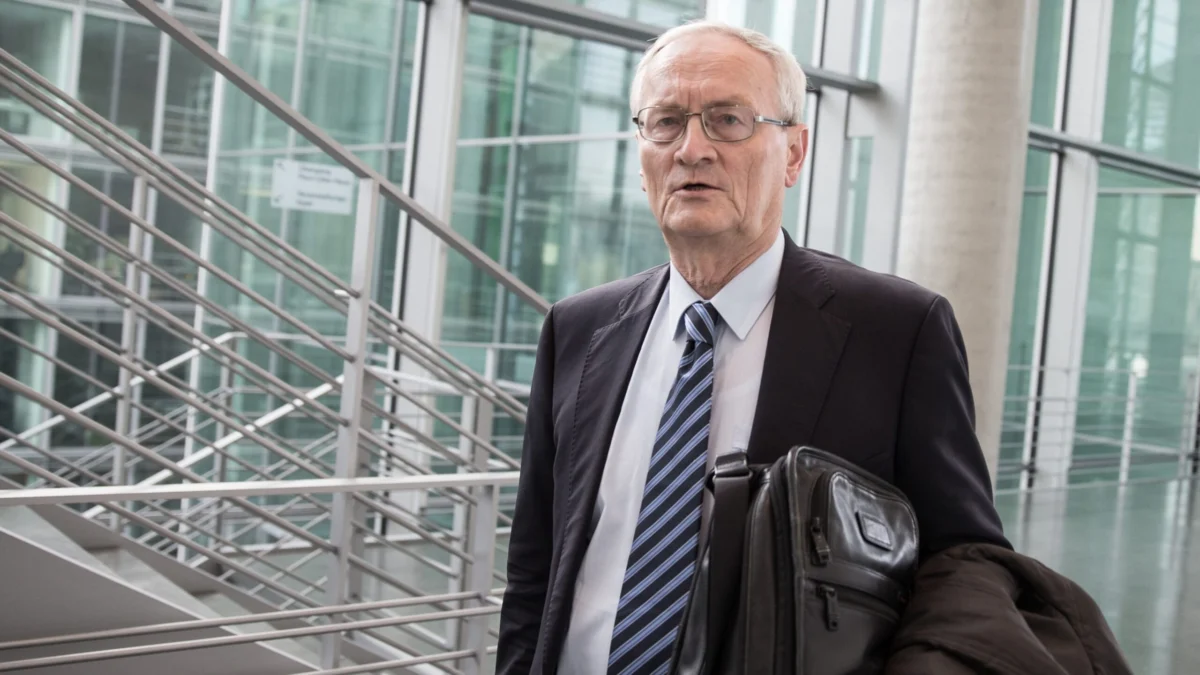
Düsseldorf, Germany – In a development that has sent shockwaves through Germany’s security apparatus, August Hanning, the former President of the Bundesnachrichtendienst (BND), Germany’s foreign intelligence service, has been arrested on suspicion of espionage. The 80-year-old former intelligence chief, who led the BND from 1998 to 2005, was taken into custody by Federal Criminal Police Office (BKA) officers on Tuesday morning at his home in Nordwalde, near Münster.
Simultaneously, Manfred D., Hanning’s former head of office, was also apprehended in Bad Tölz. Both men are at the centre of an unprecedented investigation by the Federal Prosecutor’s Office (Generalbundesanwaltschaft – GBA) into allegations of treasonous espionage, attempted treason, and intelligence agent activity. Manfred D. is reportedly facing charges of aiding and abetting these grave offences.
The arrests mark a deeply troubling moment for Germany, raising profound questions about the integrity of its intelligence services and the security of its most sensitive state secrets. The revelation that a former head of the BND could be implicated in such a scandal has prompted widespread concern across political and security circles.
The Arrests and Initial Allegations
The arrests, first reported by Handelsblatt citing security circles and subsequently corroborated by Süddeutsche Zeitung, NDR, and WDR, underscore the gravity of the allegations. BKA officers executed the arrest warrants with precision, reflecting the high-stakes nature of the operation. Hanning, a figure once entrusted with safeguarding Germany’s national interests on the global stage, now finds himself accused of undermining them.
According to reports, the accusations against Hanning and D. are extensive and alarming. Manfred D. is alleged to have supplied Hanning with approximately 2,000 classified BND documents over several years, reportedly in exchange for financial compensation. These documents are said to include highly sensitive materials such as situation assessments, intelligence from foreign partner services, and critical information pertaining to Iran’s nuclear programme and the Russian military. Furthermore, Hanning himself is alleged to have, on at least one occasion, prepared a security analysis for an undisclosed foreign intelligence service.
The Federal Prosecutor’s Office initially maintained silence on the matter, a standard procedure in ongoing high-profile investigations, but has since announced that a press release detailing the developments is forthcoming. This anticipated statement is expected to provide official confirmation of the charges and potentially shed more light on the scope of the investigation.
A Web of Treachery: The Alleged Document Leaks
The scale of the alleged leaks, involving some 2,000 secret BND documents, suggests a systematic and prolonged betrayal of trust. The nature of the documents – encompassing strategic assessments, intelligence from allied nations, and specific dossiers on critical geopolitical issues like Iran’s nuclear ambitions and Russia’s military posture – indicates a potential compromise of Germany’s intelligence capabilities and its relationships with international partners.
Situation assessments are vital analyses of global events and threats, guiding policy decisions at the highest levels of government. Material from foreign partner services is often shared under strict confidentiality agreements, and its compromise could severely damage trust and future cooperation. Information on the Iranian nuclear programme and the Russian military would be of immense value to a wide range of state and non-state actors, offering insights into Germany’s understanding of these critical threats and potentially revealing sources and methods.
The allegation that Hanning himself produced a security analysis for a foreign intelligence service adds another layer of gravity, suggesting direct active engagement in intelligence activities detrimental to Germany. The identity of this foreign intelligence service remains undisclosed, but its implications are profound, pointing to a potential adversarial relationship or a significant breach of national security for financial gain. The duration of this alleged operation, spanning years, speaks to a deeply entrenched scheme that went undetected for an extended period.
A Shocking Discovery: The Child Kidnapping Connection
Perhaps one of the most astonishing aspects of this unfolding scandal is the serendipitous manner in which the alleged espionage activities came to light. The investigation into Hanning did not originate from suspicions of treason but from an entirely unrelated and equally sensational case: a purportedly planned child kidnapping involving the prominent Hamburg restaurateur Christina Block.
In September of the preceding year, investigators conducted a search of Hanning’s property in connection with inquiries into this alleged plot. Hanning had vehemently denied any involvement in the Block case at the time. However, during the meticulous evaluation of data carriers seized during that search, BKA officials reportedly stumbled upon the trove of classified BND documents. This unexpected discovery pivoted the investigation from a domestic criminal matter to a full-blown national security crisis, revealing a clandestine operation that might otherwise have remained hidden. This accidental unearthing highlights the complex and often unpredictable nature of intelligence work and criminal investigations.
August Hanning: A Career at the Pinnacle of German Intelligence
August Hanning’s career trajectory within the German security establishment was nothing short of remarkable, culminating in his appointment as President of the BND in 1998. Born in 1946, Hanning joined the Federal Border Guard (Bundesgrenzschutz) in 1966, eventually moving into the civil service. He held various positions within the Federal Ministry of the Interior before joining the Federal Chancellery, where he served as coordinator of the intelligence services.
His tenure as BND President, from 1998 to 2005, was a period of significant global upheaval and transformation. He assumed leadership as the world grappled with the aftermath of the Cold War and the emerging threats of international terrorism. His leadership spanned the crucial years immediately following the September 11, 2001, terrorist attacks in the United States, which fundamentally reshaped the global intelligence landscape. Hanning was instrumental in adapting the BND to these new challenges, focusing on counter-terrorism efforts, intelligence sharing with allies, and the monitoring of proliferators of weapons of mass destruction.
During his time at the helm, the BND faced increasing scrutiny and pressure to modernize, particularly in light of debates surrounding Germany’s role in international conflicts, such as the Iraq War. Hanning navigated these complex political waters, often defending the BND’s operations and advocating for its vital role in national security.
After leaving the BND in 2005, Hanning continued his career in public service, serving as State Secretary in the Federal Ministry of the Interior until 2009. His subsequent professional engagements included roles in the private sector, notably in security consulting, leveraging his extensive experience and network. Throughout his career, Hanning was widely regarded as a seasoned and highly respected figure within Germany’s security establishment. The current allegations thus strike at the very heart of this reputation, casting a long shadow over a distinguished career dedicated, ostensibly, to the service of the state.
The German Federal Intelligence Service (BND): Guardian of State Secrets
The Bundesnachrichtendienst (BND) is Germany’s foreign intelligence agency, responsible for gathering and analysing information on foreign countries that is relevant to German foreign and security policy. Established in 1956 during the Cold War, the BND has evolved into one of the world’s most sophisticated intelligence services, employing thousands of staff and operating a global network of informants and technical surveillance capabilities.
Its core mission includes strategic intelligence gathering on political, economic, and military developments abroad, counter-terrorism, counter-proliferation of weapons of mass destruction, and cyber defence. The BND operates under the strict oversight of the German government and parliamentary committees, reflecting Germany’s strong democratic principles and commitment to civilian control over its intelligence agencies.
The BND’s effectiveness hinges on its ability to collect sensitive information, maintain its secrecy, and share it securely with trusted partners. Any breach, particularly one involving a former head of the agency, directly undermines these fundamental pillars. While the BND has faced its share of controversies and challenges over the decades, including past cases of internal security breaches or questions about its operational methods, none have involved an individual of Hanning’s stature being accused of such a grave offence. This incident is unique in its potential to erode public and international confidence in the service’s ability to protect its most vital assets.
Profound Implications for German National Security
The arrest of August Hanning on espionage charges carries profound and multifaceted implications for German national security, both domestically and internationally.
Erosion of Trust and International Standing
The most immediate and severe consequence is the potential erosion of trust. Internally, within the BND itself, the news of a former leader’s alleged betrayal can be devastating for morale and cohesion. It forces a painful introspection into vetting procedures, oversight mechanisms, and the culture of integrity within the agency. How could such an alleged scheme involving a figure of Hanning’s prominence go undetected for so long?
Externally, Germany’s international standing, particularly among its closest intelligence allies (such as the Five Eyes nations – US, UK, Canada, Australia, New Zealand – and key European partners), could be significantly damaged. Intelligence sharing is built on a foundation of absolute trust. When a former intelligence chief is accused of leaking highly classified documents, including those originating from partner services, it raises red flags about Germany’s capacity to safeguard shared intelligence. Allies might become more hesitant to share sensitive information, fearing it could be compromised. This could isolate Germany in critical intelligence networks and hamper its ability to respond effectively to global threats. The specific mention of documents related to Iran’s nuclear programme and Russia’s military posture underscores the geopolitical sensitivity and the potential for severe diplomatic fallout.
Internal Security Breach and Vetting Concerns
The alleged long-term nature of the leaks and the involvement of Hanning’s former head of office, Manfred D., point to a deep-seated internal security failure. This incident will undoubtedly trigger a comprehensive review of the BND’s internal security protocols, particularly concerning access to classified information by former senior officials and the monitoring of their post-service activities. While former intelligence chiefs often maintain a degree of access or are consulted on matters of national importance, the current allegations suggest a severe misuse of such privileges.
Questions will arise about the effectiveness of existing vetting processes, psychological assessments, and financial monitoring for individuals holding positions of immense trust. It also highlights the persistent vulnerability of even the most sophisticated intelligence agencies to insider threats, especially when driven by financial incentives or ideological motivations. The BND will be compelled to reassure its personnel, the German public, and its international partners that robust measures are in place, or will be implemented, to prevent such breaches from recurring.
The Legal Road Ahead: A Complex and High-Stakes Process
The legal proceedings against August Hanning and Manfred D. are expected to be protracted and immensely complex, given the nature of the charges and the high-profile individuals involved. The Federal Prosecutor’s Office, responsible for investigating and prosecuting crimes against the state, will lead the case.
The charges of treasonous espionage (landesverräterische Ausspähung), attempted treason (versuchter Landesverrat), and intelligence agent activity (geheimdienstliche Agententätigkeit) are among the most serious offences under German law. Treasonous espionage, for instance, involves the unlawful procurement or disclosure of state secrets with the intent to harm Germany’s security. Attempted treason implies actions taken towards this goal, even if unsuccessful. Intelligence agent activity refers to working for a foreign intelligence service in a way that endangers German interests.
The legal process will typically involve:
- Investigation: A meticulous and lengthy phase where investigators gather evidence, including forensic analysis of seized data carriers, interrogation of suspects, and potentially questioning of witnesses. The alleged 2,000 documents will need to be thoroughly examined to ascertain their content, origin, and potential impact.
- Pre-trial Detention: Given the severity of the charges and the flight risk or risk of evidence tampering, it is likely that the accused will remain in pre-trial detention, especially in the initial stages of the investigation.
- Indictment: If the GBA believes there is sufficient evidence, an indictment will be filed, formally bringing the case to trial.
- Trial: The trial itself will be conducted under strict security measures, potentially involving classified evidence presented in closed sessions to protect national secrets. The defence will have the opportunity to challenge the evidence and present their case.
- Verdict and Sentencing: If convicted, the penalties for espionage and treason in Germany are severe, often involving lengthy prison sentences.
Throughout this process, the principle of presumption of innocence will apply. Hanning and D. are innocent until proven guilty in a court of law. However, the mere fact of their arrest and the allegations made against them have already inflicted significant damage.
Official Silence and Anticipated Statements
In the immediate aftermath of the arrests, the Federal Prosecutor’s Office adopted a policy of initial non-comment, which is standard for sensitive ongoing investigations. This approach is intended to protect the integrity of the investigation, prevent premature speculation, and ensure that all evidence is collected thoroughly before public statements are made.
However, given the extraordinary nature of the case – involving a former head of Germany’s foreign intelligence service – a detailed official statement is expected soon. This press release will likely confirm the arrests, outline the general scope of the charges, and explain the legal basis for the investigation. It will be closely scrutinised by national and international media, political observers, and intelligence agencies worldwide. The government, particularly the Federal Chancellery and the Federal Ministry of the Interior, which oversee the BND, will also be under pressure to provide reassurances to the public and Germany’s allies regarding the state of national security and the measures being taken to address this crisis.
Conclusion: A Seismic Event in Germany’s Security Landscape
The arrest of August Hanning represents a seismic event in Germany’s security landscape, unparalleled in its gravity and potential repercussions. It is a stark reminder that no institution, however robust, is entirely immune to the threat of betrayal from within, even from those who once stood at its apex.
The investigation will be long and arduous, unravelling a complex web of alleged espionage that could redefine how Germany perceives and protects its national secrets. Beyond the legal proceedings, the incident demands a profound re-evaluation of security protocols, oversight mechanisms, and the very culture of trust within Germany’s intelligence services. The international community will be watching closely as Germany navigates this unprecedented crisis, seeking reassurance that its intelligence partnerships remain secure and its commitment to safeguarding sensitive information unwavering. The coming weeks and months will undoubtedly reveal more details, but the shadow cast by these arrests will linger for years to come, profoundly impacting Germany’s standing on the global stage.
















