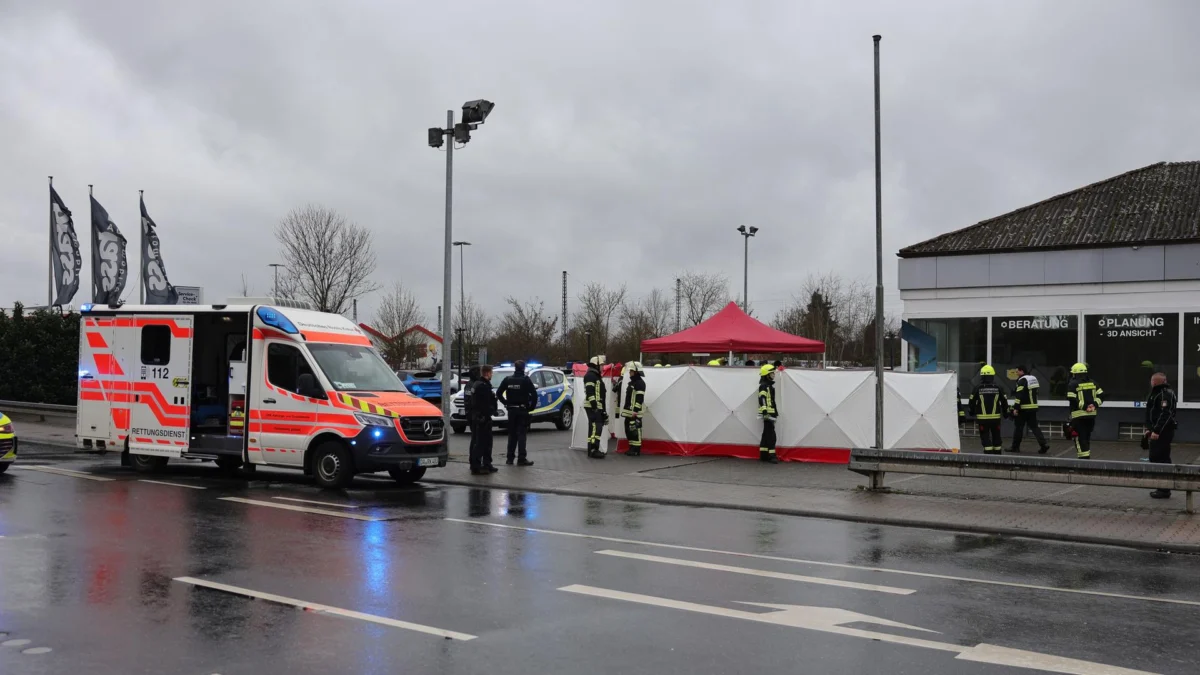
DARMSTADT, GERMANY — The serene backdrop of a commercial parking lot in Babenhausen became the stage for a brutal act of violence that has gripped the local community and sent shockwaves through the regional business sector. At the heart of the proceedings currently underway at the Darmstadt Regional Court is a tragic tale of professional collaboration gone awry, shifting from the complexities of financial brokerage into a lethal confrontation between two business partners.
A 37-year-old man, now standing trial, has formally confessed to the stabbing death of his 27-year-old associate. While the act itself is no longer in dispute, the legal battle centers on the nature of the crime: the prosecution argues it was a calculated, cold-blooded murder, while the defense insists the act was a panicked reaction during an uncontrollable moment of fear.
The Prosecution’s Case: A Premeditated Attack
According to the indictment presented by the Darmstadt Public Prosecutor’s Office, the incident, which occurred on February 12, 2026, was not a spur-of-the-moment flare-up but a calculated execution. Prosecutors contend that the defendant arrived at the scene with clear intent, having armed himself with multiple knives before entering the vehicle for a planned journey with the victim.
The narrative provided by the state paints a gruesome picture of the final moments of the 27-year-old victim. As the victim maneuvered his vehicle into a parking space at a local car dealership, the defendant allegedly launched an immediate and ferocious assault from the passenger seat. The prosecution alleges that the attacker delivered four precise, deep thrusts into the victim’s neck area while he was still behind the wheel.
The violence did not stop there. The prosecution claims that after the initial barrage of stabs, the defendant exited the vehicle, circled to the driver’s side, and continued the assault through the open door, plunging the blade twice more into the victim’s back. The force of the attack was so extreme that the 20-centimeter blade of the weapon snapped, leaving a harrowing piece of evidence behind.
The Defendant’s Account: A Plea of Panic
In a statement read by his defense counsel during the trial’s opening sessions, the 37-year-old defendant offered a starkly different account of the day’s events. While acknowledging the physical act of killing his partner, he vehemently denied the charge of murder, which carries a mandatory life sentence in Germany.
"I had no intention to kill," the defendant claimed through his lawyer. According to his testimony, the atmosphere in the car was thick with tension. He asserted that when his partner began to park the vehicle, he was suddenly overcome by an intense sense of dread. Fearing for his own safety, he pulled a knife to intimidate his associate.
The defendant described the ensuing struggle as a chaotic, frantic blur. He maintained that as the two men grappled in the confines of the vehicle, he lost all sense of control, stabbing out in a state of blind panic. He claims the fatal wounds were not the result of a calculated plan to end a life, but a tragic consequence of a situation that spiraled rapidly into violence.
Chronology of a Financial Downward Spiral
To understand the motive, the court has begun to peel back the layers of a complex and illicit business arrangement. Both men were involved in the brokering of real estate loans—a profession that, according to the evidence, relied on deceit.
The Foundation of Fraud
The two men were partners in a credit mediation scheme that allegedly operated on fraudulent documentation. By submitting falsified records to secure loans, the pair managed to maintain their business for a time. However, the house of cards began to collapse when financial institutions issued severe repayment demands.

The Escalation
The mounting pressure of the fraud investigation and the inability to meet financial obligations placed an enormous strain on their relationship. The 27-year-old victim, according to the defendant, had become deeply entangled in high-interest debt, allegedly resorting to pawning his own car and his wife’s gold jewelry to satisfy predatory lenders.
The Day of the Incident
On February 12, 2026, the situation reached a breaking point. The defendant claimed he was accompanying the victim to meet with these high-interest money lenders. Fearing that these lenders were a physical threat, the 37-year-old admitted he carried two knives for "self-protection." It was during this drive that the relationship—already strained by mutual financial ruin—shattered permanently on the asphalt of a Babenhausen parking lot.
Institutional and Security Implications
The gravity of the case has transformed the Darmstadt Regional Court into a high-security zone. Given the violent nature of the crime and the underlying criminal network involving loan sharks and fraud, authorities have implemented extraordinary measures to ensure the safety of all participants.
Increased Courtroom Security
From the first day of the trial, police presence was highly visible. Patrol vehicles were stationed around the courthouse perimeter, and officers were deployed inside the building, specifically monitoring the hallways leading to the courtroom. All attendees, including members of the press and public, were subjected to rigorous security screenings, with items such as lighters and aerosol sprays strictly prohibited inside the hall.
A Chilling Intimidation Attempt
The volatility surrounding this case was further underscored by a disturbing incident reported by the victim’s father. During his testimony, the father revealed that on the night preceding the start of the trial, a fire broke out in front of his home. His wife, who discovered the blaze in time, managed to alert the family before the flames could spread, but the incident has left the family terrified. Investigators are currently looking into whether this fire was a targeted act of intimidation meant to influence the proceedings or silence witnesses.
Socio-Economic Context and Future Proceedings
The case highlights the dark underbelly of the "gray market" of financial services, where individuals desperate for capital often turn to fraudulent brokerage firms. The intersection of financial crime and extreme violence is a rare but chilling phenomenon in the region.
As the trial moves forward, the court must grapple with the discrepancy between the "premeditated murder" theory held by the state and the "panicked self-defense" argument presented by the defense. Key witnesses, including financial investigators and those privy to the men’s business dealings, are expected to take the stand in the coming weeks.
The legal process is far from over. The presiding judge has scheduled further hearings for this coming Thursday, where the court is expected to delve deeper into the forensic evidence, including the broken knife blade and the path of the wounds, to determine if the defendant’s claims of a chaotic struggle hold up under scientific scrutiny.
For the family of the 27-year-old victim, the trial offers little solace. They remain caught in a nightmare that began with a business partnership and ended with a life extinguished in a parking lot. The community of Babenhausen, meanwhile, continues to watch closely, waiting for a verdict that will serve as the final chapter in this tragic story of greed, betrayal, and violence.
The trial is expected to continue for several weeks, with a final judgment anticipated later this year. For now, the heavy security and the somber atmosphere in the courtroom serve as a grim reminder of the high price of the illicit financial activities that ultimately led to this fatal confrontation.