


By Sports Editorial Staff
Updated: October 7, 2026
The 2026 European Road Cycling Championships concluded in a whirlwind of speed, technical precision, and contrasting fortunes in Slovenia. While the event served as a grand stage for established legends like Marlen Reusser and Primoz Roglic to solidify their dominance in the discipline of individual time trials, it proved to be a sobering reality check for the German national team, which struggled to find its rhythm on the demanding Slovenian course.
The Main Event: A Masterclass in Power
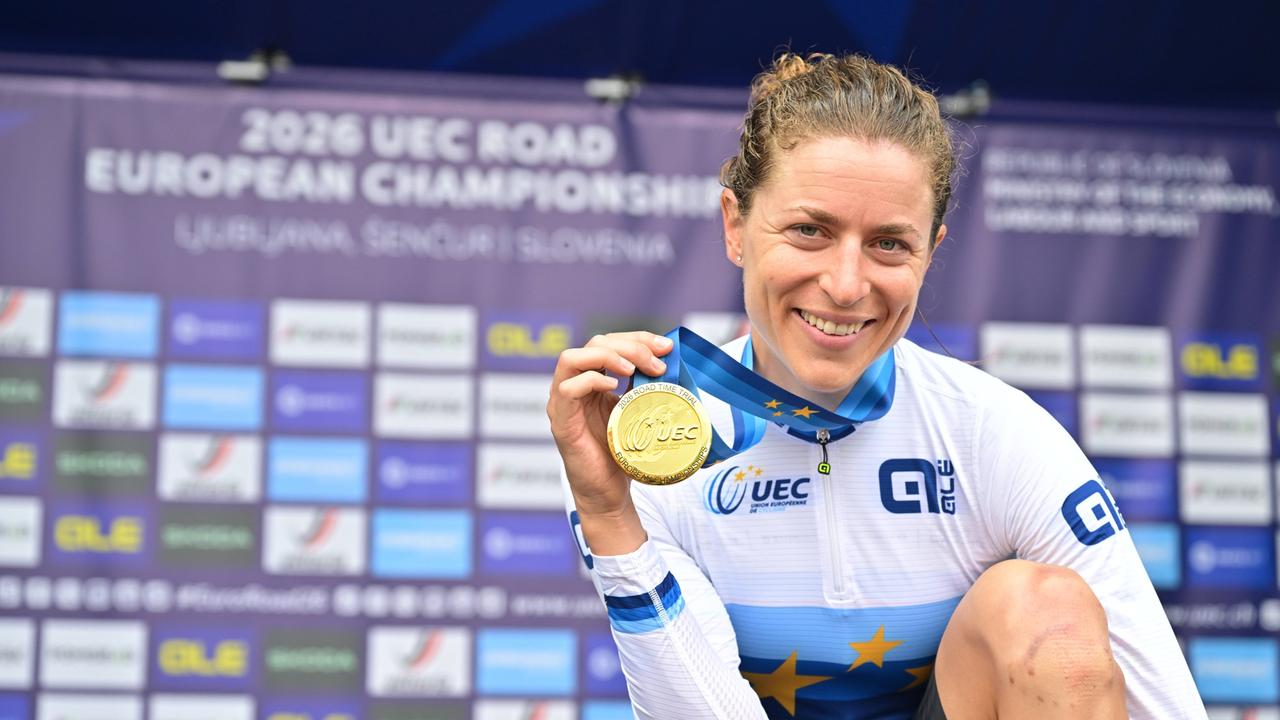
In the women’s elite category, the narrative was defined by the singular brilliance of Switzerland’s Marlen Reusser. Defending her title with a display of raw power, Reusser once again proved why she is currently the benchmark in time trial cycling. Having already secured gold at the recent World Championships in Montreal, her performance in Slovenia was less of a surprise and more of a confirmation of her current physical peak.
Reusser navigated the 22-kilometer course with clinical efficiency, clocking a time that left the rest of the field struggling to find an answer. By the time she crossed the finish line, she had established a clear gap, proving that her tactical preparation and aerodynamic efficiency remain unrivaled.
For the Dutch cycling powerhouse Demi Vollering, the day was one of resilience. The Tour de France winner, who has dominated road stages throughout the season, demonstrated her versatility by securing the silver medal. Despite her best efforts, she finished 23 seconds behind the imperious Reusser. The podium was rounded out by France’s Juliette Berthet, who claimed the bronze medal, capping off a stellar performance that highlighted the shifting dynamics of the international peloton.
Roglic’s Emotional Homecoming
While the women’s race was a showcase of consistency, the men’s elite time trial delivered an emotionally charged narrative. Primoz Roglic, the local hero, provided his home fans in Slovenia with a performance for the history books.
The atmosphere was electric as the Red Bull-affiliated rider took to the start house. Knowing the terrain intimately, Roglic balanced risk and caution to perfection. His victory was not just a win for his palmarès—it was his first-ever European gold in the discipline—but a moment of national pride. He finished seven seconds ahead of the French specialist Bruno Armirail and 28 seconds ahead of Maxime Decomble.
For Roglic, this victory serves as a cornerstone of his season, effectively silencing any questions regarding his form heading into the final months of the cycling calendar. His ability to execute a perfect ride under the pressure of home expectations underscores his status as one of the most mentally formidable athletes in professional cycling today.
A Disappointing Outing for the German Team
For the German contingent, the European Championships will be remembered as a missed opportunity. The team arrived in Slovenia with high hopes, particularly surrounding their national time trial champion, Franziska Koch.
Koch, who has enjoyed a breakout season that included a prestigious victory at Paris-Roubaix, arrived in Slovenia with momentum following her bronze medal performance at the Montreal World Championships. However, the 22-kilometer course proved to be a formidable adversary. Koch struggled to find her pace, finishing in 11th place—a result that saw her fall just outside the top ten. Her final time was 2:57 minutes slower than Reusser’s winning mark, a margin that suggests an off-day for the young star rather than a systemic issue.
The disappointment extended to the men’s side as well. Marco Brenner, a rider of immense potential, could only manage a 20th-place finish, crossing the line 1:28 minutes behind Roglic. Reflecting on the campaign, the German team’s performance was statistically underwhelming. Across all categories, the only glimmer of success came from the junior ranks, where Klara Dworatzek secured a bronze medal.
Chronology of the Final Day
- 09:00 CET: The morning session begins with junior categories, setting the stage for the elite races. Dworatzek provides early optimism with her podium finish.
- 13:00 CET: Elite women take the start. The weather conditions are optimal, with minimal wind, allowing for high average speeds.
- 14:30 CET: Marlen Reusser sets a blistering pace early on. Her intermediate check-points suggest a near-impossible time for the rest of the field to chase.
- 16:00 CET: The men’s elite race commences. Primoz Roglic receives a massive ovation from the Slovenian spectators at every turn.
- 17:30 CET: The podium ceremonies conclude as the sun sets over the Slovenian landscape, with Roglic receiving his gold medal amidst a chorus of national cheers.
Supporting Data and Technical Analysis
The Slovenian circuit, while shorter than many professional time trials at 22 kilometers, was technically demanding. It featured rolling hills that required riders to constantly oscillate between high-cadence climbing and heavy-gear power output on descents.
Women’s Elite TT Top 3:
- Marlen Reusser (SUI): Gold
- Demi Vollering (NED): +23s
- Juliette Berthet (FRA): [Time pending official verification]
Men’s Elite TT Top 3:
- Primoz Roglic (SLO): Gold
- Bruno Armirail (FRA): +7s
- Maxime Decomble (FRA): +28s
The data shows a clear divide between the specialists and the generalists. Reusser’s ability to maintain a high wattage output on the brief climbs allowed her to distance riders like Vollering, who are traditionally more comfortable on long-form mountain stages.
Official Responses and Team Statements
In the aftermath of the race, the mood in the German camp was somber but focused on future development. "We clearly didn’t meet the expectations we set for ourselves," a team spokesperson noted during the post-race press conference. "Franziska is an exceptional talent, and we know that one result—especially on a day where things just didn’t click—does not define her season. We will analyze the data, look at the power files, and prepare for the next block of racing."
On the other side of the spectrum, the Slovenian national team was jubilant. Primoz Roglic, in a brief comment to the media, said: "To win here, on home roads, with the support of my people, is a feeling I cannot describe. It was about managing the effort and trusting the process. I am incredibly proud of this result."
Future Implications: What Lies Ahead?
The 2026 European Championships have provided several key takeaways for the cycling world:
- The Reusser Era: Marlen Reusser has cemented her position as the undisputed queen of the clock. Her dominance suggests that she will be the rider to beat in the upcoming Olympic cycles and world-level time trials for years to come.
- Roglic’s Renaissance: For Primoz Roglic, this victory provides the psychological boost needed to compete at the absolute highest level. It proves that he remains a multi-faceted rider capable of winning on any stage.
- German Rebuilding: The German Cycling Federation faces a period of reflection. With a young core of riders like Koch and Brenner, the challenge will be to translate domestic success and high-level one-day race performance into consistency in time-trial-heavy events.
- The Rise of France: With both the men’s and women’s podiums featuring French riders, the nation is clearly investing heavily in aerodynamic development and time-trial training, positioning them as a major force in the coming seasons.
As the peloton packs up and leaves Slovenia, the focus shifts to the late-season classics and the preparation for the 2027 calendar. The European Championships have once again served their purpose: they have honored the sport’s established stars, elevated local heroes, and provided a harsh but necessary reminder that in the world of professional cycling, the margin between glory and disappointment is measured in mere seconds.



