Kyiv, Ukraine – October 22, 2026 – Despite ongoing diplomatic efforts brokered by the United States, the brutal conflict in Ukraine has seen a significant escalation in the past 24 hours. Overnight, Russia launched a barrage of missiles targeting the Ukrainian capital, Kyiv, resulting in civilian casualties and extensive damage. Concurrently, Moscow reported drone attacks directed at its own territory, painting a stark picture of a war that continues to rage on multiple fronts, even as discussions about its potential end are tentatively underway.
The latest attacks underscore the volatile nature of the conflict and the persistent challenge of achieving a lasting de-escalation. While official statements from both sides hint at a willingness to engage in dialogue, the reality on the ground remains one of relentless military action, leaving Ukrainian cities scarred and its citizens living under constant threat.
A Night of Terror: Kyiv Under Missile Fire
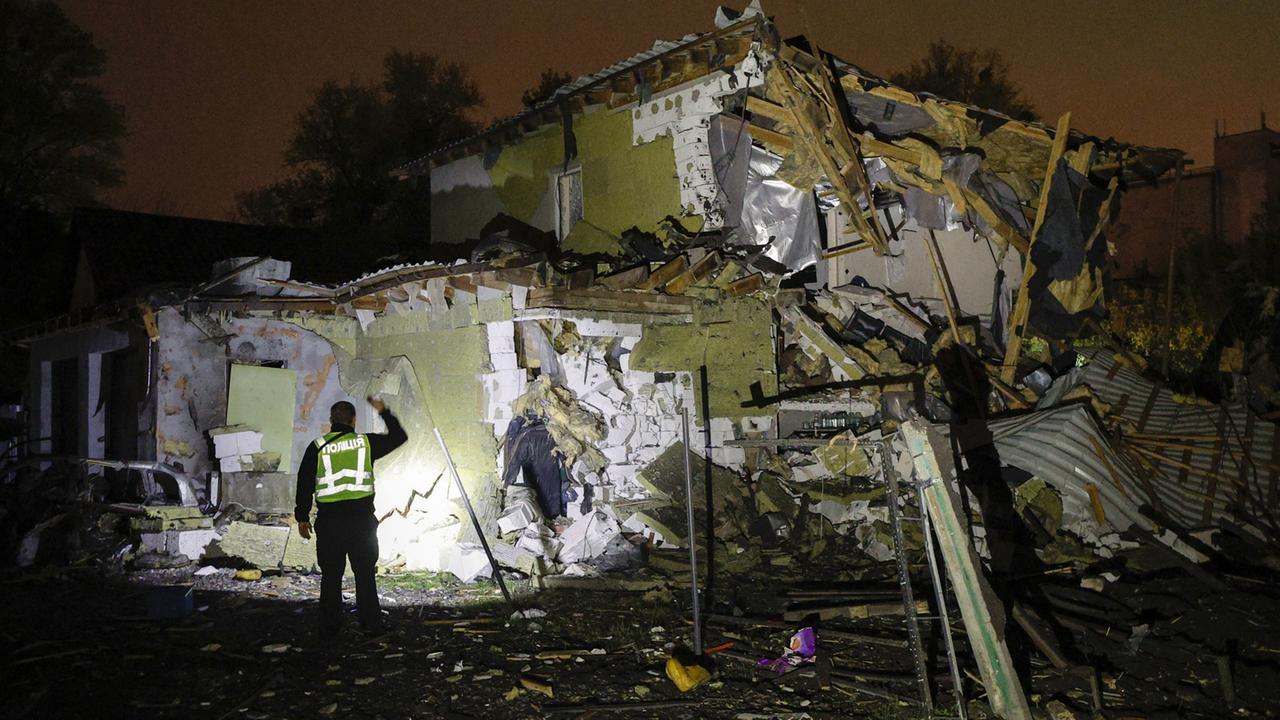
The early morning hours of October 22nd brought renewed terror to Kyiv as Russian forces unleashed a wave of missiles upon the capital. The city’s air defense systems were engaged in a desperate battle to intercept the incoming projectiles, but not all were thwarted. Vitali Klitschko, the Mayor of Kyiv, confirmed multiple impacts across the city via the social media platform X, urging residents to seek shelter in designated safe zones. Reports indicate that several individuals sustained injuries as a direct result of the strikes.
In the pre-dawn darkness, the Ukrainian Air Force issued stark warnings of "further ballistic missiles en route to Kyiv," amplifying the sense of dread among the city’s inhabitants. The psychological toll of these recurring attacks cannot be overstated, as they force a population to live in a perpetual state of alert, their lives dictated by the unpredictable rhythm of war.
Mayor Klitschko provided a grim assessment of the damage, reporting that residential buildings and a gas station in districts east of the Dnipro River suffered damage from falling debris. The potential for further casualties remained a significant concern, with emergency services assessing the possibility of individuals trapped within damaged structures. Later updates confirmed that sections of a metro bridge had also sustained damage, adding to the extensive destruction wrought by the assault.
The Russian Ministry of Defense, in its own briefing, claimed to have launched a significant assault on port facilities in Odesa during the night. They asserted that vessels utilized by the Ukrainian army had been targeted and struck, indicating a strategic focus on Ukraine’s maritime infrastructure. This claim, if substantiated, suggests a coordinated effort to degrade Ukraine’s logistical capabilities and naval presence.
Moscow Reports Drone Swarms Amidst Kyiv’s Resilience
In a curious turn of events, Moscow also reported being the target of significant drone activity overnight. Sergey Sobyanin, the Mayor of the Russian capital, stated that approximately 630 drones were launched in the direction of the Moscow region. While the majority were reportedly neutralized by Russian air defenses, two individuals were reported injured in the incidents. This reciprocal reporting of aerial attacks highlights the interconnected and escalating nature of the hostilities, where neither side appears to be solely on the defensive.
The simultaneous reporting of attacks on both Kyiv and Moscow, even with differing degrees of success and impact, underscores the widening scope of the conflict and the increasing reach of aerial warfare. It also serves as a stark reminder that the human cost of this war extends beyond the immediate battlefields, impacting civilian populations on both sides.
A Glimmer of Hope? Putin Agrees to Diplomatic Overtures
In a development that has injected a cautious optimism into the international community, Russian President Vladimir Putin has reportedly agreed in principle to a resumption of trilateral talks involving Ukraine and the United States. This significant diplomatic breakthrough, as announced by Kremlin aide Yuri Ushakov, is slated to commence after November 10th. The stated objective of these negotiations is to "establish a security system for Russia and Ukraine after the end of the conflict."
This agreement, however tentative, marks a crucial moment in the protracted diplomatic wrangling surrounding the conflict. For months, international efforts have been focused on finding a pathway towards de-escalation and a sustainable peace. The US, in particular, has been actively engaged in mediating discussions, seeking common ground between the warring parties.
The Elusive Path to Peace: Hopes and Skepticism
While the agreement to engage in trilateral talks is a positive step, it is tempered by considerable skepticism from analysts and observers. Russia, under President Putin, has historically maintained a firm stance against proposals that it perceives as undermining its security interests. Ushakov’s statement, while acknowledging the potential for talks, also indicated Russia’s continued reservations regarding certain proposals. He reportedly described suggestions conveyed by U.S. Special Envoy Steve Witkoff, representing European and Ukrainian positions, as "not containing much substance."
This sentiment was echoed in a recent interview with tagesschau24, where Andreas Umland, an expert on Eastern Europe, expressed his doubts about Russia’s current commitment to genuine negotiations. "This ‘negotiation theater’ has been going on for many years," Umland stated, adding, "In that regard, I have no great hopes yet." His perspective highlights a long-standing pattern of what some interpret as Russia using diplomatic engagement as a tactic rather than a genuine pursuit of peace, especially when military objectives are not yet fully achieved.
The meeting between President Putin and Steve Witkoff in St. Petersburg, which reportedly lasted for approximately three hours and included other high-ranking Russian officials, underscores the level of engagement, even if the substance of the discussions remains a point of contention. The presence of Ushakov and Kirill Dmitriyev suggests a serious, albeit perhaps strategic, discussion about future diplomatic frameworks.
Zelenskyy’s Vision: Freezing the Frontline as a Precursor to Peace
Ukrainian President Volodymyr Zelenskyy has responded with cautious optimism to the prospect of renewed talks with the United States and Russia. He expressed his desire for a meeting of negotiators to take place as soon as possible, ideally by early November. The agenda for such a meeting, as outlined by Zelenskyy, would include discussions on peace proposals and the potential for a summit between heads of state and government.
Crucially, President Zelenskyy has articulated a potential roadmap for de-escalation, suggesting that a "freezing of the frontline" in the conflict with Russia could serve as a viable first step towards a ceasefire. Speaking to Fox News, he stated, "We have to freeze it now. This is the way to ‘end this war’ and ‘the minimum we expect from Russia today.’" This pragmatic approach acknowledges the immediate realities on the ground and proposes a tangible, albeit potentially controversial, initial measure to halt the bloodshed.
Zelenskyy’s proposal for a frontline freeze suggests a recognition of the current military stalemate and a desire to prevent further territorial gains or losses that could complicate future peace negotiations. It also implies a willingness to engage in difficult compromises in pursuit of ending the wider conflict.
The Broader Implications: A War of Attrition and Shifting Alliances
The events of the past 24 hours serve as a stark reminder of the protracted nature of the war in Ukraine. The renewed missile and drone attacks demonstrate the continued capacity and willingness of Russia to exert military pressure, even while seemingly engaging in diplomatic overtures. This dual approach, often referred to as "escalation for negotiation," is a well-established tactic in international conflict.
For Ukraine, the resilience displayed in the face of relentless attacks is a testament to its people’s determination to defend their sovereignty. However, the constant bombardment exacts a heavy toll, both in terms of human lives and the nation’s infrastructure. The ongoing need for international military and financial aid remains critical.
The proposed trilateral talks, should they materialize and prove fruitful, could represent a significant turning point. The involvement of the United States as a mediator is crucial, given its influence and its commitment to Ukraine’s territorial integrity. However, the underlying issues that led to the conflict remain deeply entrenched, and the path to a lasting peace will undoubtedly be fraught with challenges.
The expert opinions, such as that of Andreas Umland, suggest that a genuine breakthrough may require a shift in Russia’s strategic objectives or a change in its assessment of the costs and benefits of continued conflict. Until then, the world watches with bated breath, hoping that the fragile threads of diplomacy can withstand the persistent onslaught of war. The coming weeks will be pivotal in determining whether the current escalation signals a desperate last stand or a prelude to a genuine, albeit arduous, peace process. The resilience of Ukraine, coupled with the complex geopolitical landscape, will shape the future of this devastating conflict.