MÜNCHEN – The backbone of Germany’s future—its educational infrastructure—is currently facing a structural crisis of historic proportions. According to a landmark study commissioned by the KfW (Kreditanstalt für Wiederaufbau) and conducted by the German Institute for Urban Affairs (Difu), the nation’s schools are in a state of advanced decay. With a staggering investment backlog now calculated at €67.8 billion, the data paints a grim picture: a generation of students is being taught in environments that often fail to meet the basic standards of modern, digital, or even safe pedagogy.
As German cities and municipalities struggle to balance their books, the neglect of school buildings has moved from a local administrative challenge to a systemic national threat. Two-thirds of all local authorities now classify the maintenance and renovation requirements of their school facilities as “significant” or “grave.”
The Anatomy of the Investment Gap
The scale of the problem is best understood when contextualized against other municipal burdens. The €67.8 billion required for schools currently dwarfs the investment backlog for roads and transport infrastructure, which stands at €53.7 billion. This shift in priority highlights a painful reality for local governments: the physical foundations of the “Land of Ideas” are eroding at an accelerating pace.
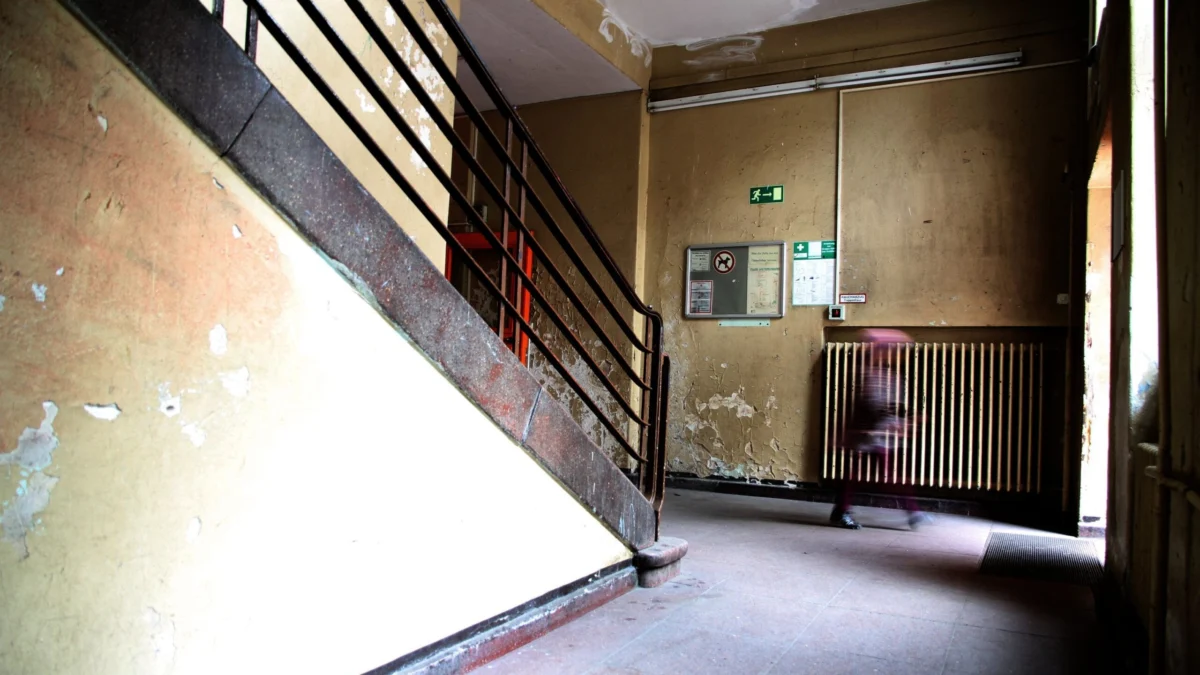
For years, educational experts and politicians have sounded the alarm, arguing that dilapidated classrooms act as a direct barrier to learning. In an era that demands high-speed connectivity, energy-efficient climate control, and modular spaces for collaborative learning, many German schools remain trapped in the architectural paradigms of the 1960s and 70s. Peeling paint, faulty wiring, and outdated heating systems are not merely aesthetic issues; they are indicators of a profound institutional neglect that threatens the equality of opportunity promised by the German educational system.
A Chronology of Neglect
The roots of this crisis did not sprout overnight; they are the result of decades of fiscal conservatism and shifting administrative responsibilities.
- The Post-War Boom (1950s–1970s): During the post-war reconstruction period, thousands of schools were built in rapid succession to accommodate the Baby Boomer generation. These buildings were constructed with a singular focus on volume.
- The Era of Austerity (1990s–2010s): Following the reunification of Germany, municipal budgets were squeezed by the need to integrate Eastern infrastructure. During this period, "deferred maintenance" became a standard administrative strategy. Repairs were pushed into the future to balance current budgets.
- The Digital Awakening (2015–Present): As the demand for digital education surged, the structural limitations of aging buildings became glaringly obvious. Installing high-speed fiber optics in buildings with crumbling asbestos-laden walls proved to be an impossible fiscal hurdle for many municipalities.
- The KfW Report (2023–2024): The latest data from the German Institute for Urban Affairs serves as a definitive audit of this cumulative neglect, quantifying the massive financial chasm that now separates current conditions from functional reality.
The Financial Conundrum: Why Municipalities are Paralyzed
The core of the issue lies in the German fiscal federalism model. Municipalities are largely responsible for the construction and maintenance of school buildings, yet they have limited revenue-raising power. Unlike the federal government, which can take on debt to stimulate the economy, local authorities are often trapped in a cycle of debt-servicing, social welfare spending, and rigid budget caps.
When faced with a choice between fixing a leaking roof at a primary school or maintaining vital social services, many local councils have opted for the latter, effectively kicking the can down the road. This has created a self-reinforcing cycle: as buildings deteriorate, the cost of future repairs grows exponentially, eventually reaching the €67.8 billion threshold identified today.
A New Paradigm: Private-Public Partnerships (PPP)
Faced with this insurmountable fiscal wall, a paradigm shift is underway. For years, the idea of private investment in public schools was met with deep skepticism in Germany, often criticized as "privatization of the common good." However, the sheer scale of the crisis has forced a re-evaluation of these traditional stances.
Tanja Volksheimer, Managing Director of Next Generation Invest, a firm specializing in socially responsible asset management, observes a distinct trend: "We are observing a professionalization on both sides. After years of critical distance, authorities and private investors have found a common language."
This new model of cooperation involves private developers, construction firms, and institutional investors working alongside local governments. These partnerships are no longer limited to simple construction contracts; they are evolving into sophisticated long-term management agreements. By leveraging private capital, municipalities can execute large-scale, climate-neutral renovations that would otherwise take decades to fund through tax revenue alone.
Official Responses and Political Implications
The federal government, under pressure from state ministries and educational unions, has begun to acknowledge that the school crisis is a national emergency that transcends local jurisdiction. While federal grants (such as the DigitalPakt Schule) have provided some relief, critics argue that these are "drops in the ocean."
Political discourse in Berlin has recently focused on the "Golden Rule of Investment"—a proposal to loosen debt-brake restrictions specifically for long-term infrastructure projects. Supporters argue that investing in school buildings is not consumption, but capital accumulation for the future of the German labor market. Opponents, however, worry about the long-term impact on the federal budget and the risk of moral hazard.
Meanwhile, local mayors are increasingly vocal, demanding a structural overhaul of how school maintenance is funded. The message is clear: if the physical infrastructure of the classroom is allowed to fail, the pedagogical reforms intended to prepare Germany for the 21st century will be functionally impossible to implement.
Implications for the Future of Education
The implications of this crisis extend far beyond the construction sector. There is a direct correlation between the quality of the learning environment and student performance. Studies have consistently shown that poor ventilation, inadequate lighting, and lack of space for group work correlate with higher dropout rates and lower test scores.
If Germany fails to close this €67.8 billion gap, the socioeconomic divide will widen. Wealthier municipalities will continue to maintain high-quality facilities, while schools in struggling urban centers or rural peripheries will fall further behind. This creates a geography of inequality that undermines the social contract of the Federal Republic.
Furthermore, the environmental impact of these buildings is significant. Many of the schools built in the mid-20th century are "energy sieves," consuming vast amounts of fossil fuels for heating. A systematic renovation of these buildings is a prerequisite for Germany’s Energiewende (energy transition) goals.
Conclusion: A Call to Action
The €67.8 billion figure is more than a line item in a financial report; it is a wake-up call. Germany stands at a crossroads. It can continue to manage the decline of its educational infrastructure through piecemeal, reactive maintenance, or it can embrace a new, aggressive strategy that combines public willpower with private innovation.
The path forward requires more than just money. It requires a fundamental shift in how the state views the relationship between architecture and education. A school is not merely a collection of classrooms; it is the most critical site of investment for the nation’s future. As the data shows, the bill for neglecting this reality is rising every year. The time for administrative hesitation has passed; the time for systemic, well-funded, and collaborative reconstruction has begun.