By MDR WISSEN / Research Desk
Updated: October 5, 2026
As the automotive industry pivots toward an era of autonomous transport, the challenge is no longer just about the sophistication of sensors or the precision of AI algorithms. Instead, the most critical frontier for widespread adoption lies in the psychological comfort of the public. A collaborative study led by researchers from the Technical University (TU) of Chemnitz and the Technical University of Berlin has unveiled pivotal insights into how pedestrians perceive and interact with self-driving shuttles, marking a significant milestone in "human-centered" mobility design.
Main Facts: The Psychology of the Road
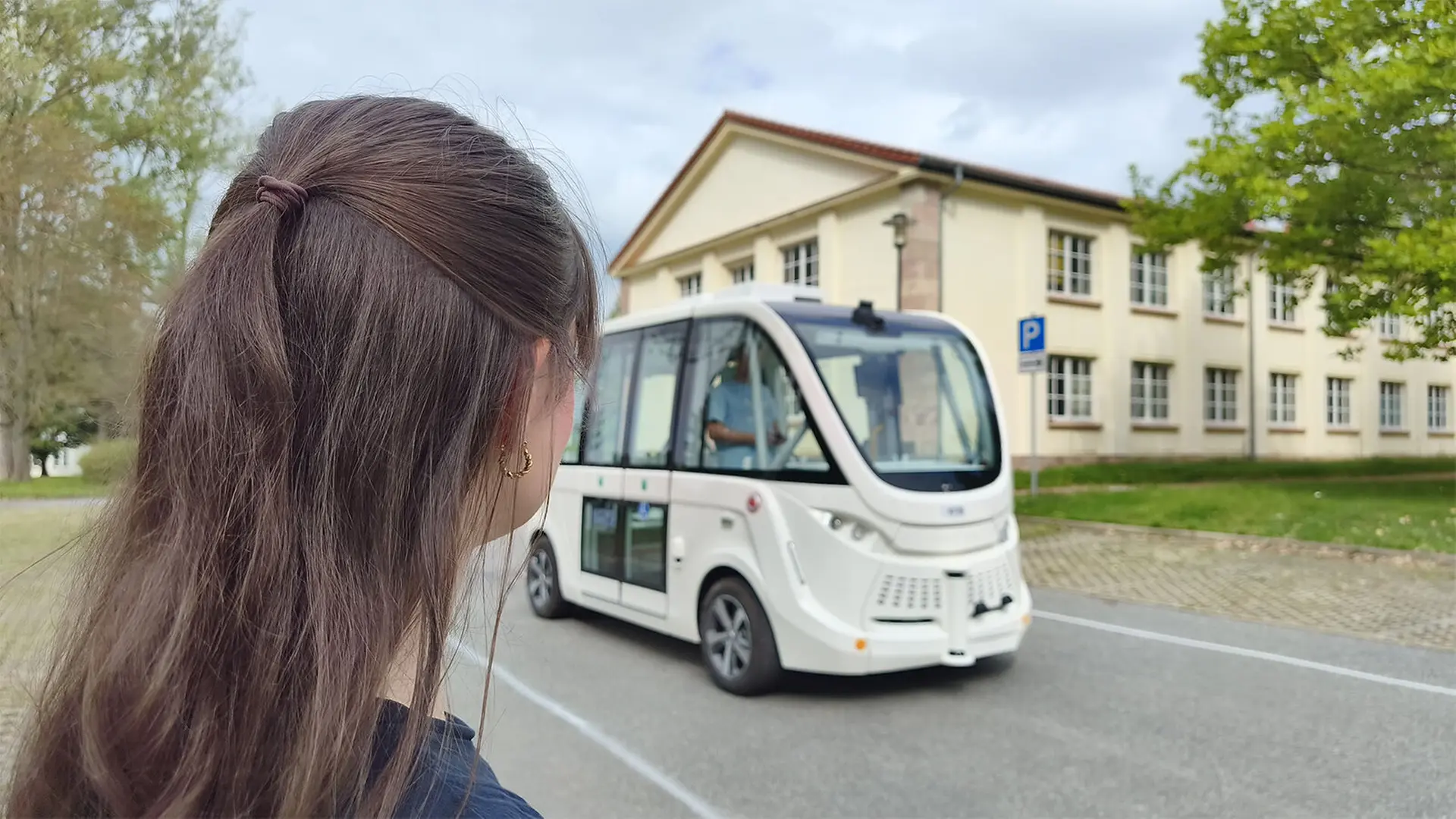
The research project, which concluded its testing phase in the summer of 2026 at the TU Chemnitz campus, sought to decode the non-verbal communication between humans and machines. By utilizing an automated shuttle as a testing platform, researchers observed real-world interactions between pedestrians and vehicles operating in different modes.
The core findings suggest that the average pedestrian perceives well-behaved autonomous vehicles as "safe, relaxed, self-determined, and efficient." However, the study also identified a delicate threshold: while efficiency is often associated with higher speeds, that same speed can trigger a subtle decline in the pedestrian’s sense of safety and relaxation. This creates a "comfort paradox" that engineers must navigate to ensure that autonomous technology is not just technically sound, but socially acceptable.
A Chronology of Research and Development
The path to these findings began with a multidisciplinary approach, blending the expertise of psychologists, labor scientists, innovation managers, and automotive engineers.
- Phase 1: Conceptualization and Setup (Early 2026): The research teams from Chemnitz and Berlin established a controlled, yet realistic, testing environment on the university campus. The goal was to simulate traffic scenarios that mirror urban environments, such as street crossings.
- Phase 2: Simulation of Operating Modes (Spring 2026): Researchers introduced three distinct control regimes for the shuttle: fully automated (autonomous), manual (human-driven), and teleoperated (controlled remotely by a human operator).
- Phase 3: Real-world Interaction Testing (Summer 2026): Proband groups were asked to interact with the shuttle under these various modes. The data collection focused on the subjective emotional responses of pedestrians and their behavioral changes during crossings.
- Phase 4: Bremsmanöver (Braking Maneuvers) Analysis (Late Summer 2026): A specialized follow-up study focused on the mechanics of braking. Scientists varied the deceleration patterns and the distance at which the vehicle came to a complete halt, analyzing the "language" of the vehicle’s movement.
The Influence of Vehicle Mode and Velocity
One of the most surprising takeaways from the study is the high level of trust pedestrians place in teleoperated vehicles. Because teleoperation allows for human intervention from a remote center, it often mimics the nuanced social behaviors that pedestrians have come to expect from human drivers.
However, the study emphasizes that the mode of operation is only one variable. Speed, unsurprisingly, remains the dominant factor in human perception. When the shuttle approaches at higher velocities, the pedestrian’s perception of "safety" dips, even if the vehicle’s sensor suite is capable of stopping instantly. This implies that for autonomous vehicles to be successful, they may need to adapt their velocity based on the density and proximity of pedestrians, rather than just optimizing for traffic flow.
The Nuance of Braking: It’s Not Just About Stopping
A critical component of the research explored the "how" of stopping. The study found that it is not enough for an automated vehicle to simply come to a halt; the manner in which it stops is paramount.
Researchers tested various braking strategies—gradual deceleration versus sudden, high-precision stops. The results suggest that the "braking signature" of a vehicle is a form of communication. A smooth, predictable deceleration pattern allows pedestrians to intuitively judge whether the vehicle has "seen" them and intends to yield. Conversely, erratic or overly aggressive braking creates uncertainty, which triggers anxiety in pedestrians. Furthermore, the distance from the crossing line at which the vehicle stops significantly alters the pedestrian’s perception of the vehicle’s "politeness" and intent.
Official Responses and Expert Perspectives
The research team at TU Chemnitz has highlighted that this data is a wake-up call for the automotive industry. "We cannot continue to define vehicle behavior exclusively through a technical lens," a representative stated. "The future of mobility must be designed with the human participant at its center."
The integration of these findings into future software updates for autonomous systems is expected to be a key focus for manufacturers. By translating these human-centered observations into algorithmic parameters—such as "socially intelligent braking profiles"—the researchers hope to bridge the gap between cold machine logic and human expectation.
Implications for Future Urban Planning
The implications of this research are far-reaching. As cities look to integrate autonomous shuttles into public transit networks, the "social integration" of these vehicles will determine their success.
1. Urban Design and Infrastructure
If pedestrians feel more comfortable with certain braking patterns or speed profiles, city planners may need to implement "autonomous-friendly zones" where vehicle behavior is programmed to prioritize social flow over pure efficiency.
2. Regulatory Frameworks
Government bodies currently evaluating the safety of autonomous driving may need to adopt the "human-centered" metrics identified by the TU Chemnitz and Berlin teams. Safety is not just the absence of accidents; it is the presence of predictable, comforting interaction.
3. The Future of Teleoperation
The positive reception of teleoperated vehicles suggests that remote-control technology could serve as a necessary bridge technology. As fully autonomous systems continue to evolve, the "human-in-the-loop" approach provided by teleoperation might be the key to building public trust during the transition period.
Conclusion: Designing for Trust
The collaboration between the Technical Universities of Chemnitz and Berlin serves as a critical reminder that technology does not exist in a vacuum. A vehicle, no matter how advanced its LiDAR and AI, is a social actor in a shared public space.
As the researchers prepare to publish their comprehensive findings in upcoming scientific journals, the industry faces a clear mandate: the next generation of autonomous transport will be won not by the fastest chip or the most powerful battery, but by the machine that best understands the subtle, unwritten rules of human courtesy. By prioritizing the human experience, the researchers are laying the groundwork for a future where autonomous mobility is not just a technical reality, but a seamless, integrated part of our daily lives.
Data sources: The findings discussed are based on the joint research project by the TU Chemnitz and TU Berlin regarding human-machine interaction in autonomous transit, as reported by MDR WISSEN in October 2026.