


By Editorial Staff
October 5, 2026
The world of international football, often lauded as a universal language that transcends geopolitical divides, has found itself at the center of an unprecedented diplomatic and humanitarian storm. Following a highly charged Nations League fixture that concluded in a 1-1 draw, Ireland’s national team head coach, Heimir Hallgrímsson, has issued a stark, public plea to UEFA: cease the scheduling of matches between the Republic of Ireland and Israel.
The Icelandic tactician’s comments, delivered in the immediate aftermath of a match played in a surreal, spectator-free environment in Bačka Topola, Serbia, underscore a growing consensus within the Irish camp that the sport is no longer an adequate vehicle for engagement under the current circumstances. As the conflict in the Middle East continues to claim lives, the football pitch has become a theater of protest, tension, and alleged misconduct, leaving the governing body of European football in an increasingly difficult position.
A Chronology of Escalation
The friction between the two football associations did not emerge in a vacuum; it is the culmination of months of mounting political pressure. The saga reached a critical inflection point in June, when the Football Association of Ireland (FAI) officially requested the relocation of their home fixture against Israel.
What should have been a standard Nations League encounter in Dublin became a flashpoint for national protest. Amidst widespread public outcry and calls for a total boycott of the match as a direct protest against Israel’s military operations in Gaza, the FAI and UEFA ultimately reached a compromise: moving the match to neutral territory in Serbia.
The choice of Bačka Topola as the venue for both the "home" and "away" legs was intended to mitigate security risks and minimize the potential for large-scale civil unrest. However, the move failed to quell the underlying volatility. Instead, the sterile, empty stands served only to amplify the friction on the pitch, turning a professional sporting event into a microcosm of a bitter, unresolved geopolitical tragedy.
The "Spitting Incident" and Professional Conduct
The most recent encounter, held behind closed doors, was marred by reports of a disturbing confrontation in the tunnel. According to allegations brought forward by the Irish delegation, the team’s fitness coach was subjected to a physical assault by a member of the Israeli staff during the halftime break. The allegation centers on an act of spitting—a profound breach of sporting decorum and professional conduct.
While the incident has triggered internal reviews, definitive evidence remains elusive. Mobile phone footage captured in the restricted confines of the Serbian stadium shows a sudden escalation in agitation among players and staff, with one voice audibly shouting, "Be clever," to de-escalate the situation.
When pressed on the matter during the post-match press conference, Hallgrímsson maintained a disciplined, if strained, composure. "I will not comment on that; it is a matter that will likely be addressed by the disciplinary commission," he stated, refusing to be drawn into a public war of words. When asked if the alleged incident and the subsequent atmosphere had compromised his players’ focus, he offered a curt denial, emphasizing that his squad’s primary concern remained the match itself, despite the overwhelming external pressures.
Hallgrímsson’s Shift in Rhetoric
Perhaps the most significant development in this narrative is the evolution of Heimir Hallgrímsson’s own public persona. Earlier in the campaign, the coach found himself at the epicenter of a media firestorm after a series of inflammatory remarks. His declaration, "We are playing against Israel, we are playing against genocide," sent shockwaves through the sporting world, prompting an immediate and scathing rebuke from the Israel Football Association (IFA).
In the quiet aftermath of the latest match, Hallgrímsson appeared to be in a reflective, perhaps regretful, mood. While his stance on the necessity of separating the two teams remains unchanged, he acknowledged that his previous choice of language was a tactical and professional error.
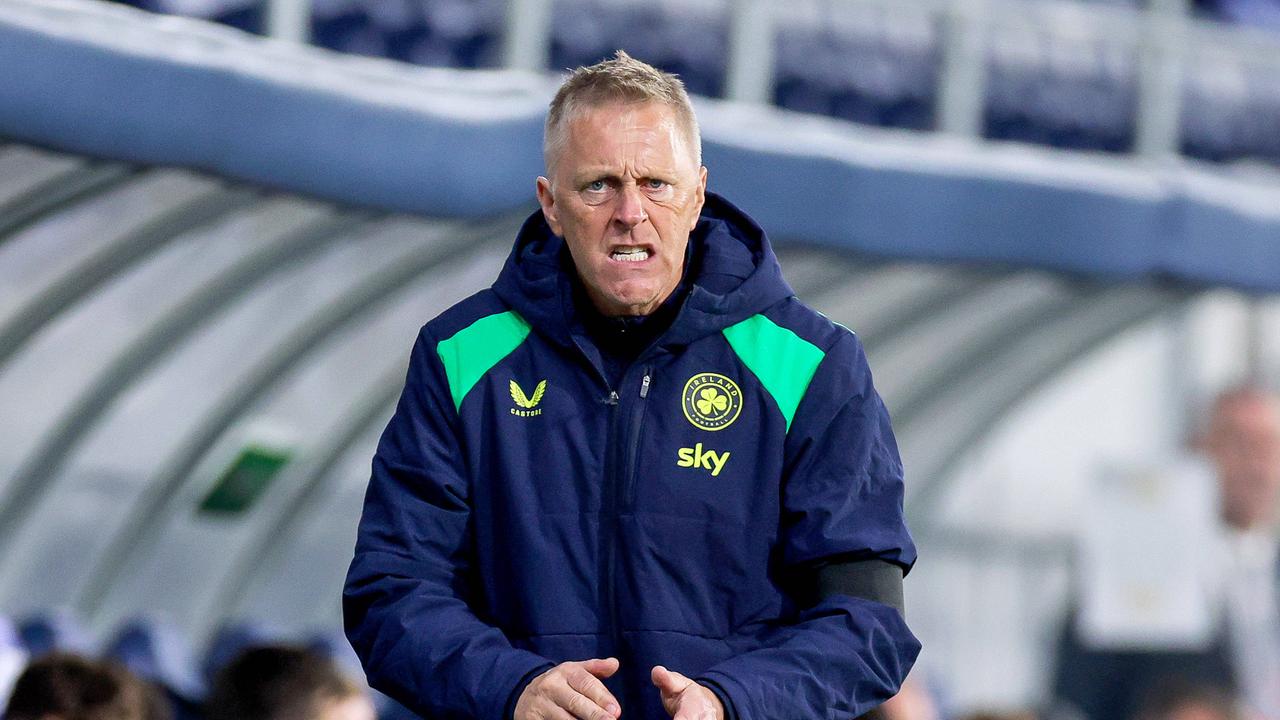
"Today, I think I made a mistake," Hallgrímsson admitted in an interview with RTÉ. "I should have kept my personal feelings and views to myself. When I am acting as the representative of an organization and a team, I have a responsibility to maintain a degree of neutrality that I failed to uphold in that moment."
This admission of error highlights the impossible position in which managers are currently being placed. They are expected to be the face of their national sporting bodies, yet they are also individuals with deeply held personal convictions regarding one of the most polarizing humanitarian crises of the 21st century.
Symbolism and Protest on the Pitch
The matches have been defined as much by what happens before the whistle as by the tactical maneuvers on the field. During the playing of the Israeli national anthem, the Irish squad displayed a unified form of silent protest, collectively lowering their heads. This gesture, repeated from the first leg, served as a clear visual signal of the team’s stance.
Furthermore, the breakdown of diplomatic norms extended to the captaincy level. During the pre-match coin toss, Ireland captain Caoimhin Kelleher declined the traditional handshake with his Israeli counterpart, Dor Peretz.
Both teams wore black armbands, though the intent behind the mourning differed sharply. For the Israeli side, the armbands were a tribute to the victims of the October 7, 2023, attacks by Hamas. For the Irish, the gesture honored the victims of the ongoing conflict in the Gaza Strip. This dissonance—using the same symbol to mourn different sides of the same conflict—highlights the profound chasm that exists, one that the game of football seems utterly unable to bridge.
Official Responses and UEFA’s Dilemma
The burden of resolution now falls squarely on the shoulders of UEFA. The Irish FA’s stance is clear: football should not be used as a front for political warfare, and when a match carries such a high risk of diplomatic incident and personal conflict, the governing body has a duty to intervene.
To date, UEFA has been cautious, prioritizing the continuation of the competition over the political optics. However, the "spitting incident" and the repeated requests from national team staff to discontinue these fixtures present a new challenge. UEFA’s disciplinary committee is now faced with the task of investigating the tunnel confrontation. The outcome of this investigation will set a precedent for how the organization handles future disputes of a political nature.
Broader Implications for International Sport
The Ireland-Israel situation serves as a troubling harbinger for the future of international sports. We are entering an era where the concept of "sporting neutrality" is increasingly difficult to sustain. When national identity is inextricably linked to current geopolitical events, the pitch ceases to be a neutral ground.
If UEFA decides to force future fixtures between these nations, they risk further alienating players, coaching staff, and the broader public. Conversely, if they grant the request to separate the teams, they establish a precedent that political considerations can override the requirements of tournament competition. This creates a "slippery slope" that could see other nations demanding exemptions based on their own political grievances.
For Heimir Hallgrímsson and his team, the goal is simple: they want to return to a state of sport where their profession is not tied to the trauma of a war thousands of miles away. "I wouldn’t wish any national team to have to go through what we have had to endure over the past two weeks," Hallgrímsson noted.
As the dust settles on the latest fixture, the question remains: Can football truly remain separate from the world it inhabits, or have we reached a point where the game itself has become just another battleground? For now, the silence from UEFA remains deafening, and the tension between Dublin and the international football governing body is only beginning to intensify. The sport finds itself at a crossroads, forced to choose between the rigid adherence to competition rules and the shifting, often brutal, realities of the modern global landscape.












