The pursuit of the "ultimate" virtual reality (VR) experience has long been dominated by the headset. From the Meta Quest to the Apple Vision Pro, the industry has spent billions perfecting high-resolution displays, spatial audio, and motion tracking strapped directly to our faces. Yet, for all their technological prowess, these devices share a common, persistent weakness: they are physically intrusive. They are heavy, they trap heat, they exert pressure on the sinuses and ears, and, for a significant portion of the population, they trigger a visceral reaction known as "cybersickness"—a sensory mismatch where the brain struggles to reconcile the movement perceived by the eyes with the stillness felt by the inner ear.
Now, a team of researchers at Kyushu University in Fukuoka, Japan, is proposing a radical departure from the "goggles-on" paradigm. Led by Shogo Fukushima, the team has unveiled a prototype that seeks to bridge the gap between the isolated, head-mounted experience and the static, large-scale projection rooms found in high-end research facilities. Their solution? An immersive VR chair that utilizes "aerial imaging" to suspend digital worlds in thin air.
Main Facts: The Concept of the Immersive Chair
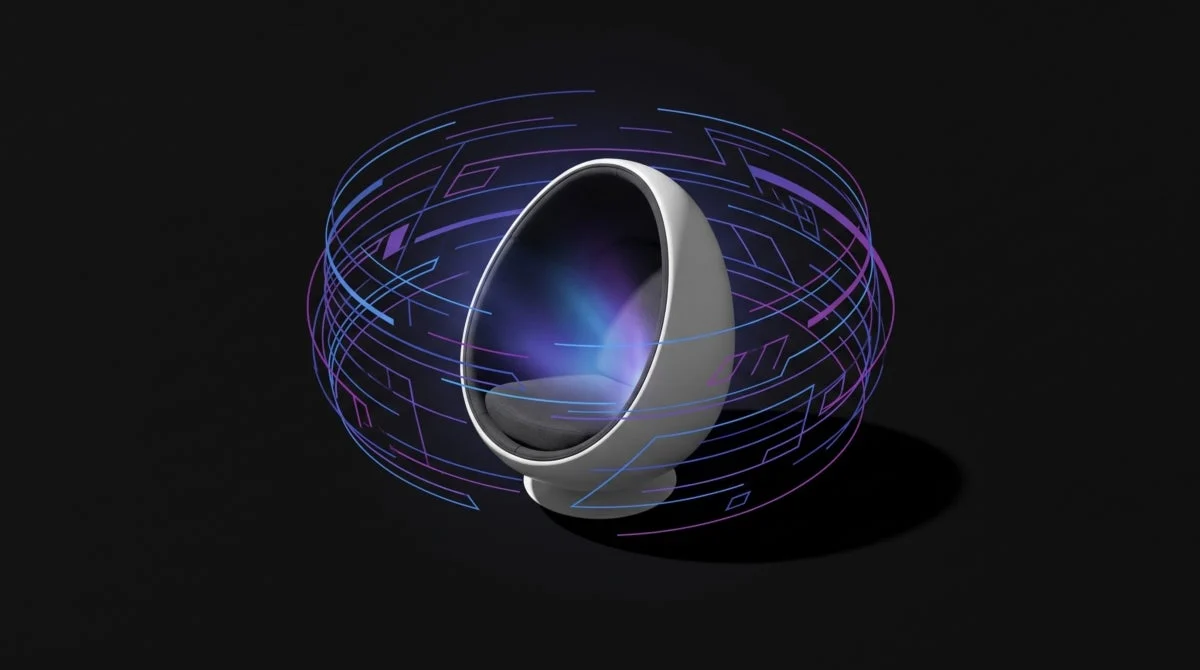
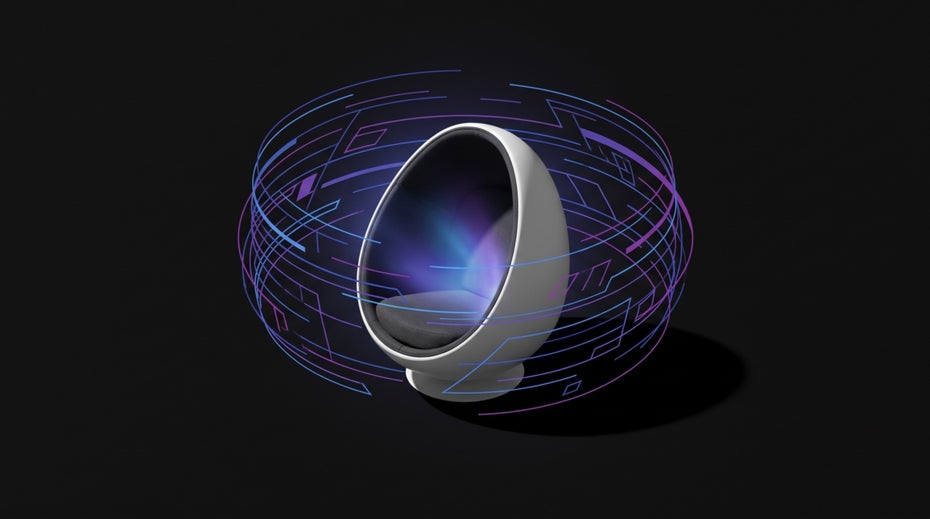
The concept behind the Kyushu University prototype is fundamentally different from existing VR solutions. Instead of forcing a user to wear a display that occludes the real world, the system functions as a semi-open, semi-closed personal cockpit.
When a user sits in the chair, a motorized optical assembly lowers from above, effectively creating a private "visual bubble." The defining feature of this system is that the user does not look at a physical monitor or a screen. Instead, they look into the empty space in front of them, where images appear to float as if they were physical objects.
This is achieved through a process the team calls "Aerial Imaging." By utilizing a high-luminance screen positioned below the user’s natural line of sight, the system directs light through a collection lens. This lens converges the light rays, projecting them onto a specialized plate composed of thousands of microscopic, high-precision mirrors. These mirrors reflect the light with such exactitude that the image is reconstructed in mid-air at a specific focal point. By displaying slightly different perspectives for the left and right eyes, the system tricks the brain into perceiving a three-dimensional, immersive environment without the need for headgear.
Chronology: From Academic Concept to SIGGRAPH Spotlight
The development of the VR chair has been a multi-year effort rooted in the long-standing tradition of optical research in Japan.
- Foundations (2020–2022): Initial research into aerial imaging technologies began with a focus on non-interactive, static displays. Researchers experimented with various mirror-based projection techniques to make digital information appear tangible.
- The Integration Phase (2023): The Kyushu University team recognized that static aerial images were limited. They began integrating motion-tracking sensors—initially testing with tablets—to correlate the physical rotation of a chair with the digital perspective of the projected image.
- The Breakthrough (2024): The team successfully combined the optical aerial display with a mechanical, rotating chair frame. This allowed for real-time perspective shifts based on the user’s physical orientation.
- Public Unveiling (Summer 2025/2026): The prototype was presented at SIGGRAPH, the premier global conference for computer graphics and interactive techniques. The demonstration drew significant interest for its ability to simulate depth and immersion without the "caged" feeling of a standard VR headset.
Supporting Data: Understanding the Optical Mechanics
The technical sophistication of the system relies on high-precision light manipulation. Unlike a standard projector, which relies on a wall or a screen, the Kyushu University system creates a "virtual image" in free space.
The optical path is defined by three primary stages:
- Luminance Generation: A high-brightness display creates the source imagery.
- Convergence: A large-aperture lens collects the light, ensuring that the rays are coherent and directed toward the target mirror array.
- Spatial Reconstruction: The micro-mirror array acts as a bridge, bending the light rays precisely so that they converge at the user’s eyes.
Because the system manages the "parallax" (the difference in viewpoint between the two eyes) through the optical assembly, it provides a binocular depth cue that is remarkably natural. While a standard VR headset tracks the movement of the pupil and the head to adjust the image, the Kyushu University chair uses the seat’s movement as the primary input. When the chair turns, the tablet’s gyroscope sends data to the computer, which adjusts the perspective of the aerial image in real-time.
However, there are physical constraints. The team acknowledges that the "field of view" (FOV) is currently limited by the size of the mirror plates. While a VR headset offers an expansive FOV, the chair’s window into the digital world is defined by the physical footprint of the optics. The researchers have noted, however, that these are "modular components," meaning they can be scaled up or down depending on the intended use case.
Official Responses: Addressing the "VR Sickness" Problem
One of the most compelling aspects of the Kyushu University project is its potential to mitigate motion sickness. Shogo Fukushima has been vocal about the medical and psychological benefits of this non-headset approach.
"Our system has the potential to reduce VR sickness significantly," Fukushima stated during a press briefing at SIGGRAPH. "One of the primary drivers of nausea in VR is the disconnect between the visual input and the physical sensation of the body. Because our design is not restricted by a headset, we have much more freedom to integrate larger optical components and mechanical movement, allowing the body to exist in a more natural environment while the eyes perceive the digital space."
Fukushima believes that by eliminating the "goggle" effect, the user’s peripheral vision—which remains anchored to the real world—helps the brain stabilize. This "grounding" effect prevents the sensory conflict that is common when wearing a fully occlusive VR headset, where the brain receives no external confirmation that the body is stationary.
Implications: The Future of Immersive Computing
The implications of this technology extend far beyond entertainment. While gaming is the obvious application, the Kyushu University team is actively seeking industry partners to test the system in three critical domains:
1. Museum and Educational Exhibitions
Museums have struggled to implement VR because headsets are difficult to sanitize, require staff to help visitors put them on, and can be alienating for elderly or younger visitors. A "VR chair" allows for a seated, communal experience where the user can lean in to inspect an artifact without the burden of equipment.
2. Robotics and Remote Control
The chair could serve as an advanced control station for remote robotics. An operator sitting in the chair could view a 3D feed of a remote environment. Because the chair provides a stable, comfortable environment, operators could theoretically spend longer periods "in the field" without the physical fatigue associated with current HMD (Head-Mounted Display) units.
3. Industrial Design and Simulation
In fields like architecture or automotive design, the ability to walk around a virtual object is key. While the current prototype is chair-based, the research suggests that the technology could be scaled into larger, walk-in stations that provide the same "floating" imagery.
Conclusion: A Middle Path
The Kyushu University project represents a "third way" in the evolution of virtual reality. It acknowledges the limitations of both the static screen (which lacks immersion) and the VR headset (which lacks physical comfort and long-term viability for many users).
By focusing on "Aerial Imaging," the team is essentially trying to bring the digital world into our physical space, rather than forcing our physical bodies into a digital one. While the technology is still in the prototype phase—and certainly lacks the extreme portability of a consumer-grade headset—it addresses the most fundamental human-centric design challenges of the current VR era.
As we look toward a future where digital and physical realities become increasingly blurred, the answer may not be to build better goggles, but to rethink the very spaces in which we consume digital media. For those who find the current generation of VR headsets claustrophobic or nauseating, the VR chair from Fukuoka might just be the solution that finally brings immersion into the mainstream. The team’s quest for industrial partners suggests that we may soon see these "floating images" in a museum or industrial control room near us, marking the first real step away from the tyranny of the headset.