For decades, the search for extraterrestrial life has been tethered to a singular, somewhat anthropocentric goal: finding an "Earth 2.0." We have scoured the cosmos for rocky planets orbiting sun-like stars at the perfect distance—the "Goldilocks Zone"—where liquid water can pool on the surface. However, as the European Space Agency (ESA) prepares to launch its ambitious PLATO (Planetary Transits and Oscillations of stars) mission in early 2027, the scientific consensus is undergoing a seismic shift.
The focus is moving away from the hunt for mere Earth-doubles toward the discovery of "superhabitable" worlds—planets that might not just mimic Earth, but offer conditions even more conducive to the flourishing of complex biological life.
The Crushing Reality of M-Dwarfs
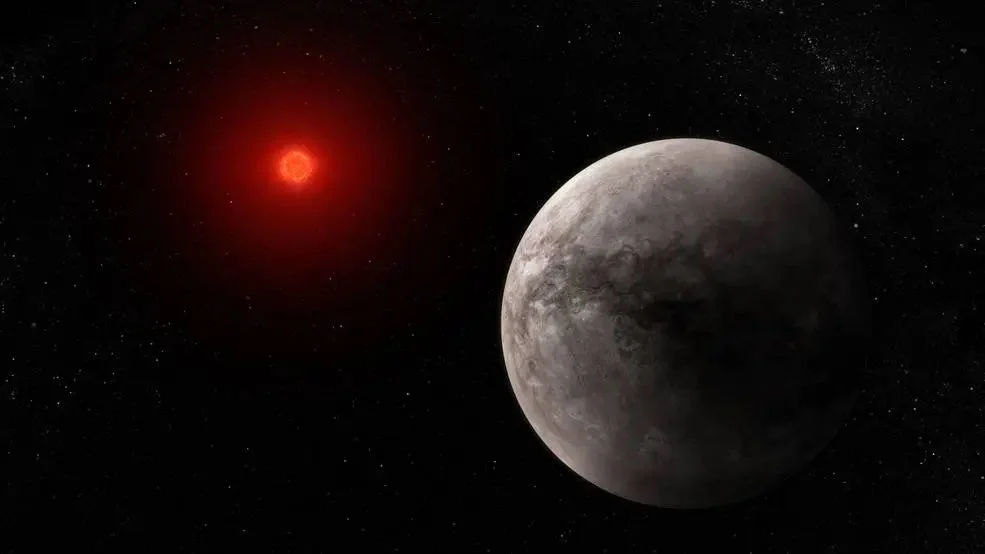
The impetus for this strategic pivot was born from a period of sober scientific reflection. In recent years, the James Webb Space Telescope (JWST) has turned its high-precision infrared gaze toward nearby rocky planets orbiting M-dwarfs, or "Red Dwarfs." These stars are the most common in our galaxy, making them statistically attractive targets.
However, findings such as those published in Nature regarding the planet TRAPPIST-1b have been sobering. Research led by NASA astrophysicist Thomas Greene demonstrated that the intense, volatile radiation bursts characteristic of these small, cool stars are capable of stripping away the atmospheres of planets in close proximity. Without a protective blanket of gas, these worlds become sterile, scorched rocks, rendering them unsuitable for the life we recognize. This realization has forced astronomers to reconsider the "Earth-Twin" bias and the assumption that a planet’s position in the habitable zone is the sole arbiter of its viability.
Chronology of a Paradigm Shift: From Earth-Centricity to Universal Biology
The history of exoplanet research has been a steady expansion of our definition of "home."
- 1990s–2010s: The "Gold Rush" era, characterized by the discovery of thousands of exoplanets, primarily focused on finding planets that mirror our solar system.
- 2014: Astrophysicist René Heller (Max Planck Institute for Solar System Research) and physicist John Armstrong (Weber State University) published a seminal paper in Astrobiology, challenging the scientific community to move beyond the "Earth as a reference" model. They argued that if our goal is to find life, we should look for planets with greater biodiversity potential than Earth.
- 2020: A team led by astrobiologist Dirk Schulze-Makuch (TU Berlin) and René Heller identified 24 "superhabitable" candidates—planets that might offer more stable, longer-lived environments than Earth.
- 2024: Researchers led by astrobiologist Iva Vilović (Leibniz Institute for Astrophysics Potsdam) demonstrated that plant life could theoretically adapt to the distinct light spectra of stars other than our Sun, specifically K-dwarfs.
- 2027 (Projected): The launch of the ESA’s PLATO mission marks a new era in systematic planetary hunting.
The Case for K-Dwarfs: The "Goldilocks" Stars
As the limitations of M-dwarfs become clear, astronomers are increasingly setting their sights on K-dwarfs—orange-colored stars that are slightly cooler and less massive than our Sun.
Johanna Teske, a planetary scientist at the Carnegie Institution for Science, describes this stellar class as the "favorable middle ground." While our Sun is expected to exhaust its hydrogen fuel in roughly 10 billion years, K-dwarfs burn their fuel with a slow, steady efficiency that allows them to shine consistently for tens of billions of years.
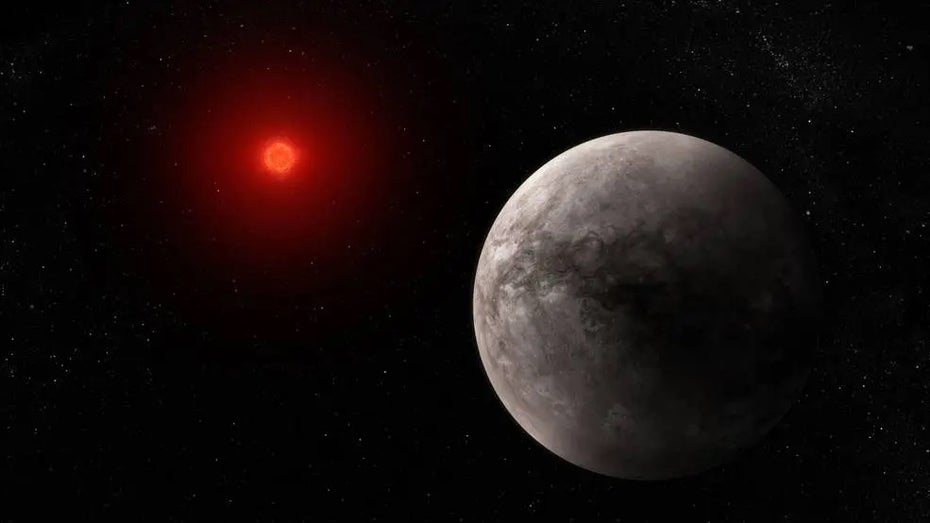
This longevity is a critical factor for life. On Earth, the Sun’s increasing luminosity will likely render our planet too hot for complex flora and fauna in about 500 million years—a mere blink of an eye in cosmic time. A planet orbiting a K-dwarf, however, could enjoy a stable, temperate climate for significantly longer, providing a much wider window for the evolution of complex, multi-cellular organisms.
Super-Earths: Architecture of a More Vibrant World
If we accept that Earth is not the blueprint for biological success, what are we looking for? According to models proposed by Heller and his colleagues, the ideal "superhabitable" planet would be a "Super-Earth," possessing roughly twice the mass of our planet and a diameter 20 to 30 percent larger.
This physical configuration provides several biological advantages:
- Topography: A planet with 30 percent higher gravity would likely exhibit a more subdued topography. The reduction of extreme mountain ranges and deep oceanic trenches would lead to a world defined by vast, shallow seas and numerous archipelagos, which are known to foster higher levels of biodiversity.
- Magnetosphere: A larger iron core, common in planets of this size, would generate a more robust magnetic field, providing superior protection against cosmic radiation.
- Climate: Research suggests that the ideal average surface temperature for such a world would be approximately five degrees Celsius warmer than Earth’s current mean.
However, the margin for error is thin. As Dirk Schulze-Makuch has noted, these models are purely theoretical at this stage. If a planet is too massive, the atmospheric pressure at the surface could become crushing, or worse, the world could transition into a "Mini-Neptune"—a gas-shrouded planet with no solid surface, effectively ending the prospect of life as we know it.
Experimental Biology: Photosynthesis Under Alien Skies
A central question in astrobiology remains: Could life on an exoplanet actually utilize the light of a different star?
In 2024, Iva Vilović and her team conducted a fascinating experiment using common garden cress grown under simulated K-dwarf light. The results were telling: while the plants grew taller and germinated faster, they exhibited a higher water content and lower dry mass. This indicates that while Earth-like photosynthesis is adaptable to different spectral compositions, the resulting morphology of the lifeforms would be distinctly different. This experiment reinforces the notion that we should not look for "green" plants on alien worlds, but rather be open to a diverse spectrum of biological pigmentation and structural adaptations.
Official Perspectives and Technical Realities
Despite the excitement surrounding superhabitable worlds, the scientific community remains cautiously pragmatic. René Heller, while a leading voice in the field, has been quick to manage expectations regarding the upcoming PLATO mission.
"We will likely find a dozen or so candidates," Heller told the New York Times. "But we won’t know much about them initially."
The technical reality is that PLATO is designed to detect the size and orbit of planets by measuring the subtle dips in starlight as they transit their host stars. It is an excellent surveyor, but it is not equipped to analyze the chemical composition of an atmosphere. To identify biological markers like oxygen or methane—the true "smoking guns" of life—we must wait for the next generation of observatories.
The Extremely Large Telescope (ELT) currently under construction in Chile and the future Habitable Worlds Observatory (HWO) being planned by NASA are the keys to the next chapter. With the HWO not expected to launch until the 2040s, the path to confirming life on a superhabitable world is a marathon, not a sprint.
Implications for Humanity: A Change in Perspective
The shift toward searching for superhabitable worlds is more than a change in scientific strategy; it is a profound philosophical evolution. For decades, the "Earth-Twin" model has served as a mirror for our own existence. By acknowledging that Earth might not be the biological ideal, we are forced to move past a human-centric view of the universe.
If we find that the most vibrant, life-rich worlds in the galaxy are larger, warmer, and orbit orange stars, it will fundamentally rewrite our understanding of our place in the cosmos. It suggests that life is not a fragile accident occurring only under exact, Earth-like conditions, but a robust phenomenon that can flourish across a variety of stellar and planetary environments.
As we stand on the precipice of the 2027 PLATO launch, we are doing more than searching for new worlds; we are broadening the definition of what it means to be alive in a vast, diverse, and potentially crowded universe. The hunt for "home" has evolved into a hunt for the extraordinary, and in the process, we may finally learn that the universe is far more capable of sustaining life than we ever dared to imagine.