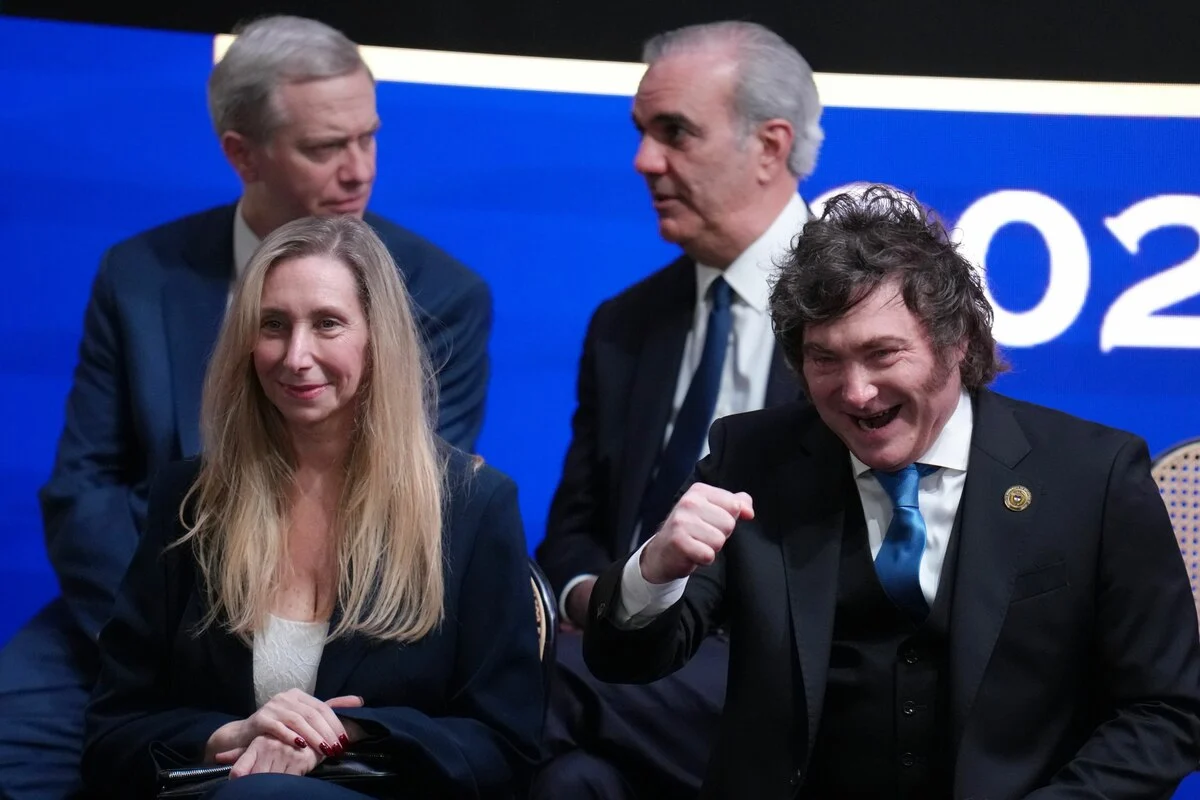
Buenos Aires, Argentina – Argentine President Javier Milei has been cleared of charges related to an alleged cryptocurrency fraud that saw investors lose an estimated $200 million. A federal judge dismissed the case, ruling that the alleged events did not constitute a criminal offense, a decision that has sparked outrage from the opposition and a defiant response from the libertarian head of state.
The scandal, which first emerged last year, centered on Milei’s promotion of a lesser-known cryptocurrency called $LIBRA on social media. The coin’s value plummeted just hours after his endorsement, leading to widespread financial losses and accusations of a "rug pull" scheme – a notorious form of crypto fraud. While the judiciary maintains there were insufficient grounds for a criminal indictment, critics decry the ruling as further evidence of a politicized justice system.
The Allegations: A Timeline of the $LIBRA Scandal
The controversy began when then-presidential candidate Javier Milei, known for his unconventional style and outspoken support for libertarian economic principles, took to the social media platform X (formerly Twitter) to endorse the $LIBRA cryptocurrency. His post, which read, "The world wants to invest in Argentina. $LIBRA," was interpreted by many as a powerful signal of confidence in the digital asset. Milei, a vocal proponent of cryptocurrency as a hedge against inflation and government overreach, had built a significant following, and his endorsement carried considerable weight, especially among a population grappling with chronic economic instability.
However, the optimistic pronouncement quickly turned into a financial nightmare for many. Within hours of Milei’s tweet, the value of $LIBRA crashed dramatically, leaving countless investors with significant losses. The sudden and precipitous decline immediately raised red flags, and the term "rug pull" began circulating among aggrieved investors and financial analysts. Milei swiftly deleted his original post, later issuing a statement claiming he was unaware of the project’s details. "I did not know the details of the project, and after learning about them, I decided not to promote it further," he stated, attempting to distance himself from the debacle.
The fallout was immediate and severe. Initial estimates placed investor losses at over $200 million, a staggering sum in a country already facing immense economic challenges. The incident fueled widespread public anger and prompted calls from segments of the opposition for an impeachment process, arguing that a public official, particularly one aspiring to the highest office, should be held accountable for actions that could be perceived as misleading or negligent, especially when they result in such significant financial harm to citizens. The accusation resonated deeply within Argentina’s volatile political landscape, adding another layer of controversy to Milei’s already polarizing public image.
Understanding the "Rug Pull" and its Victims
To fully grasp the gravity of the allegations, it is essential to understand the mechanics of a "rug pull." This term, borrowed from the analogy of literally pulling a rug out from under someone, refers to a malicious maneuver in the cryptocurrency world where developers abandon a project and run away with investors’ funds. Typically, it involves creating a new token, hyping it up on social media and other platforms to attract significant investment, and then abruptly draining the liquidity pool – the reserves of cryptocurrency that allow traders to exchange tokens – leaving investors with worthless assets.
The $LIBRA incident, as alleged by critics, fit this pattern. The rapid ascent in value following Milei’s endorsement, followed by the immediate and drastic crash, suggested a coordinated effort to inflate the asset’s price before cashing out. Such schemes thrive in the largely unregulated environment of the cryptocurrency market, where new tokens can be launched with relative ease and anonymity, making it difficult for average investors to distinguish legitimate projects from scams. The lack of robust regulatory frameworks in many jurisdictions means that victims often have little recourse when these schemes collapse.
The estimated $200 million in losses represents a significant blow to the financial well-being of thousands of individuals. Many of these investors, lured by the promise of quick returns and the perceived legitimacy offered by a public figure’s endorsement, likely invested their savings, or even borrowed money, hoping to escape Argentina’s endemic inflation and achieve financial stability. The sudden evaporation of their investments left them not only financially devastated but also deeply distrustful of both the digital asset market and the political figures who championed it. The impact extended beyond mere monetary loss, contributing to a broader erosion of public trust in financial innovations and governmental oversight. The case underscored the inherent risks associated with highly speculative assets and the potential for public figures to inadvertently, or intentionally, lend credibility to fraudulent enterprises.
The Judicial Verdict: "No Criminal Offense"
The formal investigation into the $LIBRA scandal was overseen by Federal Judge Marcelo Martínez de Giorgi, who ultimately delivered the verdict that has now cleared President Milei. The judge’s decision, delivered recently, concluded that the incidents reported "did not fall under any criminal offense." This ruling effectively halted the legal proceedings, removing the cloud of suspicion that had hung over Milei and his inner circle.
The judge’s reasoning, according to official statements, centered on the lack of sufficient evidence to establish intent to defraud, abuse of public office, or any other actions incompatible with public office that would warrant criminal charges. This perspective had, notably, already been articulated by the Public Prosecutor’s Office earlier in the investigation, indicating a consensus within the judicial branch regarding the prosecutorial viability of the case. For a "rug pull" to be legally prosecuted as fraud, prosecutors typically need to prove criminal intent on the part of the promoters – that they knowingly orchestrated a scheme to deceive investors and abscond with funds. In the absence of direct evidence linking Milei to the creation or management of the $LIBRA project, or demonstrating his specific knowledge of its fraudulent nature at the time of promotion, proving such intent becomes a significant legal challenge.

The investigation was not limited to Javier Milei alone. His sister, Karina Milei, 53, who holds the powerful position of Secretary-General of the Presidency and is often referred to as "The Boss" due to her immense influence within the administration, was also under scrutiny. Other individuals linked to the cryptocurrency project were also investigated. The dismissal of charges therefore extends to all parties involved in the probe, further solidifying the judiciary’s stance that no criminal wrongdoing could be definitively proven. The complexity of prosecuting alleged financial crimes in the nascent and rapidly evolving cryptocurrency sector, coupled with the jurisdictional challenges and the difficulty of tracing digital assets, often poses formidable obstacles for legal systems worldwide, and Argentina is no exception. This case highlights the ongoing struggle for legal frameworks to keep pace with technological advancements, particularly in areas ripe for exploitation.
President Milei’s Vindication and Counter-Attack
Upon the announcement of the judicial decision, President Javier Milei wasted no time in responding, seizing the opportunity to frame the outcome as a complete vindication and launch a scathing counter-attack against his political adversaries. Taking to X, his preferred platform for direct communication, the newly 56-year-old president declared the ruling exposed an "enormous political and media operation whose sole purpose was to damage the office of the President for political, coup-like reasons."
Milei’s statement is consistent with his broader narrative of being an outsider fighting against a corrupt establishment and entrenched political interests. He frequently portrays himself as a victim of smear campaigns orchestrated by those who oppose his radical reforms and libertarian agenda. In this context, the crypto fraud allegations were, in his view, merely another weapon wielded by the "caste" – his term for the political and economic elites he rails against – to undermine his presidency.
He continued his rhetorical offensive by questioning the motives of his accusers and demanding accountability: "Who compensates me for a year, eight months, and nine days full of lies, defamation, and insults?" This rhetorical question underscored his perception of personal injury and the alleged damage to his reputation, further solidifying his image as a persecuted figure fighting for truth and justice. The president’s strong reaction serves not only to celebrate his legal victory but also to reinforce his anti-establishment credentials, rallying his base and projecting an image of resilience against what he casts as unfounded attacks. For Milei, the court’s decision was not just a legal exoneration but a political triumph, affirming his belief that the justice system, in this instance, had "set things right."
Furious Opposition: Accusations of Judicial Bias
The judiciary’s decision, while welcomed by the presidential palace, was met with fierce condemnation from Argentina’s opposition, particularly from left-Peronist factions. The youth organization "La Cámpora," a powerful political force closely aligned with former President Cristina Fernández de Kirchner, was particularly vocal in its criticism.

In a sharply worded statement posted on X, La Cámpora asserted, "There is no justice in our country. Justice is controlled by a mafia that serves power." This accusation reflects a deep-seated distrust within certain political circles regarding the impartiality of Argentina’s judicial system. For years, the country has grappled with allegations of judicial politicization, where court decisions are often perceived through the lens of political alignments rather than strictly legal merit. The opposition’s reaction to Milei’s exoneration is therefore rooted in a broader context of skepticism about the rule of law in Argentina, particularly when high-profile political figures are involved.
The reference to a "mafia that serves power" is a direct challenge to the legitimacy of the judicial process and implies that the ruling was politically motivated rather than based on an objective assessment of the evidence. This sentiment is amplified by the ongoing legal battles faced by figures like Cristina Fernández de Kirchner, who is currently under house arrest due to a corruption conviction. The opposition frequently alleges that such legal proceedings are politically driven efforts to sideline popular leaders, creating a perception of a justice system that is selectively applied.
The outcry from groups like La Cámpora underscores the profound political polarization gripping Argentina. For them, the dismissal of charges against Milei, especially given the substantial financial losses incurred by investors, signifies a double standard and reinforces the belief that those in power are shielded from accountability. This narrative further fuels public disillusionment and entrenches the divide between the government and its critics, making consensus-building and stable governance increasingly challenging in the South American nation.
Broader Implications and Future Outlook
The dismissal of the crypto fraud charges against President Javier Milei carries significant implications for Argentina’s political landscape, the future of cryptocurrency regulation, and public trust in institutions. For Milei, the ruling provides a crucial boost to his political standing. It allows him to shed a damaging accusation that threatened to undermine his credibility and validates his narrative of being targeted by a hostile political establishment. This legal victory could empower him to push forward with his controversial economic reforms, including dollarization and drastic spending cuts, with renewed confidence, portraying himself as a leader who has overcome fabricated obstacles.
However, the political ramifications are far from settled. The opposition’s vehement accusations of judicial bias ensure that the controversy will continue to simmer, deepening the already intense polarization within Argentine society. The perception that justice is selectively applied, with powerful figures seemingly immune from prosecution, risks further eroding public trust in the judiciary and other democratic institutions. This environment of mistrust can destabilize governance and make it harder to address the country’s pressing economic and social challenges effectively.

Furthermore, the $LIBRA scandal and its legal outcome highlight the persistent challenges in regulating the burgeoning cryptocurrency market. Argentina, like many nations, grapples with establishing clear legal frameworks for digital assets, which operate largely outside traditional financial oversight. The case underscores the vulnerability of investors to sophisticated "rug pull" schemes and the potential for public figures’ endorsements to be misused, even if unintentionally. This incident could catalyze renewed calls for stricter crypto regulations in Argentina, aiming to protect consumers while still fostering innovation in the digital finance space.
Looking ahead, the incident serves as a stark reminder of the complexities inherent in the intersection of politics, finance, and technology. While President Milei may have secured a legal victory, the political battle over accountability and judicial integrity is far from over. The episode will undoubtedly remain a potent talking point in Argentina’s turbulent political discourse, shaping public perception of its leaders and institutions for years to come.