By International Cultural Desk
In a decision that has electrified the global literary community, the Swedish Academy announced today in Stockholm that the 2026 Nobel Prize in Literature has been awarded to the Canadian poet, essayist, and classicist Anne Carson. Recognized for her "bold and imaginative body of work" and her singular ability to dismantle the boundaries between ancient tradition and contemporary form, Carson’s selection cements her status as one of the most influential voices of the 21st century.
The announcement, delivered by the Swedish Academy, highlights a career defined by intellectual rigor, playful linguistic experimentation, and an uncompromising dedication to the elasticity of the written word. For those who have followed Carson’s trajectory—from her academic roots in classical philology to her status as a literary icon—the award is both a long-anticipated acknowledgment and a bold endorsement of experimental literature.
The Architect of New Forms: Who is Anne Carson?
Born in Toronto in 1950, Anne Carson is a figure who defies easy categorization. A polymath who has served as a professor of classical philology at various prestigious universities across Canada and the United States, her work is fundamentally grounded in the past, yet perpetually looking toward the horizon of the future.
Carson’s writing is marked by a unique synthesis of genres. She does not merely write poetry; she creates environments where essays, translations, dramatic dialogues, and lyric verse collide. Her work is a testament to the idea that the ancient world is not a static relic, but a vibrant, living dialogue that can illuminate the anxieties and complexities of the present day.
By integrating figures such as Socrates or Antigone into modern, often cinematic, scenarios, Carson examines how the archetypes of antiquity would fare under the harsh, scrutinizing glare of contemporary life. She bridges the gap between centuries with ease, placing the rhetorical insights of the ancient Longinus alongside the artistic visions of Michelangelo and the cinematic sensibilities of director Michelangelo Antonioni.
Defining Works: From the Mythic to the Personal
While her body of work is vast, several key titles have become pillars of contemporary literature. Her 1998 breakthrough, Autobiography of Red, stands as a landmark in the genre of the verse novel. By reinterpreting the Greek myth of the monster Geryon through a deeply human, deeply queer, and profoundly vulnerable lens, Carson redefined what narrative poetry could achieve.
Equally significant is her 2010 masterpiece, Nox. A deeply personal, experimental meditation on the death of her brother, Nox is as much an object of art as it is a book. Through a tactile, fragmented assembly of photographs, letters, and classical translations, Carson explores the impossibility of fully knowing another person—or even fully understanding one’s own grief. It remains a definitive text on the nature of memory and loss.
The Moment of Discovery: "Listening to the Wind"
The announcement process, as always, carried a sense of dramatic anticipation. Ingrid Carlberg, the permanent secretary of the Swedish Academy, revealed that she had managed to reach the 76-year-old laureate while the author was in Iceland.
According to Carlberg, the moment of notification was quintessentially "Carson-esque." The author was outdoors, occupied with the elemental act of "listening to the wind," when she received the life-changing news. Carlberg described the laureate as being deeply moved and genuinely surprised by the honor. This quiet, elemental connection to the landscape resonates with the themes often found in Carson’s work—a preoccupation with the silence between words and the vast, often indifferent power of nature.
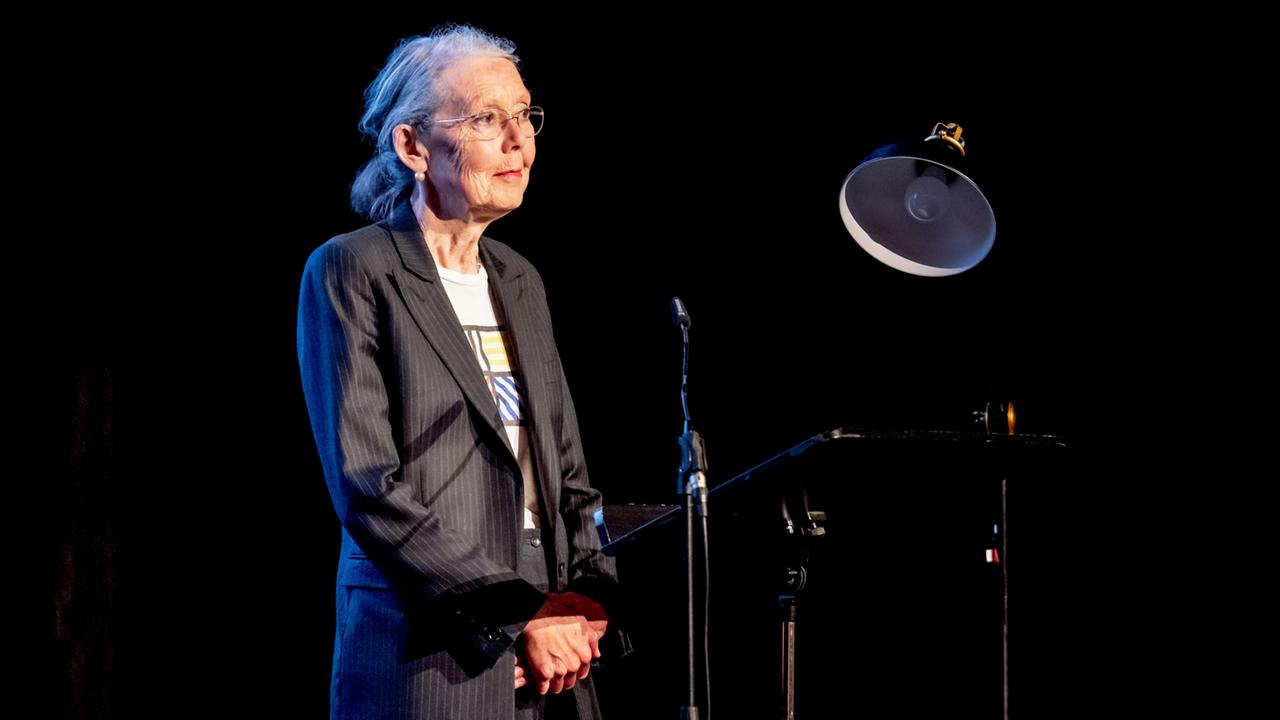
The Significance of the Nobel Prize
The Nobel Prize in Literature is widely regarded as the most prestigious honor in the world of letters. The selection process is a closely guarded secret, with approximately 200 nominations submitted annually, all of which remain under lock and key for half a century to ensure the integrity of the process.
The award serves as a recognition of a writer’s lifetime achievement, a career-defining validation that brings with it a prize of twelve million Swedish krona (approximately 1.06 million Euros). The official ceremony will take place in Stockholm on December 10, the anniversary of Alfred Nobel’s death, where Carson will join the pantheon of literary giants who have shaped the history of the written word.
A Legacy of Transgression
To understand the weight of this award, one must understand that the Swedish Academy is not merely rewarding a collection of books, but a specific way of thinking. Carson’s work is inherently transgressive; she pushes against the boundaries of what is considered "proper" literature. By refusing to stay within the lanes of pure poetry or pure academic study, she has created a new category of "hybrid" literature that has inspired a generation of younger writers to abandon the traditional rules of genre.
Her academic background acts not as a shackle, but as a scaffold. Because she is deeply trained in the classics, she knows exactly which rules to break and how to break them to achieve maximum emotional and intellectual impact. Whether she is translating Sappho or deconstructing the nature of the "gendered" gaze, Carson remains a relentless interrogator of the human condition.
The Nobel Week Context
The announcement of the Literature prize is traditionally the fourth in the annual Nobel cycle. The week began on Monday with the unveiling of winners in the scientific categories of Medicine, Physics, and Chemistry.
This year’s awards have highlighted a strong showing for German scholarship, with researchers Peter Hegemann and Georg Nagel among those recognized in the field of Medicine for their groundbreaking contributions. As the week concludes, the focus shifts toward Oslo, where the highly anticipated Peace Prize will be announced tomorrow.
Global Implications and Cultural Impact
The choice of Anne Carson is seen by many analysts as a signal that the Swedish Academy is prioritizing intellectual depth and structural innovation. In an era often dominated by ephemeral content and rapid-fire digital communication, honoring a writer who demands slow, attentive, and deeply immersive reading is a profound statement.
Carson’s victory is likely to trigger a global surge of interest in her back catalog. Publishers are already bracing for a significant increase in demand for her verse novels and essay collections. Furthermore, her win serves to bridge the divide between "high" academic literature and the broader reading public, demonstrating that complex, erudite, and experimental writing can possess profound, universal resonance.
As we look toward the December ceremony, the literary world will continue to reflect on the immense contribution of a writer who has spent her life turning the "dust" of the ancient world into the "gold" of contemporary thought. Anne Carson has not only changed how we read the classics; she has changed how we read ourselves.
With reporting provided by Jan Ehlert, ARD Kultur.