By Editorial Staff
In a sport defined by momentum, the Skyliners Frankfurt learned the hard way on Wednesday evening that in the EuroCup, momentum is a fragile commodity. Despite a valiant effort that saw the German side dominate the first half against Spanish powerhouse CB Canarias Tenerife, the night ultimately ended in a 94:104 defeat. While the scoreline reflects a competitive spirit, the reality of the evening was marked by two distinct narratives: a historic display of offensive firepower from the visitors and a sobering reality check for a Frankfurt team struggling to command local attention.
Main Facts: A Game of Extremes
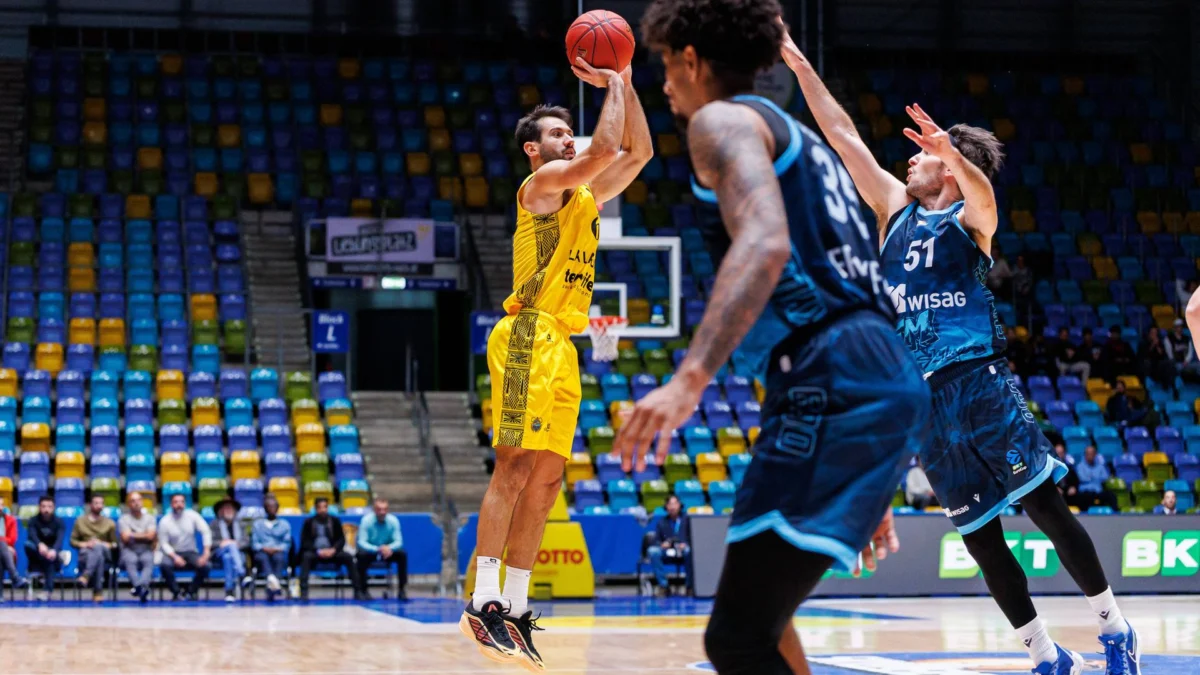
The match held at the Ballsporthalle was, by all accounts, a masterclass in tactical adjustment. The Skyliners entered the contest with the confidence of a team that had secured seven victories in their previous ten outings. For the first 20 minutes, that confidence was palpable. Frankfurt utilized their trademark defensive intensity to stifle the Canary Islands visitors, heading into the locker room at halftime with a commanding 12-point lead.
However, the second half told a different story. Tenerife, a perennial European heavyweight, shifted gears with such efficiency that they effectively dismantled Frankfurt’s defensive schemes. The final score of 94:104 does little to illustrate the sheer dominance displayed in the third quarter, where the visitors obliterated scoring records. The game concluded in a somewhat bizarre fashion—a 1.2-second timeout called by Tenerife coach Jaka Lakovič, which prompted a mass exodus of the already sparse 1,620-strong crowd, a moment that served as a microcosm for the lack of buzz surrounding the fixture.
Chronology of the Contest
The evening began with promise. Frankfurt’s head coach, Klaus Perwas, had prepared his squad to play an aggressive, physical brand of basketball. The Skyliners successfully dictated the tempo early on, forcing turnovers and capitalizing on second-chance points. The first half saw the hosts rack up 43 points, a steady and disciplined offensive performance that suggested an upset was firmly on the cards.
The turning point occurred immediately following the halftime interval. Upon returning to the court, the dynamic shifted entirely. Tenerife, clearly stung by their first-half performance, initiated a tactical onslaught. The third quarter will likely be remembered in EuroCup annals for years to come. Tenerife exploded for 43 points in those ten minutes alone—an unprecedented feat in the competition’s history. The previous record for a single quarter had stood at 42 points; Tenerife’s clinical shooting and rapid transition play erased that mark with ease.
Frankfurt, to their credit, did not fold. Despite the historic surge from the visitors, the home team continued to fight, keeping the deficit manageable until the final minutes. The match concluded with a tactical timeout by Tenerife in the closing seconds, a decision that appeared more about fine-tuning their own internal systems than impacting the final outcome, leaving the remaining spectators to head for the exits before the final buzzer had even echoed through the arena.
Supporting Data and Historical Context
To understand the gravity of the defeat, one must look at the statistical chasm that opened in the second half. While Frankfurt’s offense remained functional, their defensive efficiency—the bedrock of their season—evaporated against the relentless pressure of Tenerife’s perimeter shooters.
- Attendance: 1,620 spectators.
- Final Score: 94:104 (Frankfurt loss).
- Historical Milestone: Tenerife set a new EuroCup record for the most points scored in a single quarter (43).
- Season Form: Prior to this game, Frankfurt boasted a 7-3 record across all competitions, highlighting the suddenness of this particular performance dip.
The low attendance figures remain a point of contention for the club. Despite the high caliber of the opponent, the Ballsporthalle failed to reach even a fraction of its capacity. This disconnect between the quality of the basketball being played and the local public interest remains a persistent hurdle for the Skyliners organization as they navigate the complexities of international competition.

Official Responses and Tactical Analysis
Following the game, Coach Klaus Perwas maintained a stoic and pragmatic demeanor. "We expected more from ourselves after such a strong first half," Perwas admitted during the post-match press conference. "We held our own, but then Tenerife shifted up three gears. We weren’t aggressive enough defensively, and we allowed their shooters too much space. We paid the price for that lack of intensity."
However, Perwas was quick to frame the loss as a necessary evolution for his squad. "We have had a very successful run so far. Sometimes, a defeat like this is exactly the ‘reality check’ a team needs. It serves as a reminder that at this level, if you lose your focus for even a few minutes, the opposition will punish you. We must ensure we don’t lose our grounding."
The players echoed this sentiment, acknowledging the frustration of the defeat while maintaining a focus on the broader season goals. The commitment to the game plan, even when trailing by double digits in the final quarter, was a point of pride for the squad, who refused to let the game spiral into a blowout.
Implications for the Future
The loss to Tenerife carries significant weight, both strategically and culturally.
The Strategic Outlook
For the Skyliners, the match highlighted a clear vulnerability: the ability to sustain defensive intensity against elite-level opponents who can shoot from distance. If Frankfurt intends to make a deep run in the EuroCup, they must find a way to counter high-tempo transitions. The "reality check" mentioned by Perwas suggests that the coaching staff will likely emphasize defensive rotations and perimeter pressure in the coming weeks.
The Cultural Challenge
Perhaps more concerning than the loss on the court is the loss of momentum in the stands. A attendance of 1,620 for a high-stakes European fixture is a statistic that the organization cannot ignore. The team is playing a "good round," as Perwas noted, and the level of basketball is objectively high, yet the connection with the broader Frankfurt sporting community remains tenuous.
The club faces a challenge to transform their on-court identity into a product that captures the imagination of the city. If they can continue to win, the fans may return, but the organization must also address the marketing and fan-engagement gaps that lead to empty seats even when the team is performing at a high level.
Final Thoughts
Wednesday night was a lesson in the unforgiving nature of professional basketball. For 20 minutes, the Skyliners Frankfurt looked like a team capable of beating anyone in Europe. For the next ten, they were dismantled by a historic offensive performance that proved the difference between a good team and a continental powerhouse.
The Skyliners leave this match with a 94:104 loss, a new record against their name, and a clear understanding of what they need to fix. Whether this serves as a springboard for a deeper run or a sign of the team’s current ceiling will be determined in the weeks ahead. For now, the players return to the drawing board, hoping that their next performance—and the crowd that witnesses it—will offer a more complete picture of their potential.