As Serbia approaches a pivotal parliamentary election this Sunday, the political atmosphere in Belgrade is thick with both electric anticipation and a palpable, underlying dread. Aleksandar Vučić, the long-time leader who has dominated Serbian politics for over a decade, is once again vying for control—this time aiming to pivot from the presidency to the premiership. Yet, standing in his path is an unconventional, decentralized force that has emerged from the grassroots: a student-led movement that is fundamentally shaking the foundations of his authority.
The Main Facts: An Unprecedented Political Challenge
The upcoming parliamentary election was originally scheduled for 2027, but President Vučić moved the date forward to October 25, citing the need to resolve a deepening political crisis. Analysts, however, see a more strategic motive: a desperate bid to consolidate power following nearly two years of sustained, massive protests.
The opposition to Vučić is not a traditional political party. It is a "Student List"—a movement that remarkably features no students as candidates. Instead, it comprises professionals, intellectuals, and civic leaders chosen through a complex, grassroots vetting process. Their slogan, "Either Serbia or the Mafia," encapsulates the core grievance of a populace exhausted by systemic corruption, state capture, and the erosion of democratic institutions. With over 200,000 young activists, the movement has managed to organize without a visible, singular leader whom the regime could easily target, smear, or co-opt.
Chronology of a Grassroots Uprising
The roots of this current confrontation lie in a series of events that began in late 2024.
- November 1, 2024: A tragic canopy collapse at the Novi Sad railway station claimed 16 lives. The failure of the state to provide accountability triggered a wave of student-led anger.
- March 15, 2025: A massive demonstration on Belgrade’s Slavija Square drew hundreds of thousands, marking one of the largest protests in Serbian history.
- September 2025: Facing intense public pressure, Aleksandar Vučić formally stepped down from his presidential post, only to immediately reposition himself as the prime ministerial candidate for his Serbian Progressive Party (SNS).
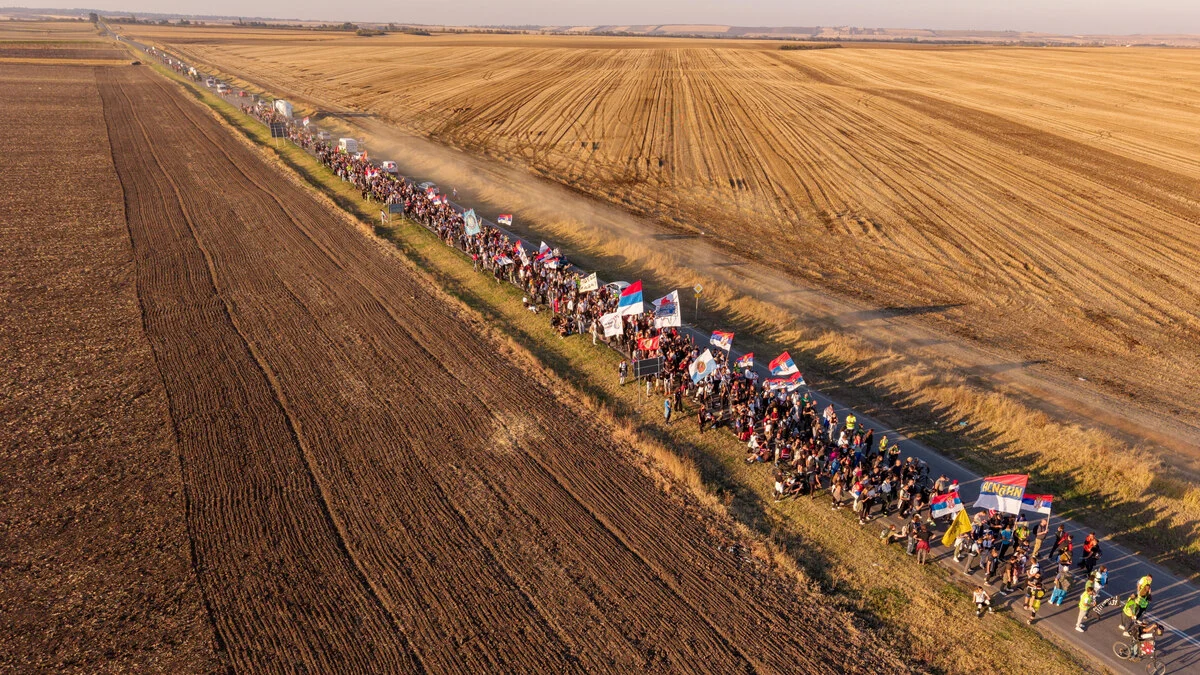
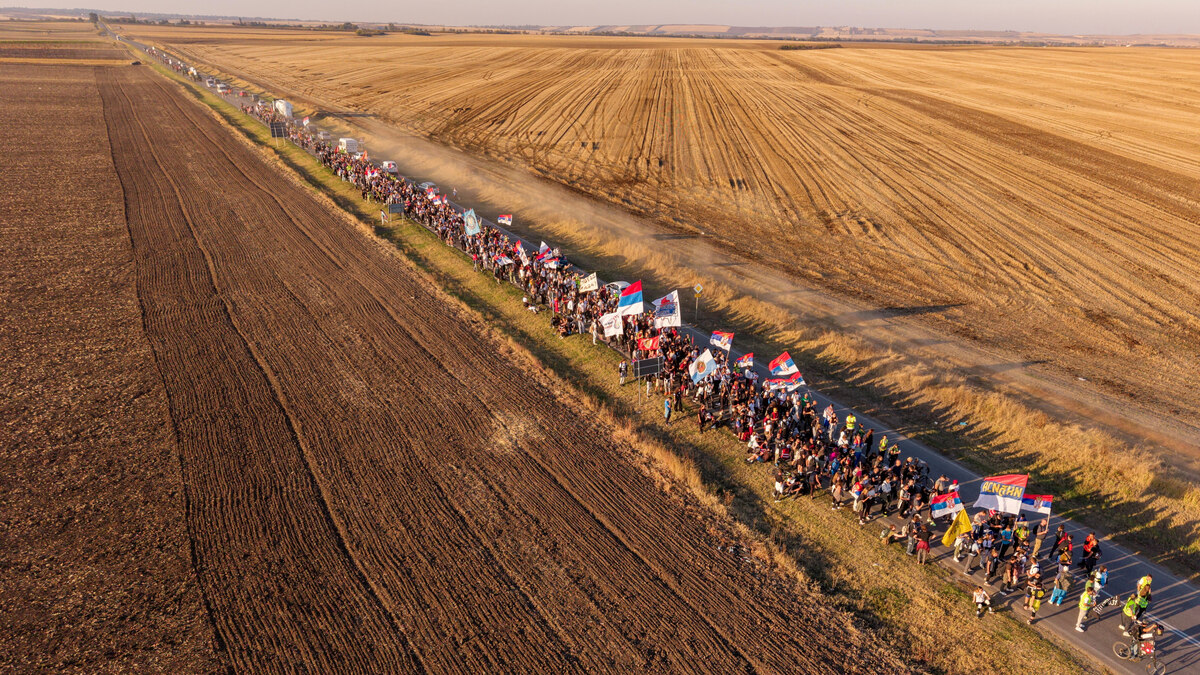
- October 2025: The "End-Sprint" of the campaign saw student columns marching hundreds of kilometers from the west, north, and east of the country toward the capital, signaling a nationwide mobilization that has reached even the most rural, traditionally pro-government strongholds.
Supporting Data: The Mechanics of Mobilization
The "Student List" operates on a shoestring budget, a stark contrast to the massive resources available to the SNS. To compensate, they have launched an aggressive, door-to-door ground campaign.
- Door-to-Door Reach: In Belgrade alone, roughly 150 students are visiting over 7,000 households weekly. This direct engagement is designed to mobilize non-voters—the demographic most likely to hold the key to the election’s outcome.
- Election Integrity: The movement has organized the largest team of independent election observers in modern Serbian history. They are prepared to monitor nearly all of the 8,392 polling stations across the country, where over 6.4 million citizens are eligible to vote.
- The "Anti-Politician" Slate: The 250 candidates on the student-backed list are individuals with established, non-political careers. Figures like Slobodan Bubnjević—a physicist, author, and science journalist—represent the ethos of the list: citizens who view politics as a necessary, temporary burden to be shouldered in order to reclaim the state from "an illegal regime."
Official Responses and Regime Rhetoric
President Vučić, having made nearly 600 television appearances since the beginning of the year, has adopted a scorched-earth rhetoric. He characterizes the student movement not as a domestic political force, but as "disguised terrorists" funded by hostile foreign powers. At daily rallies, he bellows that the students aim to destroy the state and vows that his party will "defeat them."

The regime’s narrative is clear: paint the opposition as "traitors," "anti-Serb," and agents of chaos. By framing the election as an existential battle for the survival of the nation, Vučić seeks to polarize the electorate and harden his base against the students’ message of civic reform.
Implications: The Shadow of Potential Violence
As Sunday approaches, the fear of civil unrest is rising. Political observers and international missions, including the OSCE and local monitoring group CRTA, are watching closely. The atmosphere is so tense that local journalists have been advised to procure helmets and gas masks—a chilling indicator of how the potential for state-sanctioned violence is perceived.
The core question remains: Will Vučić, who has spent years manipulating electoral processes, controlling media, and misusing state resources, accept a loss? The history of his governance suggests a man who views power as an extension of his own survival. Since 2012, he has kept Serbia in a perpetual state of "campaign mode," holding six parliamentary and three presidential elections in just over a decade to keep his opponents off-balance.

For the students and their supporters, this election is a watershed moment. It is an attempt to break a cycle of intimidation that has gripped rural areas for years. For the first time in a long time, citizens in remote villages have seen young people openly mocking the power of local SNS functionaries, laughing in the face of pressure, and offering a vision of a future that does not belong to a patronage network.
Conclusion: A Wager on Democracy
The "Student List" experiment is inherently risky. By demanding that adults and seasoned professionals remain accountable to a decentralized student movement, they are testing a new model of political governance in the Balkans. It is a David-versus-Goliath scenario where the weapon is not wealth or media control, but an indefatigable spirit of civic engagement.
Whether the movement succeeds in toppling the entrenched power structure remains to be seen. However, the energy generated by these students has already shifted the landscape. They have proven that after years of silence and despair, there is a generation willing to walk hundreds of miles, knock on thousands of doors, and face potential state-sponsored intimidation to demand a different kind of Serbia—one defined by the rule of law rather than the whims of a single man. As the countdown to Sunday continues, the world watches to see if this grassroots fervor can truly dismantle the architecture of an autocracy, or if the "strongman" will once again manage to suppress the will of the people.