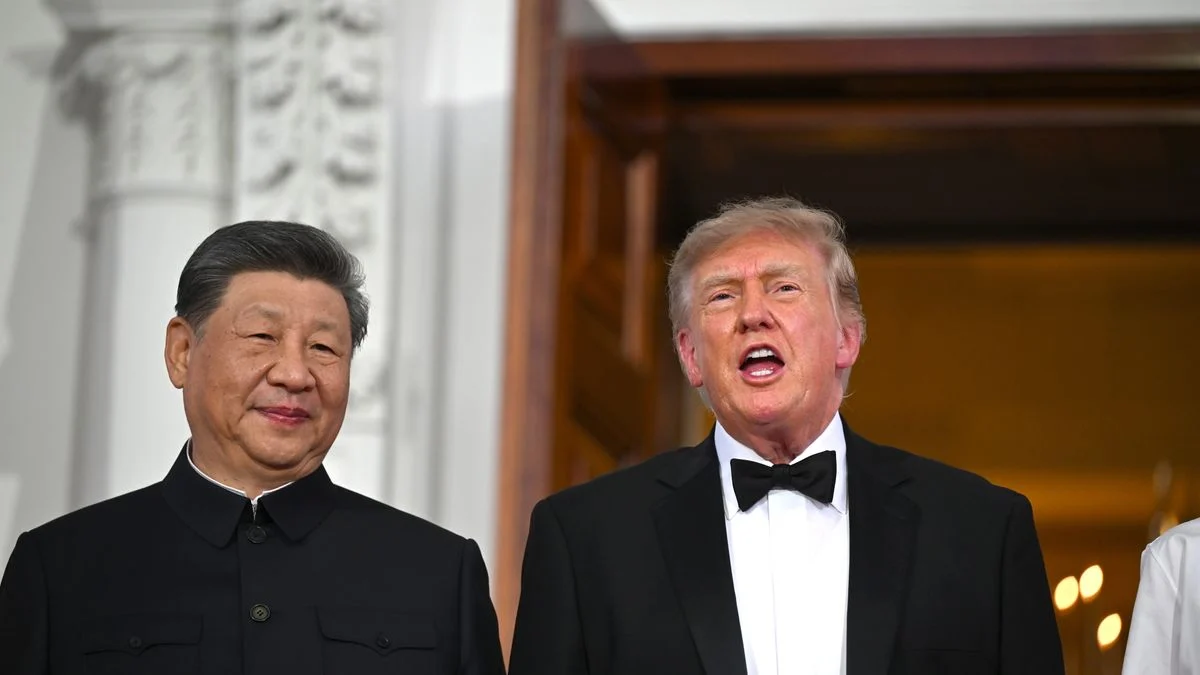
In a significant pivot in global technological diplomacy, the United States and China have formally agreed to establish a dedicated, direct communication channel aimed at managing the risks and opportunities associated with advanced artificial intelligence. Announced by the White House following a high-stakes three-day state visit, this agreement marks the creation of a formal "U.S.-China Dialogue on Superintelligence," a framework designed to prevent miscalculations regarding the world’s most potent emerging technology.
The agreement comes at a time when the rapid evolution of algorithmic systems has outpaced traditional diplomatic mechanisms. By creating this "hotline" for AI-related incidents, Washington and Beijing are acknowledging that the technological rivalry between the two superpowers carries existential risks that require urgent, high-level coordination.
The Genesis of the Agreement: From Tech Rivalry to Crisis Management
The push for a bilateral mechanism did not emerge in a vacuum. For months, international observers and technical experts have warned that the lack of communication between the two leading AI powers could lead to dangerous escalations. United Nations Secretary-General António Guterres had been a vocal proponent of this dialogue, frequently drawing parallels to the direct communication lines established between Washington and Moscow during the height of the Cold War. Guterres argued that just as the "Red Phone" prevented accidental nuclear conflict, a specialized channel for AI is essential to ensure that autonomous systems—whether in military, economic, or critical infrastructure roles—do not trigger unintended crises.
The agreement serves as a direct response to these international calls, positioning both nations as responsible stewards of global stability, even while they remain locked in a broader competition for technological supremacy.
The Semantic Shift: Why "Superintelligence"?
A notable development in the joint announcement is the shift in terminology. Both parties have officially adopted the term "Superintelligence" to describe the next generation of AI, moving away from the conventional industry standard of "Artificial Intelligence" (AI).
This shift appears to be heavily influenced by U.S. President Donald Trump, who has publicly campaigned for the rebranding. During his address at the UN General Assembly earlier this week, President Trump insisted that the term "Superintelligence" is "much better" and "far more appropriate" to capture the scope of the technology. While some critics view this as a purely rhetorical exercise, the adoption of the term by both Washington and Beijing suggests a mutual desire to frame the current technological trajectory as a unique historical phenomenon that requires a new diplomatic vocabulary.
However, the consensus on terminology does not extend to the philosophy of governance. President Trump has repeatedly expressed skepticism regarding international regulatory frameworks for AI, stating clearly that he wants the current landscape to remain "exactly as it is" to avoid stifling domestic innovation. In contrast, Chinese President Xi Jinping has emphasized a different mandate, arguing that both nations share a responsibility to develop and manage AI for the "common good," with a specific, rigid requirement that development must always remain under human control.
Chronology of the State Visit
The announcement of the dialogue was the centerpiece of a comprehensive three-day state visit by President Xi to the United States. The summit was marked by a series of high-level meetings aimed at stabilizing a bilateral relationship that has been characterized by trade friction and technological containment.
- Day 1: Initial Consultations: The leaders held preliminary discussions on geopolitical stability, with both sides acknowledging the need for a "guardrail" system regarding emerging technologies.
- Day 2: The "Superintelligence" Framework: The core of the diplomatic breakthrough was reached. The two delegations finalized the structure of the communications channel and agreed on the shift toward the "Superintelligence" terminology.
- Day 3: Economic and Cultural Agreements: The visit concluded with a series of bilateral trade and cultural pledges, including a significant commitment to fossil fuel trade and a symbolic gesture of diplomatic goodwill through the exchange of giant pandas.
Economic and Trade Implications
Beyond the technological dialogue, the visit yielded tangible economic outcomes. The White House confirmed that China has committed to importing at least ten million tons of U.S. coal annually throughout 2027 and 2028. This move is seen as a strategic effort to balance the trade deficit and provide a boost to the U.S. energy sector.
Furthermore, both nations reached an accord on "non-sensitive" goods, agreeing to streamline customs and tariff conditions to facilitate smoother trade flows. This indicates a potential de-escalation in the trade tensions that have defined the last decade of U.S.-China relations.
In a move that caught many by surprise, the two leaders also touched upon cultural diplomacy. Plans were announced for the transfer of two giant pandas to a U.S. zoo, a traditional symbol of Chinese diplomatic favor. While Beijing has not yet provided a formal statement confirming the logistical details of this transfer, the White House has framed it as a sign of warming relations.
The Road Ahead: Future Summits
President Trump characterized the three-day summit as "very positive for both countries," reflecting a tone of cautious optimism. The momentum generated by this visit is expected to continue throughout the year. Both leaders confirmed their intention to meet again at the APEC summit in Shenzhen, China, this November, followed by a subsequent meeting at the G20 summit in Miami this December.
These upcoming gatherings will be critical in determining whether the "Superintelligence" dialogue will function as a mere symbolic gesture or a robust mechanism for conflict prevention.
Global Implications: A New Cold War or Strategic Cooperation?
The establishment of this communication channel is arguably the most significant geopolitical development of the year. For decades, the international community has worried about the "thucydides trap"—the tendency for an established power and a rising power to end up in conflict. By formalizing a dialogue on the most critical technology of the 21st century, the U.S. and China are attempting to build a framework for coexistence in an age of machine-driven decision-making.
However, the fundamental tension remains. While both nations agree on the need for a "hotline," their internal strategies regarding regulation are markedly different. The U.S. approach, centered on market-driven innovation and deregulation, clashes with China’s preference for state-led management and strict human-in-the-loop oversight.
Furthermore, the rest of the world remains in a precarious position. Smaller nations and international bodies like the EU, which have been pushing for aggressive, ethics-based AI regulation, are now essentially spectators to a bilateral process that will likely set the global standard for AI development by default. If Washington and Beijing determine the rules of the road for "Superintelligence," the rest of the world will have little choice but to adapt to their standards.
Conclusion: A Delicate Balance
The U.S.-China "Superintelligence" agreement is a landmark achievement in modern statecraft, but it is also a fragile one. It represents a rare moment of alignment between two rivals who recognize that, in the face of potentially transformative technologies, the cost of miscommunication is too high to bear.
As the two nations move toward their follow-up summits in Shenzhen and Miami, the international community will be watching closely. Whether this channel becomes a permanent fixture of global stability or a temporary pause in a broader, more turbulent power struggle remains to be seen. For now, the "Superintelligence" dialogue stands as a testament to the fact that, in an era of unprecedented technological complexity, the oldest tool in the diplomat’s kit—direct, candid, and constant communication—remains the most essential.