BREMEN – As the sun rose over the Weser River on October 3, 2026, the city of Bremen transformed into the beating heart of German national identity. Marking the 36th anniversary of German Reunification, the Hansestadt hosted the official "Tag der Deutschen Einheit" (Day of German Unity) celebrations. While the atmosphere was one of civic pride and festivity, the underlying tone of the weekend was markedly somber, punctuated by urgent warnings from political and religious leaders regarding the state of the nation’s democratic health.
The event, occurring under the thematic banner "Many Strengths – One Country," brought together the highest-ranking officials of the Federal Republic, including President Frank-Walter Steinmeier and Chancellor Friedrich Merz. Yet, beneath the pomp of the Ländermeile and the musical performances, a clear consensus emerged: the German experiment is currently facing its most significant internal test since the fall of the Berlin Wall.
The Core Tensions: A Divided National Consciousness
The central challenge identified by speakers throughout the day was the deepening polarization of the German electorate. In a series of high-profile addresses, the narrative shifted away from the triumphalism of 1990 toward a more nuanced, often critical, assessment of where Germany stands today.
The Religious Perspective on Social Cohesion
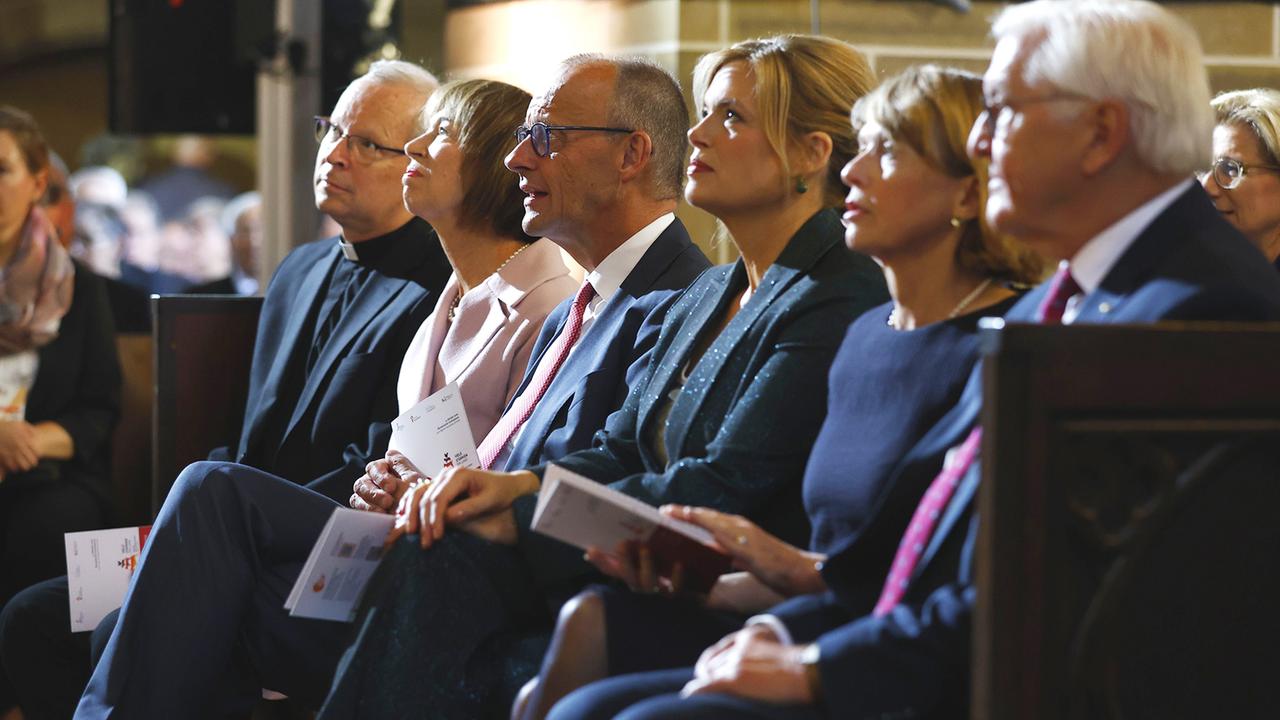
The day began in the historic St. Petri Cathedral, where the ecumenical service served as the intellectual opening act. Bernd Kuschnerus, President of the Bremische Evangelische Kirche, delivered a sermon that emphasized the necessity of inter-human reliance. "True strength exists where we need one another and entrust one another with something," Kuschnerus stated. He warned that in an era of global volatility and domestic anxiety, the temptation to retreat into individualistic silos is growing.
Bishop Dominicus Meier of the Catholic Diocese of Osnabrück echoed these sentiments with a more urgent warning. He cautioned against the "myth of the self-made individual," arguing that if citizens succumb to the belief that they are solely responsible for their own success in an increasingly fragmented market, the social contract will inevitably collapse into a "law of the jungle." For Meier, the protection of human dignity—as enshrined in the German Basic Law—is the only bulwark against the rising tides of antisemitism, xenophobia, and exclusionary populism.
Chronology of the Day’s Events
The official proceedings followed a meticulously crafted schedule designed to balance tradition with the political realities of 2026:
- 10:00 AM: The Ecumenical Service at St. Petri Cathedral. Religious leaders emphasize "Many Gifts – One Spirit," setting the moral tone for the day.
- 12:00 PM: The formal state ceremony at the "Die Glocke" concert hall. High-ranking dignitaries, including Chancellor Merz and members of the Bundestag, convene to address the constitutional significance of the holiday.
- 1:30 PM: The "Ländermeile" opening. The 16 federal states showcase their cultural and economic contributions, transforming the city center into a microcosm of the German federation.
- 3:00 PM (and throughout the afternoon): Public forums and discussions on the state of democracy, featuring civil society groups and political analysts.
- 8:00 PM: The central concert, headlined by Die Fantastischen Vier, symbolizing the cultural integration of the nation.
Political Discourse: The Crisis of Expectations
The most significant political takeaway from this year’s anniversary was the candid admission of unmet expectations. President Frank-Walter Steinmeier, in a sprawling 50-minute keynote address, departed from the standard celebratory rhetoric. He acknowledged that the promises of 1990 have not been fulfilled for many, leading to a profound sense of disillusionment that has eroded trust in democratic institutions.
The "Marriage" Analogy
Wolfgang Thierse, former President of the Bundestag, offered a sociological perspective on the East-West divide, characterizing the relationship between the two regions as a "long-term marriage." In an interview with Deutschlandfunk, the SPD veteran argued that crises and arguments are natural to such a union. He cautioned against the fantasy of a "clean break" or the belief that the two halves of Germany should be identical in every facet of life. "If the inequality between Saxony and Rhineland-Palatinate is similar to that between North and South Germany, we have achieved a form of normality," Thierse asserted.
However, Bodo Ramelow, the former Minister-President of Thuringia, challenged this optimistic view of "normality." He argued that the chasm remains deep, noting that the "spaces for genuine mutual understanding are rare." For many in the East, the structural inequalities in wages, wealth, and top-level career representation are not merely historical grievances—they are current, lived realities.
The "Catatentisch" (Children’s Table) Debate: Representation at the Top
A particularly poignant critique came from Elisabeth Kaiser, the Federal Government’s Commissioner for the New Federal States. Kaiser sparked a national conversation by arguing that the symbolic representation of Eastern Germany in federal leadership is insufficient.
"When the leaders of the Federal Republic gather in Bremen on October 3rd, it is once again striking that none of them currently hail from East Germany," Kaiser noted. She argued that this visual absence risks delegitimizing the democratic process in the eyes of Eastern citizens, who may feel they are relegated to the "Katzentisch" (the kids’ table) of national politics.
The Call for an Eastern President
In a bold policy suggestion, Kaiser advocated for the next German President to be a woman from the East. She argued that such a symbolic shift would serve as a powerful signal that the post-reunification transition is entering a new phase of maturity. Her commentary highlighted a stark statistic: despite the economic innovation and scientific growth in the Eastern states, the "glass ceiling" for East Germans in executive federal positions remains largely intact.
Supporting Data and Socio-Economic Realities
While the festivities highlighted cultural unity, the economic data presents a more complex picture. Since 1990, the standard of living in the East has risen significantly, with many regions evolving into hubs for high-tech industry and renewable energy. Yet, the "wealth gap" remains a persistent point of friction:
- Wage Disparity: Average gross annual wages in the East remain roughly 15-20% lower than in the West, partly due to the concentration of corporate headquarters in Western metropolitan centers.
- Leadership Vacuum: A 2025 study cited by the Commissioner’s office indicated that less than 5% of top management positions in DAX-listed companies are held by individuals born in the former GDR.
- Public Sentiment: Recent polling conducted in conjunction with the holiday reveals that approximately 40% of Eastern citizens still perceive themselves as "second-class citizens," a sentiment that has remained stubbornly high for over a decade.
Implications: A Democracy Under Stress
The events in Bremen underscore a critical juncture for Germany. The nation is currently grappling with a "poly-crisis": the need to integrate two distinct political memories while navigating the pressures of the digital age, a shifting global geopolitical landscape, and the rise of extremist political movements that exploit the remaining fissures between East and West.
The Path Forward
The consensus among the speakers in Bremen was that democracy is not a static achievement but a continuous process. Chancellor Merz, while emphasizing the economic necessity of a unified market, conceded that the "infrastructure of trust" requires as much investment as the physical infrastructure of the nation.
As the 400,000 visitors to the Bremen festival return to their homes across the country, the message they carry is one of cautious resolve. The "Day of German Unity" has transitioned from a celebration of a historical event into a yearly diagnostic check of the German state. The warning is clear: without an active, conscious effort to bridge the remaining structural and social gaps, the "Unity" being celebrated may remain more aspirational than actual.
For Germany, the path to true cohesion lies not in ignoring the differences, but in acknowledging that the "many strengths" mentioned in the theme are only effective if they are allowed to contribute equally to the national narrative. As the banners are packed away and the stages dismantled in Bremen, the challenge for the coming year is to ensure that the "East-West" conversation evolves from one of historical grievance into one of shared future-building. The stability of the European project, and the strength of the German republic, may well depend on it.