The recent Bundesliga clash between SC Freiburg and FC Bayern Munich has ignited a fierce tactical debate among football analysts and fans alike. In the latest episode of the Sportschau Bundesliga Update podcast, hosts Jens Walbrodt and Anne Hilt dissected a match that saw the Breisgau-based club push the perennial German champions to their absolute limit. While the final scoreline favored Munich, the narrative surrounding the game is one of tactical audacity, defensive vulnerability, and a late-match surge that nearly yielded a historic result.
The Tactical Blueprint: High Risk, High Reward
The core of the discussion centered on Freiburg’s decision to mirror Bayern’s aggressive, man-to-man defensive structure across the entire pitch. For much of the first half, this strategy was a double-edged sword. On one hand, it allowed Freiburg to stifle Bayern’s build-up play, forcing errors and applying pressure in areas where the visitors usually operate with impunity. On the other, it stripped the team of its traditional defensive solidity.
The most glaring consequence of this high-risk approach was the opening goal, scored by Bayern defender Dayot Upamecano. Following a blocked shot by Freiburg, the hosts found themselves caught in a moment of transition that left their entire central defensive structure exposed. Upamecano, showing remarkable pace and composure, sprinted the length of the pitch to find himself in a one-on-one situation with Freiburg goalkeeper Mio Backhaus. He finished with clinical precision.
"Dass Freiburg ein solches Gegentor kassiert, hat mich überrascht," remarked host Jens Walbrodt. The sentiment was echoed by co-host Anne Hilt, who noted, "I was also surprised. It wasn’t that I didn’t think Bayern was capable of a counter-attacking goal, but that Freiburg allowed themselves to be caught in such an open position. It was perhaps too bold."
Chronology of a High-Stakes Encounter
The match unfolded in distinct phases, characterized by Freiburg’s shifting tactical confidence.
The Opening Act: Bayern’s Dominance
In the first half, Bayern Munich utilized their superior individual quality to capitalize on the gaps created by Freiburg’s man-marking scheme. By playing in one-on-one situations across the pitch, Freiburg inadvertently simplified the game for Bayern’s attackers, who thrived on the space provided behind the high-pressing line. By the halftime whistle, Bayern had established a 2-0 lead, effectively controlling the tempo and the rhythm of the game.
The Turning Point: The Rosenfelder Effect
The tide began to shift significantly in the final ten minutes of the match, largely thanks to the tactical substitution of Max Rosenfelder. His introduction into the game proved to be the catalyst for a late-stage revival. Rosenfelder, operating with a dynamism that mirrored his teammate Matthias Ginter, provided the technical flair and offensive transition that Freiburg had been missing.
A pivotal moment occurred when Rosenfelder embarked on a daring dribble that directly preceded the goal that brought Freiburg back into the contest. While the goal was officially credited as an own goal by Bayern’s Tom Bischof, the momentum shifted entirely in favor of the hosts. "Through the substitution of Rosenfelder, Freiburg’s game became dominant for the first time," observed Walbrodt. "He challenged Bayern with the very tools they had used to dominate the earlier stages."
The Closing Minutes: A Desperate Finale
Following the goal, Freiburg surged forward, sensing an equalizer. For a brief, electrifying period, the pressure on the Bayern defense was palpable. Bayern goalkeeper Jonas Urbig was forced into a series of crucial interventions to protect the lead, ultimately denying Freiburg what many observers felt would have been a well-deserved point.
Supporting Data and Performance Metrics
While the defeat remains a statistical reality, the performance metrics tell a more nuanced story of progress. Freiburg’s ability to remain competitive for the full 90 minutes, despite trailing by two goals, suggests a newfound mental and physical resilience.
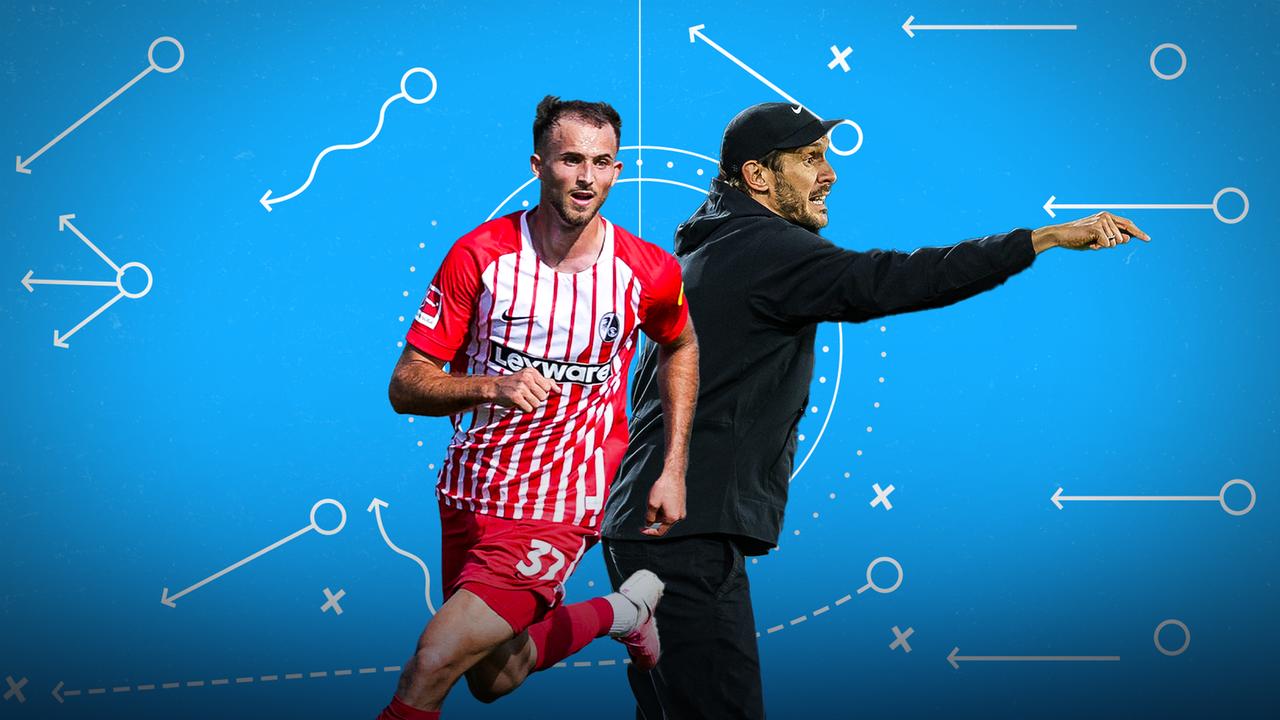
Anne Hilt pointed out that while Freiburg’s defensive structure was undeniably compromised in the first half, the team demonstrated significant improvement in preventing further damage. "I think the Freiburgers ensured for a long time that it stayed at two Bayern goals, which shows an improvement," Hilt noted. This defensive containment, despite the chaos of the man-marking system, indicates that the team is learning to manage high-intensity matches against elite opponents more effectively.
Official Perspectives and Managerial Philosophy
The internal discourse within the Freiburg camp—as echoed by the podcast’s analysis—revolves around the fine line between bravery and naivety. Managerial decisions to "go toe-to-toe" with a team of Bayern’s caliber are rarely taken lightly. The philosophy appears to be that a conservative approach against the champions often leads to a slow, inevitable defeat, whereas a high-intensity, risky approach offers a puncher’s chance.
The feedback from the Sportschau analysts suggests that while the gamble nearly backfired spectacularly, the late-game dominance provided by fresh legs and tactical adjustments like the Rosenfelder introduction offers a blueprint for future encounters. The team’s ability to force Bayern into a passive, defensive shell during the closing minutes is a testament to the tactical flexibility currently being instilled in the squad.
Implications for the Bundesliga Season
The implications of this performance extend beyond a single result. Freiburg has demonstrated that they possess the tactical depth to compete with the league leaders, provided they can balance their defensive structure with their offensive ambition.
Borussia Mönchengladbach: A Sign of the Times?
The podcast also looked at broader league developments, specifically the resurgence of Borussia Mönchengladbach. Their recent away victory in Stuttgart has triggered a debate: is this a genuine turning point for the club, or merely a transient period of high performance? The contrast between teams like Freiburg, who are pushing for tactical evolution, and teams like Gladbach, who are seeking consistency, defines the current state of the Bundesliga.
Tactical Evolution
The overarching theme for the 2026/2027 season appears to be the death of the "passive underdog." Clubs are increasingly willing to sacrifice defensive safety for the chance to dictate the flow of the game, even against superior opponents. This shift is creating a more unpredictable, high-scoring, and tactically complex league environment.
Conclusion: Lessons Learned
As the dust settles on the Freiburg-Bayern clash, the consensus is clear: Freiburg was not defeated by a lack of skill, but by a tactical experiment that was pushed to the absolute limit. The defensive lapses were the price of admission for a performance that saw them nearly humble the giants of German football.
Moving forward, the challenge for Freiburg will be to integrate the lessons of this match—specifically the need to maintain structure even when playing with high intensity. The late-game surge proved that when they apply pressure with control rather than desperation, they can disrupt even the most seasoned opponents.
The Bundesliga Update continues to track these developments, providing fans with deep-dive analysis every Thursday and Monday. For Freiburg, the journey continues, and if the final ten minutes against Bayern are any indication, they are a team to watch closely in the weeks to come. The question remains: when the next big test arrives, will they maintain their courage, or will they dial back the risk to secure the points? For now, the "too brave" verdict serves as both a critique and a compliment to a team that refuses to settle for being a mere spectator in their own matches.