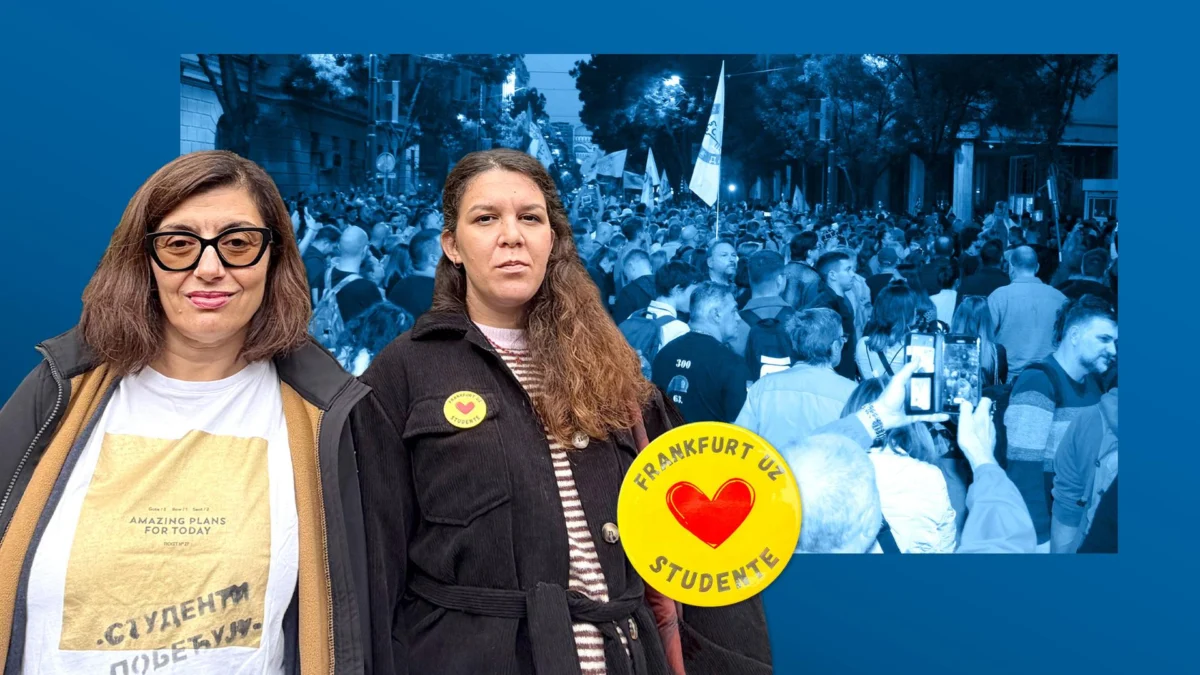
On October 25, Serbia stands at a critical juncture. As citizens head to the polls to elect a new parliament, the stakes have never felt higher. For the grassroots protest movement that has spent the last two years challenging the long-standing hegemony of President Aleksandar Vučić and his Serbian Progressive Party (SNS), this is not merely an election—it is a "Schicksalswahl" (a fateful election) intended to dismantle what critics describe as a state-captured autocracy.
The momentum, however, is not confined to the borders of the Balkan nation. Across Germany, from Berlin to Frankfurt, a dedicated network of Serbian expatriates is working tirelessly to ensure that the diaspora’s voice is heard. By navigating complex bureaucratic hurdles and mobilizing voters, these activists are attempting to turn the tide of Serbian politics from abroad.
Main Facts: The Fight for Democracy
The parliamentary election on October 25 represents the culmination of years of simmering civil unrest. Triggered originally by a tragic infrastructure failure—the collapse of a renovated canopy at the Novi Sad railway station that claimed 16 lives—the subsequent protests evolved from student-led anger into a broad-based movement against systemic corruption and democratic backsliding.
The movement has now shifted its strategy from street protests to the ballot box. For the first time, a coalition list titled "The Students Win" (Die Studierenden gewinnen) is contesting the election. Their stated goal is to break the absolute parliamentary majority of the SNS and install a technocratic government capable of restoring the rule of law and democratic institutions.
Aleksandar Vučić, who has dominated Serbian politics for 13 years, stands accused by domestic and international observers of "state capturing"—a phenomenon where all key levers of political and economic power are funneled through his party and personal inner circle. For activists like Olivera Stoišić-Rakić, a 55-year-old based in Frankfurt, the current government’s conditions have become "unbearable."
Chronology of the Movement
The trajectory of the current opposition reflects a maturing of political dissent in Serbia:
- The Catalyst: The tragedy in Novi Sad served as the primary spark, exposing deep-seated institutional rot and negligence.
- The Protest Phase: What began as a localized student strike rapidly transformed into the largest sustained protest movement in contemporary Serbian history.
- The Organizational Shift: Realizing that street demonstrations alone were insufficient to unseat a consolidated regime, the activists pivoted to institutional participation.
- Diaspora Mobilization: Over the past two years, support groups—such as "Frankfurt uz studente" (Frankfurt at the side of the students)—have formed across Germany to coordinate with the movement in Belgrade.
- The Registration Drive: Throughout September and early October, activists focused on the arduous task of ensuring that Serbian expatriates—who face a lack of postal voting options—could successfully register to vote at diplomatic missions.
Supporting Data and Diaspora Engagement
The Serbian electoral system places significant burdens on voters abroad. Because there is no postal voting, citizens must be registered at a local address in Serbia and then secure an additional permit to cast their ballot at a consulate or embassy.
"Many people, especially the elderly, were overwhelmed by the process," says Ivona Basara, an activist who has lived in Frankfurt for seven years. Her group provided telephonic consultations and information desks to guide citizens through the bureaucratic labyrinth.
The impact of this grassroots assistance is evident in the numbers. According to the Serbian Electoral Commission, 110,000 Serbs abroad have registered to vote, nearly triple the figure from the previous election. In Germany alone, an estimated 20,000 citizens have registered.
In Frankfurt, the consulate will host two distinct polling stations, a logistical shift required because the number of registered voters has surpassed the 2,500-person threshold. This surge represents a tangible success for the support groups, which have worked to facilitate voting even for those who might ultimately support the incumbent government, prioritizing the democratic process over partisan outcomes.
Official Responses and Political Implications
The Serbian government has maintained a stance of official indifference toward the protests, often framing the opposition as "foreign-funded" or disconnected from the national interest. However, the scale of the registration in the diaspora suggests that the government’s narrative of a satisfied electorate is being challenged by its own citizens abroad.
The opposition’s strategy is clear: if they can secure enough parliamentary seats to form a coalition, they intend to transition the country toward a system where state institutions are no longer subordinate to a single party. International observers, including the OSCE and European parliamentary groups, are expected to watch the October 25 vote closely, given the persistent allegations of media suppression and voter intimidation in previous cycles.
The atmosphere among the diaspora in Frankfurt is one of cautious, almost nervous, optimism. "If people turn out in large numbers, I see no way for Vučić to maintain his grip on power," says Stoišić-Rakić. "The only remaining question is whether he will recognize the result."
The "Day After": A Crossroads
For the activists in Frankfurt, the post-election period is already mapped out. "There are two possibilities," Stoišić-Rakić explains. "On October 26, we will either throw a party or we will demonstrate."
The uncertainty stems from deep-rooted mistrust of the current administration. To combat potential electoral irregularities, the Frankfurt support group has trained and dispatched four official election observers to monitor the proceedings at the consulate. These individuals have undergone specialized training to recognize and document violations of the Serbian electoral code.
The Broader Impact
The movement’s shift from the streets to the parliament signals a critical transition in Serbian political culture. Even if the opposition fails to secure an outright victory, the mobilization of the diaspora and the professionalization of the protest movement have created a new, persistent political force.
The involvement of the German-based diaspora highlights the global nature of modern democratic struggles. These expatriates, many of whom left Serbia seeking better economic and political opportunities, are now using the democratic liberties of their host country to fight for the future of their home.
Whether the result is a celebratory gathering outside the Frankfurt consulate or a continuation of the struggle on the streets, the events of October 25 are poised to redefine Serbia’s relationship with its own citizens. As Basara puts it, "We are doing our part to ensure that when the history of this transition is written, no one can say the people didn’t try to change their future."
As the clock ticks down toward the polls, the significance of this election extends far beyond the borders of Serbia. It is a litmus test for the resilience of democratic ideals in a region where autocracy has often proven difficult to dislodge. For the activists in Germany, the wait is not just about the numbers—it is about the hope that the "day after" will mark the beginning of a new chapter for their country.