In the hilly terrain of the Erzgebirge, the simple act of driving to a patient’s bedside has become a financial crisis. As fuel prices remain stubbornly high despite government intervention, ambulant care services are being forced to make impossible choices: cut services, reject patients, or risk insolvency.
The Reality at the Gas Pump: A Financial Crisis for Essential Services
For the staff at the "Pflegedienst Simone Freudenberg" in Schwarzenberg, the morning routine has fundamentally changed. It is no longer just about preparing medical supplies, checking charts, or coordinating the daily schedule. It is about logistics, timing, and, most critically, the price of diesel.

Despite the implementation of a national fuel price stabilization measure on October 1, motorists across Germany—and particularly commercial fleet operators—are still grappling with costs that frequently exceed two euros per liter. While private vehicle owners in urban centers may have the luxury of switching to public transport or delaying trips, the reality for ambulant care providers is starkly different. Their work is defined by the necessity of movement; they must travel to their patients, regardless of the price at the pump.
For Simone Freudenberg, the managing director of the local nursing service, the math is simple and devastating. Managing a fleet of 18 vehicles requires a level of fiscal discipline that is bordering on the extreme. "The recent price hikes have created a massive hole in our monthly budget," Freudenberg explains. "We are looking at an additional 1,000 euros per month just for fuel. That is money that is effectively being drained from the quality of care we can provide."

Chronology of a Mounting Burden
The trajectory of this crisis did not happen overnight. Over the past 24 months, the cumulative effect of global energy market volatility, geopolitical instability, and domestic inflationary pressures has systematically dismantled the profit margins of small-to-medium-sized healthcare providers in rural Saxony.
- Early 2024: Fuel prices began a steady climb, placing initial pressure on service providers who operate on fixed-rate reimbursement contracts with health insurance companies.
- Summer 2024: As prices surged toward record highs, many local providers exhausted their cash reserves, forcing a transition from "cost management" to "emergency austerity."
- October 1, 2026: The federal government introduced a "fuel price brake" intended to provide relief. However, for companies like Freudenberg’s, the relief proved largely symbolic. The price levels remained elevated, and the volatility persisted.
- Present Day: The "new normal" is defined by extreme operational constraints. The focus has shifted from expansion to survival, with many providers in the Erzgebirge region re-evaluating their coverage areas.
The Human Impact: A "Dienstanweisung" for the Pump
The operational response to this financial strain has been felt most acutely by the nursing staff. At the Schwarzenberg facility, a formal "Dienstanweisung" (official directive) has been issued: staff are strictly instructed to tank only during specific morning hours, when price fluctuations typically result in lower costs compared to the midday or evening peaks.
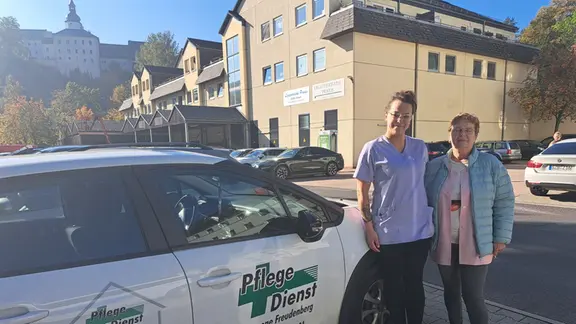
For nursing assistant Manuela Laukner, this directive is an additional, often overwhelming, burden. Her daily route is a whirlwind of essential stops: the Sonnenleite district, the Heide, the Hofgarten, the historic Old Town of Schwarzenberg, and the outlying village of Bermsgrün.
"It is physically and mentally exhausting," Laukner notes. "You are already under immense pressure to provide high-quality care to patients who are often frail or suffering from chronic conditions. Now, you have to worry about whether you have enough fuel to finish the route, and if you have enough time in the ‘cheap window’ to stop at the station without falling behind on your patient visits."

The logistical tightrope is razor-thin. The "cheap window" for refueling often falls exactly when the demand for home care visits is at its peak. The result is a system under immense stress, where the efficiency of the caregiver is sacrificed at the altar of fuel price management.
Geographic Exclusion: The New Reality of Care Access
Perhaps the most alarming implication of this fiscal crisis is the effect on the accessibility of care. Simone Freudenberg admits that the cost of driving to remote locations is no longer sustainable. Consequently, the business model has shifted from being "needs-based" to "location-based."

"When a new inquiry comes in, the first question I have to ask is: ‘Where do you live?’" Freudenberg explains. "If the potential patient lives outside of Schwarzenberg, we are often forced to decline the request. It is a heartbreaking decision to make, but we simply cannot afford to cover the distance."
This creates a "care desert" effect in rural areas. While the federal system is designed to provide equal access to healthcare, the lack of regional support for transport costs is creating a two-tier system. Unlike in Bavaria, where some structures allow for more flexible kilometer-based reimbursement, providers in Saxony are locked into rigid "service lump sums" (Einsatzpauschalen). These sums, negotiated with health insurance providers, do not adequately account for the massive spikes in fuel costs that have occurred since these agreements were finalized.
Supporting Data and Economic Implications
The financial strain on these small businesses is symptomatic of a broader failure to index operational costs against inflation in the healthcare sector.
- Fleet Maintenance: Beyond the fuel itself, the wear and tear on 18 vehicles, combined with rising maintenance and insurance costs, creates a "compounding effect" of debt.
- Reimbursement Gap: The gap between the actual cost of delivery and the reimbursement rate is estimated by industry analysts in Saxony to be growing at a rate of 12-15% annually.
- Labor Market Pressure: With fuel and operational costs rising, companies have less room to maneuver in terms of wage increases, making it harder to retain nursing staff who are increasingly burnt out by the dual pressure of care duties and logistical hurdles.
Official Responses and the Policy Vacuum
To date, there has been little in the way of a substantive, long-term policy response. While local authorities acknowledge the severity of the situation, the power to adjust reimbursement rates lies with federal health insurance associations.

Critics argue that the current system is overly bureaucratic and fails to differentiate between a courier service and an essential healthcare provider. There have been calls for a "mobility subsidy" for rural health providers—a direct, non-taxable grant that would cover the difference between pre-crisis fuel prices and current market rates. However, such proposals have yet to gain traction in the Bundestag, caught between budgetary constraints and the complexity of reforming the national health insurance framework.
Implications for the Future
The situation in Schwarzenberg is not an isolated incident; it is a preview of the systemic breakdown of rural care in Germany. If the current trend continues, several long-term outcomes are inevitable:

- Market Consolidation: Smaller, family-owned nursing services will likely be forced out of business, leading to a consolidation that favors larger, less personalized providers who can achieve economies of scale—or simply withdraw from unprofitable rural areas entirely.
- Increased Hospital Admissions: When home care services are unavailable, patients who would otherwise remain at home are forced into nursing homes or hospitals earlier than necessary, placing a significantly higher financial burden on the national health system.
- Regional Inequality: The "zip code lottery" for healthcare access will become more pronounced. Residents in urban centers will continue to have access to a variety of providers, while those in the Erzgebirge and similar rural regions will find their options increasingly limited, if not entirely evaporated.
Conclusion: A Call for Pragmatism
As the sun sets over the Erzgebirge, the debate over fuel prices is not merely an economic argument about market forces or government intervention; it is a debate about the social contract. When the cost of reaching a vulnerable patient becomes an existential threat to the caregiver, the system has failed.
For Simone Freudenberg and her team, the goal remains the same as it has always been: providing dignity and care to those who cannot leave their homes. But they are doing so with less support and more obstacles than ever before. Without a fundamental restructuring of how home care mobility is funded—one that recognizes the unique, non-negotiable nature of healthcare logistics—the "drastic measures" currently being employed in Schwarzenberg may soon become the standard operating procedure for the entire nation.

The question remains: How much is the society willing to pay to ensure that a nurse can reach a patient in need? If the answer is "not enough to cover the fuel," then the consequence is a society that has effectively abandoned its most vulnerable citizens in the name of fiscal rigidity.