Berlin, Germany – In a significant ruling that underscores the delicate balance between government transparency and national security, the Federal Chancellery is not obliged to disclose the draft of former Chancellor Olaf Scholz’s seminal "Zeitenwende" (turning point) speech. This decision, handed down by the Higher Administrative Court (OVG) Berlin-Brandenburg, reaffirms an earlier lower court judgment and rejects an appeal by a plaintiff seeking access to the crucial document and related internal memos. While the ruling represents a victory for the Chancellery in safeguarding the internal deliberative processes surrounding sensitive policy, it simultaneously reignites public debate regarding the extent of governmental transparency in Germany. The court, however, has allowed for a revision to be brought before the Federal Administrative Court, indicating the potential for further legal scrutiny of this high-profile case.
The "Zeitenwende" speech, delivered just days after Russia’s full-scale invasion of Ukraine in February 2022, marked a profound strategic pivot in German foreign and security policy. Its underlying preparatory documents, detailing considerations around defense funding and armaments, were at the heart of the plaintiff’s request. The Chancellery had consistently argued that the release of such information could have detrimental effects on the interests of the Bundeswehr (German armed forces) and public safety, a position that the OVG Berlin-Brandenburg has now endorsed. This judicial affirmation sets a notable precedent for the accessibility of government drafts pertaining to matters of national security and strategic policy formulation.
Main Facts: A Judicial Endorsement of Confidentiality
The core of the recent court decision is the affirmation that the Federal Chancellery is legally entitled to withhold the draft version of former Chancellor Olaf Scholz’s historic "Zeitenwende" speech. The Higher Administrative Court (OVG) Berlin-Brandenburg confirmed the judgment of a previous instance, dismissing the plaintiff’s appeal. This ruling effectively shields the internal workings and preliminary considerations behind one of Germany’s most pivotal foreign policy declarations in decades from public view.
The plaintiff’s request was not limited to the speech draft itself. It also encompassed three specific management templates, which were internal working documents prepared by specialized departments within the Chancellery. These templates reportedly delved into critical areas such as the financial allocation for defense and the urgent investment requirements within the armaments sector. The explicit focus on these topics highlights the plaintiff’s interest in understanding the granular details and strategic planning that underpinned the "Zeitenwende" policy shift.
The Federal Chancellery’s initial rejection of the request, issued in April 2022, was predicated on the argument that making such information public could have "adverse effects on the interests of the Bundeswehr and public security." This justification invoked provisions within Germany’s Freedom of Information Act (Informationsfreiheitsgesetz – IFG) that allow for non-disclosure when state security or other vital public interests are at stake. The OVG Berlin-Brandenburg’s decision to uphold this argument underscores the judiciary’s recognition of the sensitive nature of the information sought and the potential ramifications of its disclosure.
Crucially, the court has permitted a revision to the Federal Administrative Court (Bundesverwaltungsgericht). This allowance signifies that while the OVG has made its determination, the legal questions surrounding the case are deemed sufficiently complex or weighty to warrant consideration by Germany’s highest administrative court. This opens the door for a final, definitive ruling on the matter, which could further shape the interpretation of transparency laws concerning government policy drafts, particularly in areas of national defense and security.
Chronology: The Path to Judicial Review
The journey of this case, from a groundbreaking political speech to a significant legal battle, spans several key moments, reflecting the rapid evolution of Germany’s strategic outlook and the ongoing quest for governmental transparency.
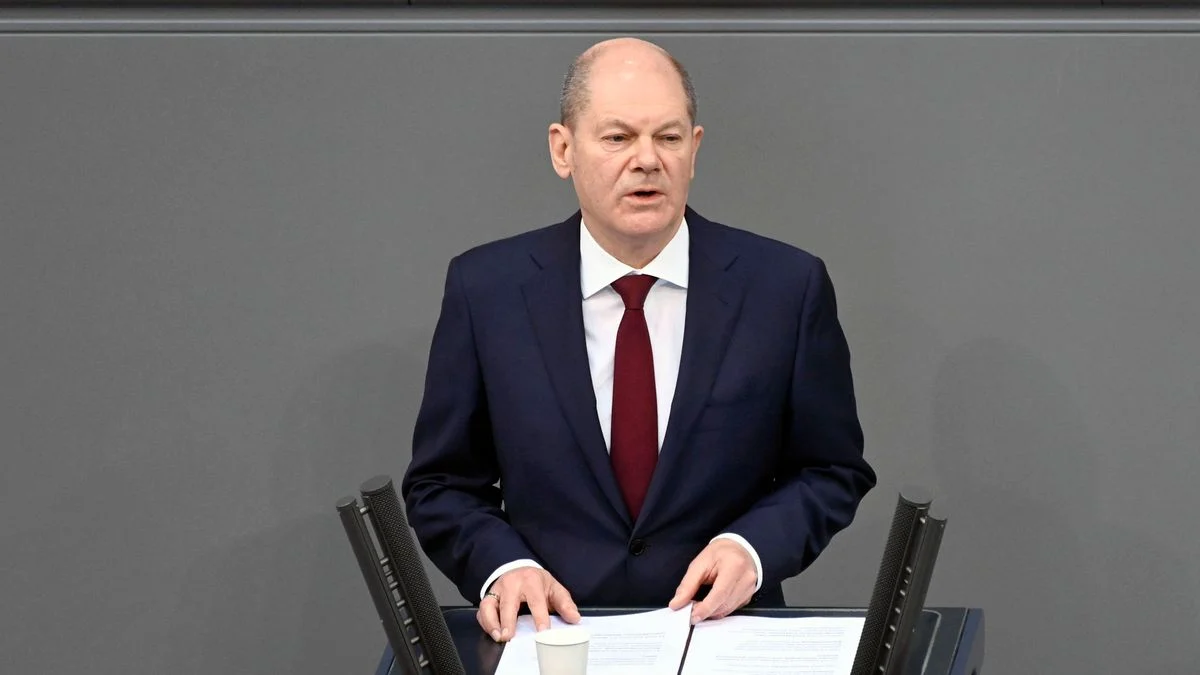
February 27, 2022: The "Zeitenwende" Declaration. Just three days after Russia launched its full-scale invasion of Ukraine, Chancellor Olaf Scholz delivered his momentous "Zeitenwende" speech to a special session of the Bundestag. This address marked an unequivocal break with decades of German foreign and security policy, announcing a paradigm shift away from a post-Cold War emphasis on economic engagement and towards a robust rearmament and a more assertive role in European security. The speech promised a €100 billion special fund for the Bundeswehr and a commitment to spending at least two percent of GDP on defense, fundamentally altering Germany’s strategic posture and its relationship with NATO allies. The profound nature of this declaration immediately elevated its underlying preparatory work to an object of immense public and academic interest.
Early 2022: The Plaintiff’s Initiative. Following the delivery of the "Zeitenwende" speech, an unnamed plaintiff, likely an individual or organization advocating for greater transparency, initiated a request to the Federal Chancellery. This request, made under the auspices of Germany’s Freedom of Information Act (IFG), sought access to the complete draft of Chancellor Scholz’s speech and specifically three management templates. These internal documents were understood to contain detailed considerations from expert departments within the Chancellery concerning critical aspects of the "Zeitenwende" policy, including the financial architecture of the special defense fund and the pressing investment needs for modernizing the Bundeswehr’s armaments.
April 2022: Chancellery’s Initial Rejection. In April 2022, the Federal Chancellery formally denied the plaintiff’s request. The Chancellery’s primary justification for withholding the documents was rooted in concerns over national security and public interest. It argued that the disclosure of the speech draft and the accompanying management templates, particularly those detailing sensitive information about defense funding and armaments, could have "disadvantageous effects on the interests of the Bundeswehr and public safety." This initial refusal set the stage for the subsequent legal challenge.
Lower Court Proceedings: Following the Chancellery’s rejection, the plaintiff pursued legal action, bringing the case before a lower administrative court. The details of these initial proceedings, including the specific court and exact date of its ruling, are not fully elaborated in the provided context, but it is known that the lower court ultimately sided with the Federal Chancellery. This initial judicial endorsement of the Chancellery’s position meant that the documents remained confidential, prompting the plaintiff to appeal the decision.
Recent Past: Higher Administrative Court Ruling. The appeal brought the case to the Higher Administrative Court (OVG) Berlin-Brandenburg. After reviewing the arguments from both the plaintiff and the Federal Chancellery, the OVG upheld the judgment of the lower court. This recent ruling, the subject of the current news, rejected the plaintiff’s appeal, thereby confirming the Chancellery’s right to withhold the requested documents. The OVG’s decision reiterated the perceived risks associated with disclosing internal preparatory materials related to national security and defense strategy.
Future: Potential Federal Administrative Court Review. Despite the OVG’s definitive ruling at its level, the court has granted permission for a revision (a specific type of appeal) to be lodged with the Federal Administrative Court (Bundesverwaltungsgericht). This significant allowance indicates that the legal questions at play, particularly concerning the scope of governmental transparency versus state secrecy in matters of high policy, are considered to be of fundamental importance or to involve complex points of law that warrant review by Germany’s highest administrative judicial body. Should the plaintiff pursue this revision, the case could set a binding precedent for similar transparency disputes across Germany.
Supporting Data: Contextualizing the "Zeitenwende" and Transparency Laws
The legal battle over the "Zeitenwende" speech draft cannot be fully understood without delving into the profound significance of the speech itself and the legal framework governing governmental transparency in Germany.
The Epochal "Zeitenwende" Speech:
Chancellor Scholz’s address on February 27, 2022, was not merely a policy statement; it was a declaration of a fundamental shift in Germany’s strategic identity. For decades, particularly since the end of the Cold War, Germany had pursued a foreign policy characterized by economic interdependence, multilateralism, and a relatively restrained military posture, often dubbed "checkbook diplomacy." The notion of military force as a primary instrument of foreign policy had been largely eschewed, influenced by historical guilt and a strong pacifist streak in public discourse.
The Russian invasion of Ukraine shattered this consensus. Scholz’s "Zeitenwende" acknowledged this brutal reality, declaring that "we are living through a watershed era" and that "the world afterwards will no longer be the same as the world before." The concrete commitments outlined were unprecedented:
- €100 Billion Special Fund: An immediate, one-off injection of €100 billion into the Bundeswehr to address years of chronic underfunding and equip it with modern capabilities. This was a direct response to the long-standing criticism from NATO allies, particularly the United States, regarding Germany’s insufficient defense spending.
- 2% GDP Defense Target: A commitment to consistently spend at least two percent of Germany’s gross domestic product on defense, aligning with NATO’s collective defense guidelines. This represented a substantial increase from previous levels, which had often hovered around 1.3-1.5%.
- Reorientation of Security Policy: A broader re-evaluation of Germany’s security architecture, including energy policy, critical infrastructure protection, and the role of the military in collective defense within NATO and the EU.
The "Zeitenwende" speech thus marked a dramatic reorientation, signaling Germany’s willingness to assume a more significant and robust role in European and global security. The draft and preparatory documents of such a speech are therefore not just administrative records; they are historical artifacts reflecting the high-stakes internal deliberations that shaped a nation’s response to an existential crisis. Understanding the nuances, initial proposals, and rejected alternatives within these drafts could provide invaluable insights into the decision-making process at the highest levels of government during a moment of profound geopolitical upheaval.
Germany’s Freedom of Information Act (Informationsfreiheitsgesetz – IFG):
The plaintiff’s request was made under the IFG, which came into force in 2006. The IFG grants every natural and legal person the right of access to official information held by federal authorities, subject to certain exceptions. The underlying principle is to foster transparency and allow citizens to hold their government accountable.
However, the IFG, like similar laws in other democracies, contains significant exemptions to protect legitimate state interests. Key exemptions relevant to this case include:
- Protection of International Relations and Security: Information whose disclosure would have an adverse effect on international relations or the security of the Federal Republic of Germany. This broadly covers defense, foreign policy, and intelligence matters.
- Protection of Deliberative Processes: Information pertaining to the preparation of laws, decisions, or other official acts, the disclosure of which could prejudice the successful completion of the measure or lead to a premature disclosure of policy options. This "deliberative process privilege" is crucial for allowing government officials to engage in frank and uninhibited discussions internally without fear that their preliminary thoughts or dissenting views will immediately become public.
- Protection of Public Safety and Order: Information whose disclosure would jeopardize public safety or order.
The Chancellery’s argument for non-disclosure squarely fell under these exemptions, particularly concerning the potential adverse effects on the Bundeswehr’s interests and public security. The management templates, specifically detailing defense funding and armaments investment, directly touch upon strategic military planning and resource allocation, areas traditionally shielded for national security reasons. Premature disclosure of specific procurement plans, budget priorities, or assessments of military capabilities could, theoretically, be exploited by potential adversaries or complicate sensitive negotiations with defense contractors and international partners.
The case thus highlights the inherent tension in freedom of information laws: balancing the public’s right to know and governmental accountability against the state’s legitimate need for confidentiality in certain sensitive domains, especially national security. The courts are tasked with interpreting these provisions and drawing the line between transparency and necessary secrecy, a task made particularly complex when dealing with documents related to a policy as transformative as the "Zeitenwende."
Official Responses: The Chancellery’s Stance and the Court’s Reasoning
The official responses in this case illuminate the differing priorities of governmental operations versus public access, and how the judiciary navigates this divide.
The Federal Chancellery’s Consistent Argument:
From the outset, the Federal Chancellery adopted a firm stance against the disclosure of the "Zeitenwende" speech draft and the accompanying management templates. Their core argument, first articulated in April 2022 and consistently maintained through the various court instances, was based on the principle of protecting vital state interests. Specifically, the Chancellery contended that making these documents public could lead to "adverse effects on the interests of the Bundeswehr and public safety."
This broad justification can be broken down into several implicit rationales:
- National Security: The "Zeitenwende" speech concerned a radical shift in Germany’s defense posture, including substantial rearmament and strategic reorientation. The preparatory documents likely contained sensitive information regarding military capabilities, procurement priorities, potential vulnerabilities, and strategic planning. Disclosure could potentially compromise military operational security, reveal strategic weaknesses to potential adversaries, or undermine Germany’s negotiating position in international defense collaborations.
- Protection of Deliberative Process: Government officials require a confidential space to develop policy, explore various options, and engage in frank discussions without the immediate pressure of public scrutiny. Releasing preliminary drafts and internal memos could stifle candid advice, make officials hesitant to put forward unconventional ideas, and lead to a less robust policy-making process. The Chancellery likely argued that the ability to freely debate and refine policy, especially on such a critical matter, is essential for effective governance.
- Economic and Industrial Security: The management templates’ focus on "funding for defense" and "investment needs in the armaments sector" suggests they contained details on budget allocations and potential procurement projects. Premature disclosure of such information could influence stock markets, create unfair advantages for certain defense contractors, or complicate competitive bidding processes, thereby impacting the economic interests of the state and the defense industry.
The Court’s Reasoning:
The Higher Administrative Court (OVG) Berlin-Brandenburg, in upholding the lower court’s decision and rejecting the plaintiff’s appeal, effectively endorsed the Federal Chancellery’s arguments. While the specific details of the OVG’s full judgment are not provided in the original text, the outcome indicates that the court found the Chancellery’s justifications for non-disclosure to be legally sound and compelling under the provisions of the German Freedom of Information Act (IFG).
The court’s reasoning likely centered on:
- Balancing Test: The judiciary often performs a balancing test, weighing the public’s right to information against the state’s legitimate interests in confidentiality. In this instance, the OVG clearly found that the potential harm to national security, the Bundeswehr’s interests, and public safety outweighed the transparency imperative. The court would have assessed the nature and sensitivity of the information contained in the documents and the credibility of the Chancellery’s claims regarding potential adverse effects.
- Interpretation of IFG Exemptions: The court would have applied the relevant exemptions within the IFG, particularly those concerning national security and the protection of government deliberations. Its decision implies that the documents in question fell squarely within the scope of these exemptions, meaning their disclosure would indeed compromise interests that the IFG explicitly seeks to protect.
- Nature of the Documents: The fact that the request concerned drafts and management templates rather than final, approved policy documents is significant. Courts often distinguish between documents that represent final government decisions (which tend to be more accessible) and internal working papers that are part of the ongoing policy formulation process (which are often more protected). The OVG’s ruling likely recognized the need to protect this internal deliberative space for high-level policy-making.
By confirming the Chancellery’s right to withhold these documents, the OVG has affirmed the principle that, under specific circumstances, the necessity of state secrecy, particularly in matters of defense and security policy, can override the general principle of governmental transparency.
Implications: Precedent, Transparency Debate, and Future Outlook
The OVG Berlin-Brandenburg’s ruling carries significant implications, extending beyond the immediate confidentiality of the "Zeitenwende" speech draft. It touches upon the broader landscape of governmental transparency, the balance of power between the executive and civil society, and the ongoing interpretation of freedom of information laws in an increasingly complex geopolitical environment.
Establishing a Precedent for Sensitive Documents:
This decision sets a clear precedent for the handling of requests for highly sensitive government documents, especially those related to national security, defense policy, and strategic shifts. It signals that courts are prepared to give substantial weight to the executive’s arguments for non-disclosure when concerns about the Bundeswehr’s interests and public safety are credibly raised. This could make it more challenging for citizens and journalists to access internal drafts and preparatory materials concerning future major policy initiatives that touch upon defense, foreign relations, or intelligence. While not an absolute bar, it reinforces the notion that the "deliberative process privilege" and national security exemptions are robust defenses against disclosure in such cases.
Fueling the Transparency Debate:
The ruling will undoubtedly reignite the perennial debate in Germany about the extent of governmental transparency. Proponents of greater openness will likely view this as a setback, arguing that it creates an unnecessary veil of secrecy around crucial policy-making. They might contend that understanding the evolution of the "Zeitenwende" policy, including initial proposals, discarded options, and internal disagreements, is vital for democratic accountability and informed public discourse. Critics might argue that such confidentiality hinders citizens’ ability to truly scrutinize and comprehend decisions that have profound impacts on the nation’s future.
Conversely, those who support the Chancellery’s position will emphasize the necessity of protecting sensitive information. They would argue that a degree of confidentiality is essential for effective governance, allowing officials to formulate policy without external pressure or the risk of premature leaks compromising strategic interests. The "Zeitenwende" was a response to an immediate and grave security crisis; therefore, the internal discussions leading to it were inherently delicate.
Political and Public Perception:
The decision could subtly influence public trust and the perception of government openness. While the legal justification for the ruling may be sound, the act of withholding documents related to such a landmark policy could be perceived by some segments of the public as a lack of transparency or an attempt to control the narrative surrounding the "Zeitenwende." This is particularly pertinent in an era where misinformation and public skepticism towards institutions are prevalent. For the government, maintaining a delicate balance between necessary secrecy and perceived openness will remain a critical communication challenge.
Impact on "Zeitenwende" Narrative and Historical Record:
The non-disclosure of the draft means that the full, unvarnished story of how the "Zeitenwende" was formulated will remain largely within the confines of the Chancellery for the foreseeable future. Historians, political scientists, and the public will have to rely primarily on the final speech, public statements, and secondary accounts to reconstruct the decision-making process. This could limit the depth of historical analysis and the understanding of the internal dynamics and intellectual debates that shaped such a pivotal moment in German history.
Future Legal Action and the Federal Administrative Court:
The allowance for a revision to the Federal Administrative Court is a critical aspect of this ruling. Should the plaintiff pursue this option, the case would ascend to Germany’s highest administrative court, whose decision would carry even greater weight and establish a more definitive legal interpretation. The Federal Administrative Court would likely focus on the overarching legal principles at stake:
- The precise scope of IFG exemptions: How broadly should "national security" and "public safety" be interpreted in the context of policy drafts?
- The balancing act: How should the courts weigh the public’s right to information against the executive’s need for confidentiality, especially in rapidly evolving security contexts?
- The nature of "deliberative process": How much protection should be afforded to internal government discussions and drafts, and at what point does a document transition from a protected "draft" to a disclosable "final record"?
A ruling from the Federal Administrative Court could either solidify the OVG’s stance, further strengthening the executive’s hand in protecting sensitive policy documents, or it could introduce new interpretations that lean towards greater transparency, potentially shifting the balance back towards public access. Regardless of the outcome, the case highlights the enduring tension at the heart of democratic governance: the need for effective and secure decision-making on one hand, and the imperative for public accountability and transparency on the other.