

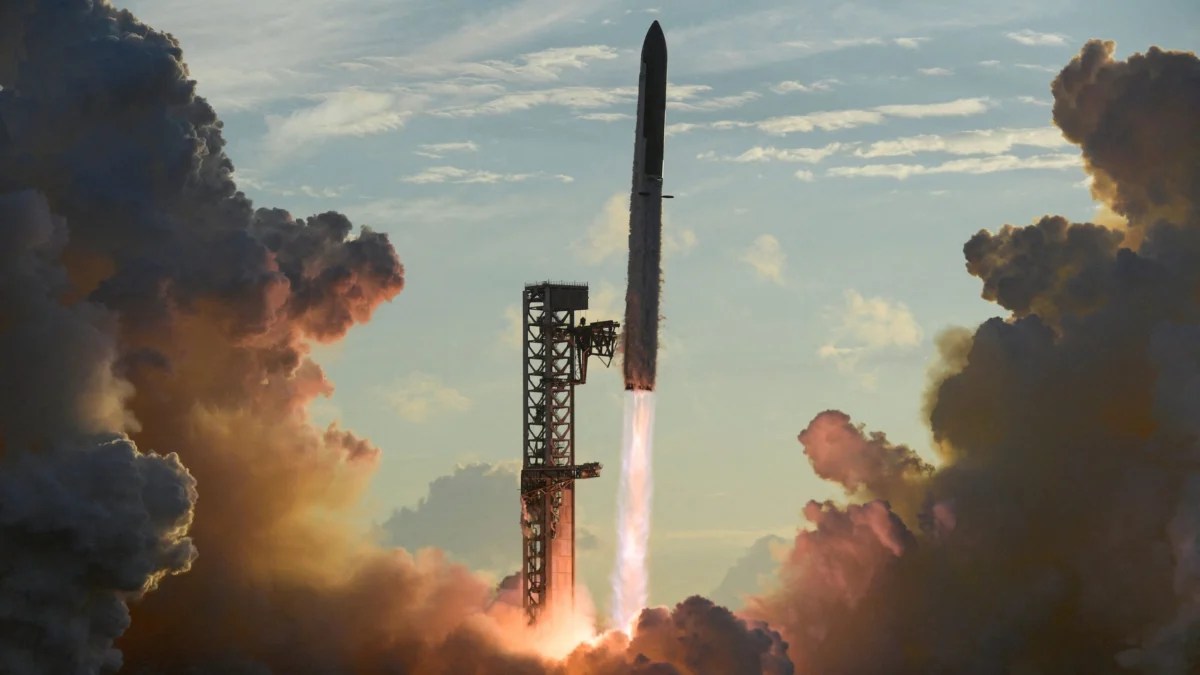
DÜSSELDORF – The global telecommunications landscape is undergoing a tectonic shift, one that has sent shockwaves through the boardrooms of legacy giants like Deutsche Telekom. On Friday, a "perfect storm" of regulatory approvals and strategic acquisitions by Elon Musk’s SpaceX fundamentally altered the competitive calculus of the mobile industry. By securing critical frequency rights and a massive satellite expansion permit, SpaceX has moved from a niche satellite provider to a direct, systemic challenger to terrestrial mobile network operators.
The Core Development: A Two-Pronged Offensive
The market reaction on Friday was swift and severe, with shares of Deutsche Telekom and other major international telcos dipping as investors digested a dual-threat announcement from the United States.
The first blow came from the U.S. Federal Communications Commission (FCC), which granted SpaceX formal authorization to deploy an additional 15,000 satellites into a low-Earth orbit (LEO). Crucially, these satellites are designed to operate at an altitude of just 330 kilometers. This extreme proximity to Earth is a game-changer; it drastically reduces latency and boosts data throughput, allowing satellite-to-smartphone connectivity that mimics the performance of traditional 5G towers.
The second, and perhaps more vital, development was SpaceX’s acquisition of "Low-Band" spectrum from the investment firm Grain Management. While the satellite infrastructure provides the "highway," this specific frequency range acts as the "universal access key." Unlike high-frequency bands that struggle to penetrate solid objects, low-band frequencies possess superior propagation characteristics, capable of passing through concrete walls, roofs, and dense foliage. Previously, SpaceX’s "Direct-to-Device" (D2D) service was largely limited to outdoor usage. With this acquisition, that limitation has effectively been removed.
Chronology of a Strategic Pivot
To understand the gravity of Friday’s events, one must look at the rapid acceleration of SpaceX’s telecommunications strategy over the past 24 months.
- Early 2023: SpaceX begins testing Starlink’s "Direct-to-Cell" technology. Initial results are promising but hampered by regulatory restrictions and the physical limitations of existing satellite-to-mobile signal penetration.
- Late 2023: SpaceX forms strategic partnerships with mobile carriers in various countries, attempting to position itself as a "supplementary coverage" provider rather than a direct competitor.
- Mid-2024: SpaceX ramps up the lobbying effort for lower orbit permissions, arguing that the future of global connectivity requires "ubiquitous coverage" that only a massive LEO constellation can provide.
- Friday, Current Month: The FCC grants the 15,000-satellite expansion, followed immediately by the announcement that SpaceX has acquired the Grain Management low-band spectrum.
- Post-Announcement: Elon Musk takes to his platform, X, to declare: "We have now acquired the last critical piece of the spectrum puzzle to provide phone connectivity across the entire United States."
Supporting Data: Why "Low-Band" Matters
The telecommunications industry is built on a hierarchy of spectrum. In the battle for market share, the type of frequency a company holds determines the quality of the user experience.
The Physics of Connectivity
- High-Band (mmWave): Offers incredible speed but covers a very short range and cannot penetrate buildings.
- Mid-Band: The current "sweet spot" for 5G, balancing range and capacity.
- Low-Band: The "gold standard" for reach. It is the frequency used by legacy 2G/3G/4G systems to ensure that a phone rings even in a basement.
By acquiring this specific low-band spectrum, SpaceX has effectively bypassed the "indoor coverage" hurdle that has crippled previous satellite-to-phone attempts. Data suggests that this move allows Starlink to offer a seamless handover between traditional cell towers and satellite connectivity, making the satellite service invisible to the end user. With 650 satellites currently operational in this specific configuration, the jump to 15,000 represents a 2,200% increase in capacity, providing a network density that could theoretically service millions of concurrent users.
Official Responses and Industry Sentiment
The atmosphere among traditional telco executives is one of defensive caution. While many companies have publicly dismissed the threat of "satellite-only" networks, the market sell-off indicates that institutional investors see the situation differently.
In a brief statement following the announcement, a spokesperson for an industry trade group noted that "spectrum management remains a complex, highly regulated environment," implying that SpaceX’s acquisition may face future legal challenges regarding antitrust concerns or the equitable distribution of airwaves.
However, the mood at SpaceX is one of aggressive triumph. Musk’s commentary on X highlights the company’s intent to move beyond "emergency connectivity" into the realm of "primary connectivity." For the consumer, this suggests a future where the "No Service" bar on a smartphone becomes a relic of the past, regardless of how remote the location.
Implications: A New Era for Telecommunications
The implications of these developments extend far beyond the stock price of Deutsche Telekom. We are witnessing the decoupling of cellular service from terrestrial infrastructure.
1. The Death of the "Dead Zone"
The most immediate implication is the elimination of rural and maritime dead zones. Historically, it has been economically unviable for telcos to build cell towers in sparsely populated regions. SpaceX is now solving the "last mile" problem by making the "last mile" irrelevant.
2. Disruption of the Roaming Business Model
International roaming fees have long been a lucrative revenue stream for traditional mobile operators. If a user can connect directly to a global satellite network that treats them as a domestic subscriber, the traditional roaming model—based on interconnect agreements between localized carriers—faces existential risk.
3. Regulatory Friction
The FCC’s approval of 15,000 satellites in a 330km orbit raises significant questions about orbital debris and space traffic management. Traditional operators are likely to lobby for stricter regulations, arguing that SpaceX is monopolizing the most desirable orbital planes and frequency bands.
4. The Shift to "Infrastructure-as-a-Service"
We may see a future where terrestrial carriers stop trying to compete with satellite connectivity and instead pivot to becoming "retail partners" for SpaceX. By offloading their most expensive, low-traffic areas to the Starlink network, carriers could potentially reduce capital expenditure (CapEx) on rural infrastructure, though this would leave them vulnerable to becoming mere "billing agents" for a Musk-controlled utility.
Conclusion: The Horizon
As the industry digests this news, one thing is clear: the monopoly of the terrestrial cell tower is under siege. By successfully threading the needle between regulatory approval and the acquisition of the essential physical spectrum, SpaceX has transitioned from an ambitious aerospace startup into the world’s most dangerous telecommunications disruptor.
For legacy firms, the clock is ticking. The challenge is no longer about who has the best signal in the city, but who owns the sky above it. As SpaceX prepares to launch the first of its new 15,000-satellite fleet, the global mobile market enters a period of unprecedented uncertainty—and for the consumer, a potential era of total, uninterrupted connectivity.
Whether this leads to a "race to the bottom" in pricing or a new era of consolidation will depend on how established players like Deutsche Telekom, Vodafone, and AT&T respond to the satellite giant in the coming months. One thing is certain: the sky is no longer the limit; it is the battlefield.

























